


You’ve got the proposal polished, the pricing feels right, and the deck looks clean. Then the follow-up goes quiet, the deal slips, and you’re left guessing whether the buyer even opened it. That’s the gap proposal software is meant to close, by turning a static PDF into a trackable, signable part of the sales process, with better handoffs, less manual chasing, and clearer next steps.
The category has clearly moved beyond simple document editing. One market estimate places proposal and document automation software at about $3.1 billion in 2026 with roughly 11.8% CAGR through 2030 (AMW Group statistics), while another projects proposal software at USD 1,893.31 million in 2026 and USD 4,140.79 million by 2035 (AMW Group statistics). That growth reflects a bigger shift, proposal tools now sit inside revenue workflows, not just document workflows. If you’re choosing software for an agency, a service business, or a sales team, the key question isn’t “Can it build a proposal?” It’s “Can it help the deal move faster without creating more tool sprawl?”
Table of Contents
- 1. GoHighLevel, The AI-powered business operating system
- 1. GoHighLevel, The AI-powered business operating system
- 2. PandaDoc
- 3. Proposify
- 4. Qwilr
- 5. Better Proposals
- 6. GetAccept
- 7. Nusii
- 8. QuoteWerks
- 9. Quotient
- 10. Zomentum
- Top 10 Proposal Software: Features & Pricing Comparison
- From Proposal to Paid, Choosing Your Sales Workflow
1. GoHighLevel, The AI-powered business operating system
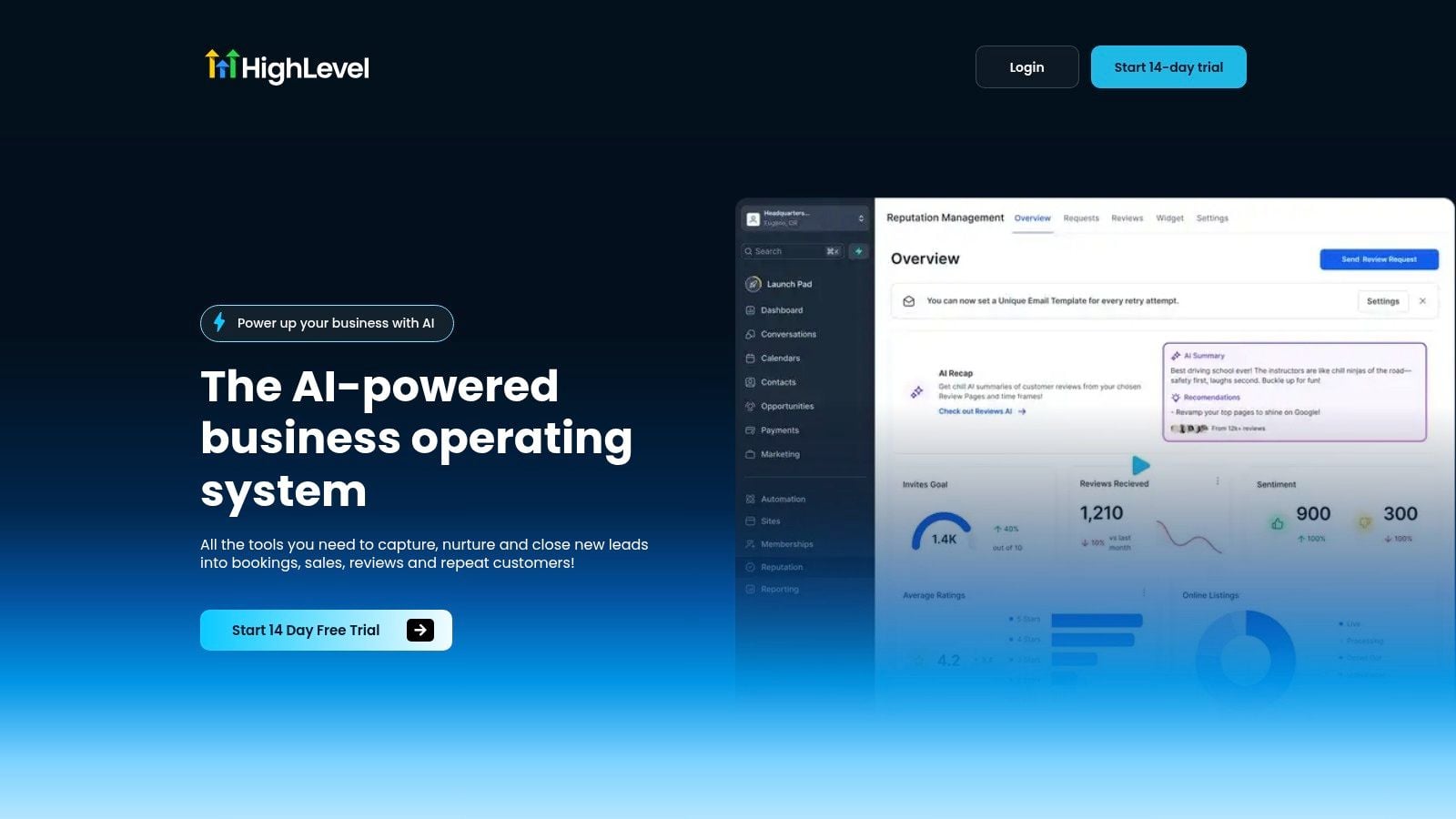
If your team is already juggling CRM notes, follow-ups, booking links, invoices, and proposal delivery in different tools, GoHighLevel solves a different problem than most point solutions. It gives you proposals and estimates inside a broader operating system, so the proposal is not a standalone document, it becomes one step in the same workspace that handles lead capture, messaging, payments, and automation. That setup cuts down on context switching and reduces the number of places a deal can stall.
Why this matters for agencies and service teams
The strongest case for GoHighLevel is operational, not cosmetic. Proposal software now commonly includes CRM integration, e-signatures, content libraries, and real-time engagement tracking, because the category has become part of the revenue stack instead of a standalone editor (sales proposal statistics overview). GoHighLevel fits that shift with a unified inbox, automation, invoices, payments, paid calendars, and mobile access, so your team can move from lead to close without rebuilding the workflow in separate apps.
That matters most when your sales process is spread across handoffs. A proposal tool that sits outside follow-up and payment steps can still create extra work, even if the document itself looks polished. In practice, the value is how well the system keeps momentum after the proposal is sent, especially for agencies that want fewer disconnected tools and clearer ownership from first response to signature.
Practical rule: If a proposal tool can’t connect cleanly to follow-up and payment, it is adding another checkpoint to manage.
For teams that want to evaluate the platform in the context of agency operations, this breakdown of GoHighLevel worth it for agencies is a useful place to look before committing. The trade-off is simple, a broader system can reduce tool sprawl, but it also asks you to adopt its workflow rather than picking one narrow feature at a time.
GoHighLevel is a stronger fit when proposals are part of a repeatable sales motion, not just a one-off document. If your team also wants to connect proposal follow-up with AI marketing automation for lean teams, the platform gives you more room to standardize how leads move through the pipeline.
1. GoHighLevel, The AI-powered business operating system
If your team is already juggling CRM notes, follow-ups, booking links, invoices, and proposal delivery in different tools, GoHighLevel solves a different problem than most point solutions. It gives you proposals and estimates inside a broader operating system, so the proposal isn’t a lonely document, it’s one step in the same workspace that handles lead capture, messaging, payments, and automation. The result is less context switching and fewer places for deals to stall.
Why this matters for agencies and service teams
The strongest argument for GoHighLevel is operational, not cosmetic. Proposal software now commonly includes CRM integration, e-signatures, content libraries, and real-time engagement tracking, because the category has become part of the revenue stack instead of a standalone editor (sales proposal statistics overview). GoHighLevel leans into that reality with a unified inbox, automation, invoices, payments, paid calendars, and mobile access, so your team can move from lead to close without rebuilding the workflow in separate apps.
Practical rule: If a proposal tool can’t connect cleanly to follow-up and payment, it’s usually adding another handoff, not removing one.
For agencies, the big upside is that the platform is built to run multiple client workspaces. The Unlimited plan’s unlimited sub-accounts and unlimited contacts make sense when you’re managing several businesses at once, and the app-first workflow helps when sales and fulfillment happen on the move. If you’re deciding whether the platform is worth the setup effort, this deeper breakdown on GoHighLevel worth it for agencies is a useful sanity check. For teams that want to bundle their stack more aggressively, the best argument is simple, fewer integrations, fewer broken handoffs, and fewer excuses for deals to sit untouched.
2. PandaDoc
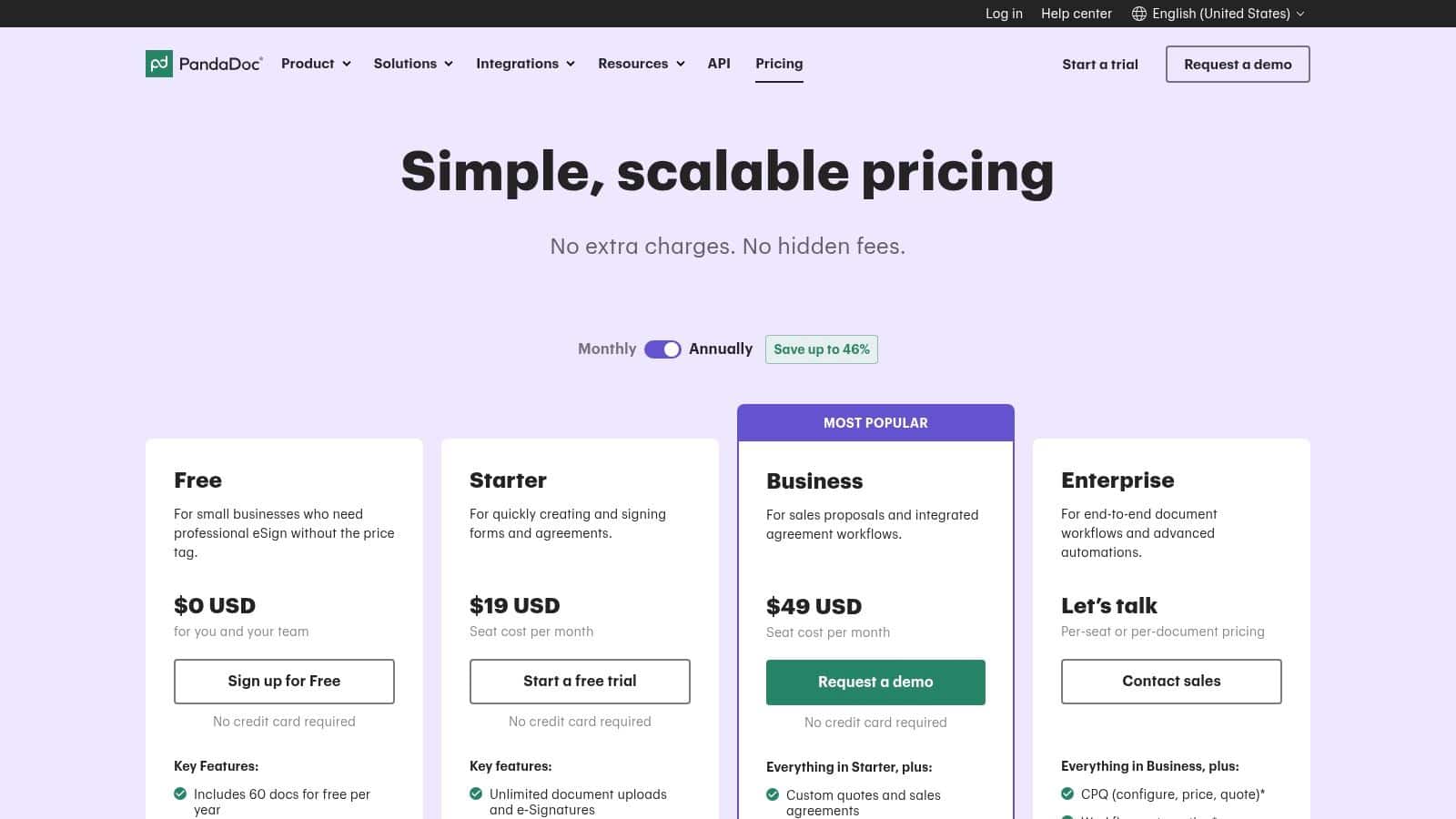
PandaDoc is the kind of proposal platform people choose when they want a clean document workflow without giving up structure. It’s strong for proposals, quotes, contracts, and e-signatures, and it works especially well when pricing tables and CRM-connected fields matter more than flashy presentation. The product fits teams that need a polished buyer experience but still care about speed in the back office.
Best when document workflow is the job
PandaDoc’s strengths show up once the proposal needs to behave like a business process. It supports interactive pricing tables, product catalogs, and deal-room-style collaboration, and its CRM connections make it a reasonable fit for teams already living in Salesforce, HubSpot, or Pipedrive. That lines up with how modern proposal software is being used, as a connected step in a larger sales process rather than a file you email and hope for the best.
The trade-off is that once you move into advanced automation or enterprise CPQ, the product gets more complex. That’s not a dealbreaker if you need depth, but it does mean smaller teams should be honest about what they’ll use. If the main goal is to get contracts approved and proposals out the door without adding another set of disconnected tools, PandaDoc is a solid middle ground. If your team also wants broader reporting, you can browse agency reporting options and compare what should live in the proposal tool versus what should live in the rest of the stack.
3. Proposify
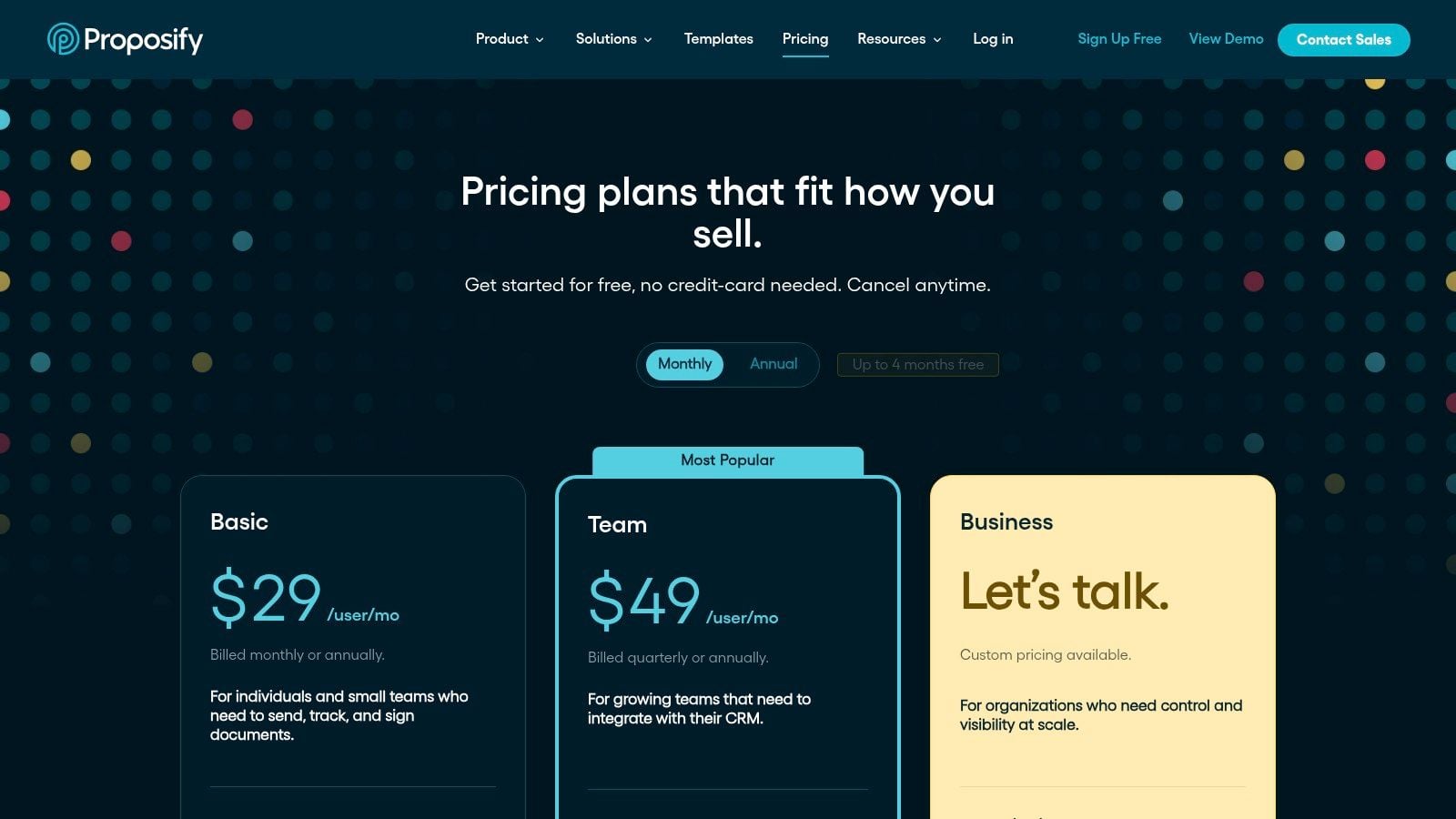
Proposify is built for teams that want governance as much as they want speed. It’s proposal-first, which matters if you’ve ever watched multiple teammates edit the same deck and accidentally break formatting, brand consistency, or legal language. The product’s real value is control, roles, permissions, locked elements, and reusable content make it easier to keep proposals clean across a team.
Governance beats chaos in team selling
That’s why Proposify works well for agencies and sales teams that can’t afford loose document handling. It offers real-time engagement notifications, a content library, interactive quoting, and support for multiple workspaces. Those features line up with the category’s broader shift toward visibility and workflow control, not just document output. And because the market has grown so much, more buyers now need process discipline than they need another template library.
Proposify also makes sense when brand consistency is essential. If your team sends many similar proposals, template reuse and element locking will save more time than a fancy layout ever will. The limitation is straightforward: some premium features sit higher in the plan stack, so you’ll want to confirm whether the setup you need is included. For teams trying to design a cleaner agency stack, it’s worth comparing the tool with the broader guidance on how to bundle tools with HighLevel, especially if you’re trying to cut redundant subscriptions rather than add another one.
Proposify is strongest when proposal quality depends on process discipline, not just design talent.
4. Qwilr
Qwilr wins when the buyer experience needs to feel modern immediately. Instead of looking like a static attachment, proposals feel more like web pages, with embedded media, quote tables, and a cleaner path to acceptance. That design-forward approach is useful when presentation quality affects trust, especially in services businesses where the proposal itself is part of the pitch.
Good for polished, interactive selling
The practical advantage is that Qwilr doesn’t just format a proposal, it makes the proposal easier to engage with. Its interactive quote tables, ROI calculator, and one-click accept flow are a strong fit for teams that want to reduce friction at the decision point. That matters in a category where timing and structure influence outcomes, because proposals sent quickly and presented clearly tend to move better through the sales process (sales proposal statistics overview).
The catch is that the product is more opinionated about presentation than some teams want. It’s excellent if your brand and buyer experience benefit from a web-native look, but less ideal if you want a simple, low-maintenance quoting system. Also, some automation and API usage has usage-based complexity, so it’s worth mapping your actual proposal volume before you commit. Qwilr is one of those tools that can make a small team look far more polished than it is, which is useful as long as you’re okay with the workflow it requires.
5. Better Proposals
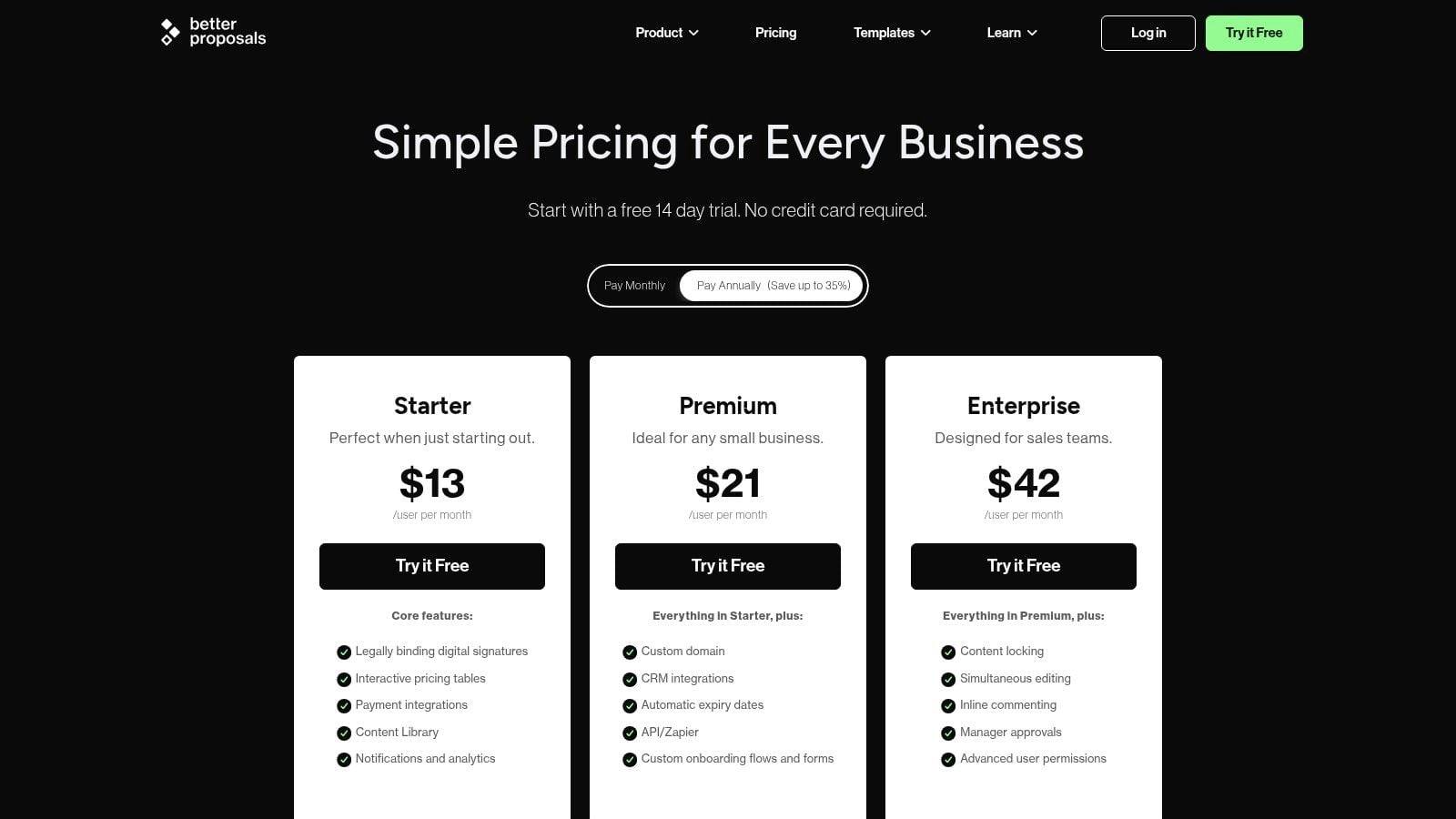
Better Proposals is the fast-moving, template-driven option on this list. It suits teams that want attractive proposals without spending half a day learning a new editor. The interface is approachable, the templates are a big part of the appeal, and it’s especially comfortable for agencies and freelancers who send similar offers over and over.
Speed and presentation without heavy setup
This is the kind of tool you use when you want the proposal to look consistent on day one. Better Proposals supports interactive pricing tables, content blocks, live collaboration, and CRM links, so you can build a repeatable process without starting from scratch every time. That’s valuable because proposal software now has to do more than look nice, it has to support real workflow movement, tracking, and follow-up.
The main trade-off is that some branding controls sit higher up the plan ladder, so teams that need deep white-label flexibility should check the fine print. If you’re a small operator who mainly wants quicker proposal production and a cleaner client-facing experience, Better Proposals does that job well. If you’re trying to connect proposals to broader sales operations, it may be enough on its own for a while, but it won’t replace a fuller business system. That’s the difference between a focused tool and a connected stack.
6. GetAccept
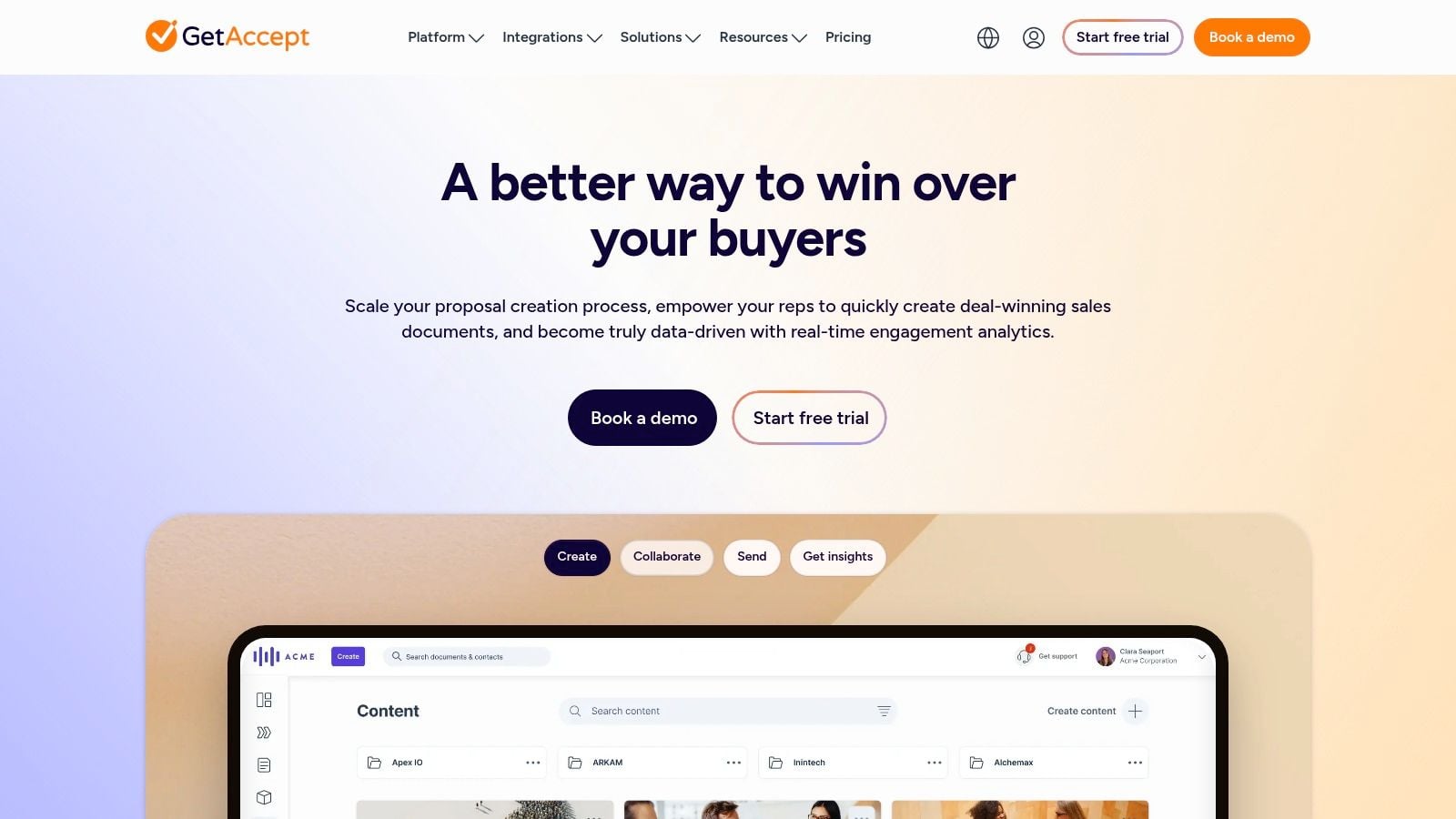
GetAccept is a good fit for teams that treat proposal software as part of the sales conversation, not the last step before signature. Its positioning around Digital Sales Rooms, live chat, video blocks, CPQ, and CRM workflows makes it especially relevant for longer, more collaborative deals where buyers need more than a PDF and a signature line. The product leans into engagement, which is exactly where the category has been heading.
Engagement data is useful, but only if you interpret it well
Tracking matters, but it’s easy to overread it. Sources on proposal software keep emphasizing opens, page views, and forwarding activity, but those signals are only useful when they help a rep time the next move, not when they’re mistaken for buying intent (proposal software guidance). GetAccept is strong because it gives you those signals inside a broader interaction layer, so follow-up can happen in context instead of through guesswork.
If you want a deeper look at how this kind of stack fits into CRM-led selling, the overview of AI-powered CRM platforms 2026 is worth pairing with your proposal evaluation. GetAccept’s biggest advantage is that it reduces the gap between proposal delivery and actual deal progression. The downside is that many advanced capabilities live in higher tiers, so teams should be clear about whether they want a digital sales room or just a faster quote-and-sign flow.
7. Nusii
Nusii is for teams that want proposal software to stay out of the way. It’s lightweight, easy to learn, and aimed at freelancers, agencies, and smaller businesses that care more about moving quickly than configuring a large system. That simplicity is the point.
A practical choice for straightforward selling
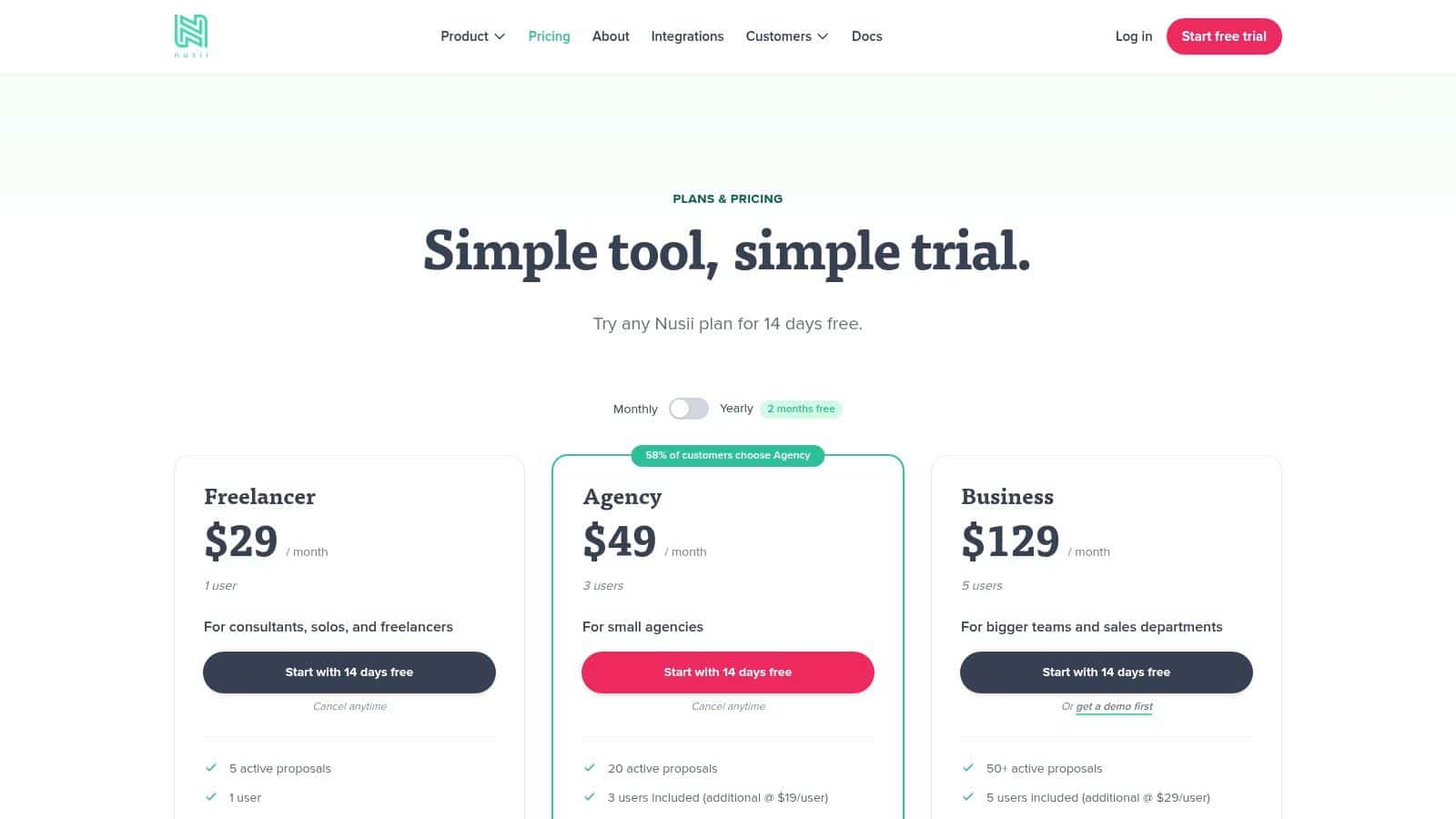
Nusii gives you templates, a content library, notifications, analytics, and e-signatures without turning the process into a project. It also supports custom domains and branding controls at higher levels, which makes it easier to keep client-facing work polished. For small teams, that combination can be enough, especially if the business doesn’t need heavy workflow automation or enterprise governance.
The limitation is equally clear, this isn’t the place to go if you need deep customization, complex versioning, or broad operational coordination. Nusii works best when the proposal itself is the main event and the rest of the sales stack is relatively simple. The fact that the plan structure is easy to understand is part of the appeal. You know what you’re getting, and you’re less likely to spend a week setting up a tool that only needs to send three proposals a month.
8. QuoteWerks
QuoteWerks is the heavy-duty option here. It’s better suited to CPQ, quoting, approvals, and procurement-adjacent workflows than to simple proposal aesthetics. If you sell complex products or services, especially in IT, AV, MSP, or manufacturing environments, QuoteWerks deserves serious attention.
Strong when the quote is technically complex
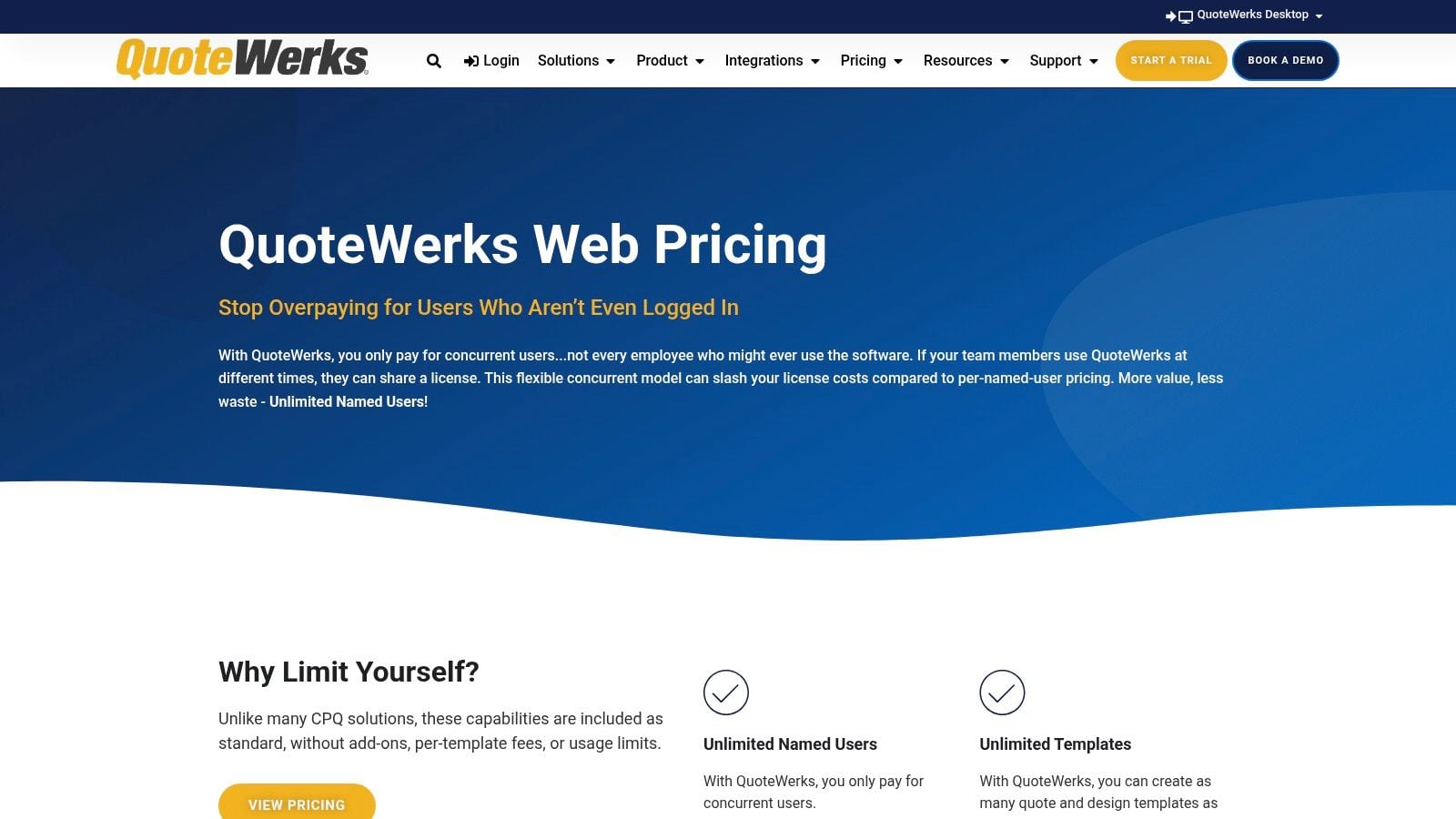
Its strength is configurability. You get bundles, optional and substitute items, approval workflows, and integrations with CRM, PSA, accounting, and vendor data feeds. That makes it a real fit for organizations where the quote has to align with inventory, margins, or procurement rules rather than just a sales conversation. In categories like this, proposal software is not just for persuasion, it’s part of the order-accuracy problem.
The trade-off is usability. QuoteWerks is more complex than lightweight tools, and that complexity is the price of its depth. If your team wants broad template freedom and a stronger link between quoting and downstream systems, it’s a serious contender. If you only need a slick proposal and a sign button, it’s probably more software than you need. For technical sellers, though, that depth is often exactly why it’s worth the friction.
9. Quotient
A small team that only needs a clean quoting flow can get a lot from Quotient. It keeps the process simple, so owners are not spending time on setup, training, or admin just to send a quote and get a signature back.
Simple quoting with low operational drag
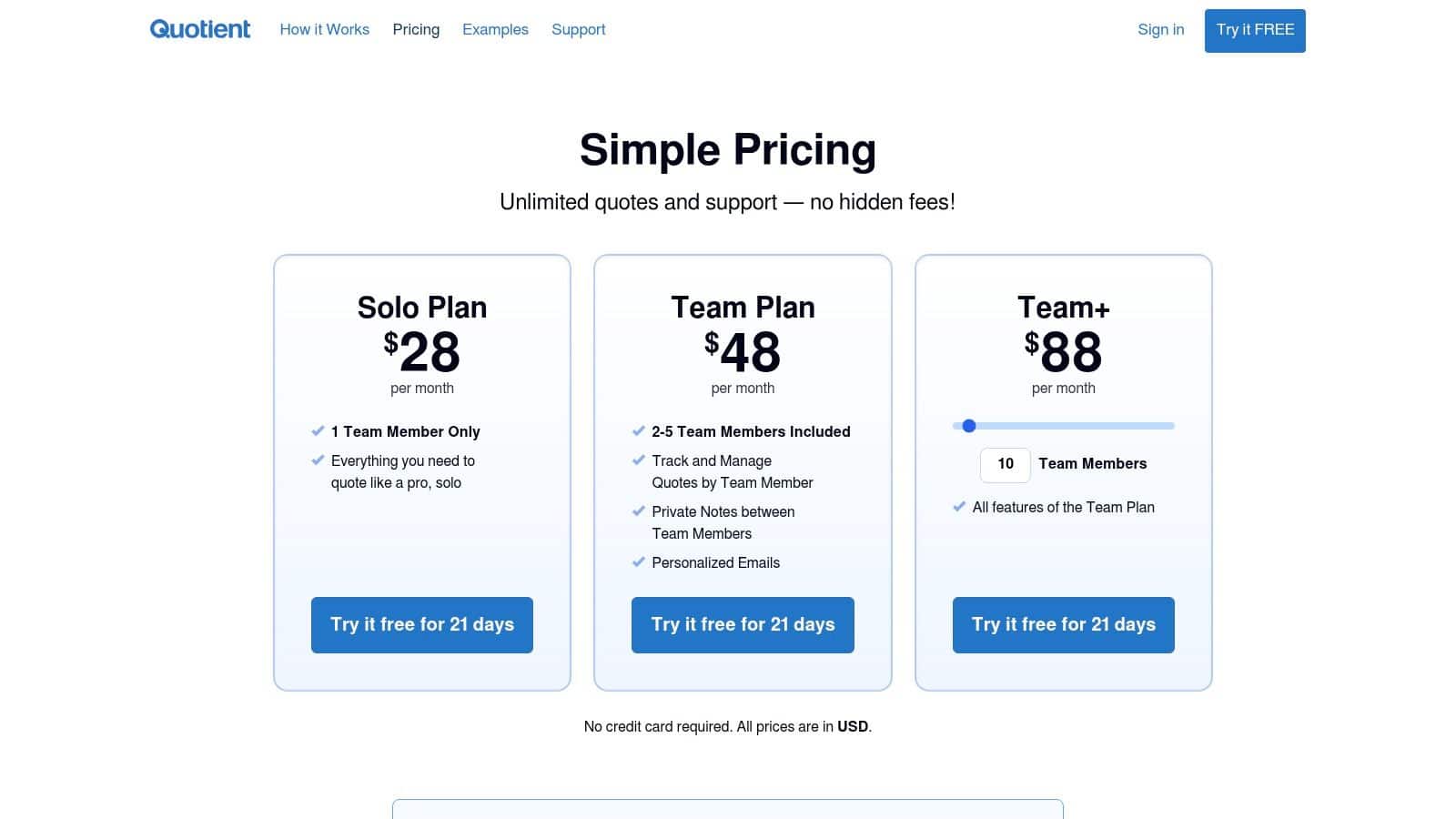
The product supports optional items, multiple-choice items, client Q&A, templates, lead capture forms, and follow-up automation. That mix gives buyers a little interaction without turning the process into a heavy build-out. For teams that only need to qualify a quote, present a clear offer, and keep the conversation moving, that kind of restraint is useful.
Quotient is not trying to cover the whole sales workflow, and that narrow focus is part of the appeal. It does not bring the deeper governance or wider integrations that larger suites offer, and that may be fine if your quoting process is the main problem you need to solve. For businesses that care about speed, clarity, and minimal overhead, a lighter tool can fit better than a broader platform. A lot of teams buy more software than their quoting motion needs, especially when the core requirement is a reliable way to send proposals and move on to the next deal.
10. Zomentum
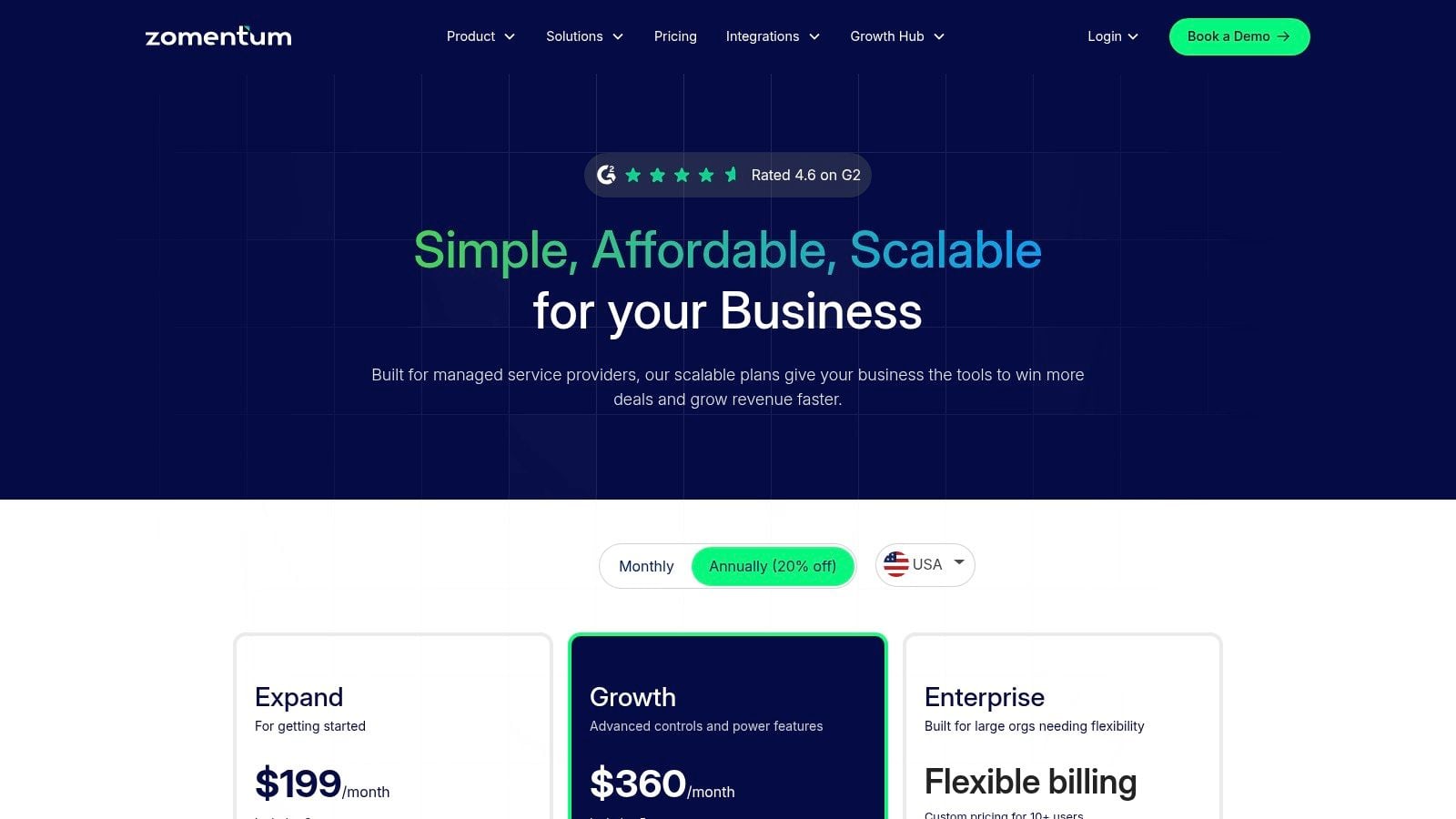
Zomentum is built for managed service providers and IT solution providers that want the quote-to-cash path to stay connected. It combines proposals, quotes, contracts, e-signatures, and payments, which is exactly what many service teams need when the sale doesn’t end at acceptance, it ends at billing and delivery.
Quote-to-cash for technical service businesses
The strongest reason to look at Zomentum is workflow continuity. It connects to PSA systems, accounting tools, distributors, and service catalogs, so the proposal doesn’t live in isolation. That matters for MSPs because manual handoffs between quoting, signing, invoicing, and fulfillment create avoidable delays and mistakes. If you’re already thinking about the best CRM tools for agencies, Zomentum is the kind of platform that makes sense when the CRM alone isn’t enough to keep the whole transaction moving.
The downside is that pricing and packaging are less transparent than some smaller tools, so you may need a sales conversation earlier than you’d like. Still, if your business depends on recurring service plans, approvals, and payment collection, Zomentum is much closer to an operations tool than a simple proposal app. That’s exactly why some teams prefer it.
Top 10 Proposal Software: Features & Pricing Comparison
| Product | Core focus | UX & Quality | Value / Pricing | 👥 Target audience | ✨ Unique selling points |
|---|---|---|---|---|---|
| GoHighLevel – The AI-powered business operating system 🏆 | All-in-one CRM, funnels, messaging, payments, memberships | ★★★★★, feature‑dense, mobile‑first | 💰 Mid–High; Unlimited plan for agencies, unlimited contacts | 👥 Agencies & SMBs seeking single workspace | ✨ AI across messaging/content/voice, unified inbox, paid calendars, unlimited sub-accounts |
| PandaDoc | Document workflow: proposals, contracts, CPQ | ★★★★☆, polished editor & templates | 💰 Per-seat; Business & Enterprise tiers (some features sales-only) | 👥 Sales teams & mid-market companies | ✨ Interactive pricing tables, Deal Rooms, strong CRM integrations |
| Proposify | Proposal-first builder, templates, governance | ★★★★☆, strong templates & controls | 💰 Per-seat; Team & Agency plans | 👥 Agencies & sales teams needing brand/governance | ✨ Granular permissions, real-time engagement notifications |
| Qwilr | Web-style, design-forward proposals with payments | ★★★★☆, excellent presentation quality | 💰 Mid; Growth/Scale seat minimums | 👥 Teams valuing polished buyer experiences | ✨ Web-page proposals, embedded media, ROI calculators |
| Better Proposals | Fast, template-driven responsive proposals | ★★★★☆, quick & consistent output | 💰 Low–Mid; quick onboarding | 👥 Agencies, freelancers, SMBs | ✨ Speed-to-proposal, live collaboration, inline commenting |
| GetAccept | Digital Sales Rooms + CPQ, buyer engagement | ★★★★☆, strong analytics & video/chat | 💰 Mid–High; many plans annual | 👥 Sales teams & enterprise sellers | ✨ Live buyer signals, Deal Rooms, CRM-embedded workflows |
| Nusii | Lightweight, fast proposal tool | ★★★☆☆, very approachable UI | 💰 Low; clear plan limits & trials | 👥 Freelancers & small agencies | ✨ Fast setup, simple branded proposals, low learning curve |
| QuoteWerks | Deep CPQ/quoting for complex products/services | ★★★★☆, powerful but steeper learning curve | 💰 Mid–High; web/desktop licensing options | 👥 MSPs, IT resellers, manufacturers | ✨ Advanced configurator, vendor feeds, QuoteValet delivery |
| Quotient | Simple online quoting & acceptance | ★★★☆☆, straightforward & fast | 💰 Low; transparent pricing, unlimited quotes | 👥 Owners/operators, SMBs needing minimal overhead | ✨ Fast quoting workflow, item library, automated follow-ups |
| Zomentum | Quote-to-cash for MSPs & IT solution providers | ★★★★☆, tailored MSP workflows | 💰 Mid–High; many enterprise items require sales | 👥 MSPs & IT solution providers | ✨ PSA/accounting integrations, built-in payments (ACH), AI writing for quotes |
From Proposal to Paid, Choosing Your Sales Workflow
Choosing the right proposal software isn't just about formatting documents better. It's about deciding how much of your sales process should live in one place, and how much friction you're willing to tolerate between proposal, signature, invoice, and payment. The tools above split into two camps, standalone point solutions that do one job well, and broader platforms that try to connect the whole workflow.
That distinction matters because the category has clearly expanded. Modern proposal platforms commonly include content libraries, CRM integration, e-signatures, and real-time tracking, and buyers increasingly expect proposals to sit inside the revenue stack rather than beside it (sales proposal statistics overview). The most valuable systems reduce handoffs, not just writing time. They make it easier for a rep to move from a conversation to a signed agreement, then to payment, without re-entering the same data three different times.
For many small teams, the hidden problem isn't proposal creation speed. It's the implementation burden that appears after the tool is added. The best-fit setup is the one that minimizes tool sprawl, manual handoffs, and switching costs, especially if your business already manages leads, booking, follow-up, and billing in a connected workflow (implementation and integration risk overview). That's where all-in-one platforms start to make more sense than another point solution, even if the point solution looks prettier in a demo.
HighLevel's appeal is that it places proposals and estimates inside a larger operating system, alongside CRM, communications, automation, booking, invoicing, and payments. That means a lead can be nurtured, quoted, signed, invoiced, and paid without bouncing across disconnected tools. If your team values operational simplicity and faster time to revenue, that architecture is often more valuable than a feature checklist.
If you're evaluating proposal software for an agency or service business, don't start with the document. Start with the workflow. Then check whether your shortlist helps you close faster without adding a second system to manage.
If you want a proposal system that sits inside your CRM, automates follow-up, and connects signing to payment, take a close look at HighLevel. It's built to reduce tool sprawl while keeping proposals, estimates, invoices, and communications in one place. For agencies and service teams, that usually means less chasing and a cleaner path from lead to paid client.
