


Are you still treating phone calls like a side channel, even though they're often the highest-intent leads in the pipeline? That's the conventional blind spot. Marketers obsess over clicks, forms, and chat widgets, but the moment someone picks up the phone, attribution often gets fuzzy, delayed, or lost.
That gap matters more now because call tracking has become a serious martech category, not a niche add-on. One market estimate places global call tracking software revenue at USD 3,661.26 million in 2025, rising to USD 4,090.36 million in 2026 and USD 11,090.39 million by 2035, which implies an 11.72% CAGR over the period, according to Industry Research Biz. That growth lines up with how modern systems work, they don't just forward calls, they use unique tracking numbers, caller location, device type, referral source, call duration, and disposition to connect phone activity back to campaigns, as described by Research and Markets.
The harder question for agencies and SMBs isn't whether call tracking exists. It's whether you need a dedicated tool, or whether an all-in-one platform can handle call attribution without creating another software stack to manage. That choice affects setup time, reporting quality, missed-call recovery, compliance, and how much operational work your team inherits after launch.
If you run local search, paid media, franchise campaigns, or lead gen for multiple clients, the best option usually comes down to how much detail you need, how fast you need it, and how much complexity you're willing to own. The tools below focus on practical trade-offs, not feature fluff, so you can pick a platform that fits the way your team works.
Table of Contents
- 1. CallRail
- 3. WhatConverts
- 3. WhatConverts
- 4. Invoca
- 5. Infinity
- 6. Nimbata
- 8. Ringba
- 8. Ringba
- 9. Marchex Marketing Edge and Conversation Intelligence
- 10. Ruler Analytics
- Top 10 Call Tracking Software Comparison
- From Blind Spot to Competitive Edge
1. CallRail
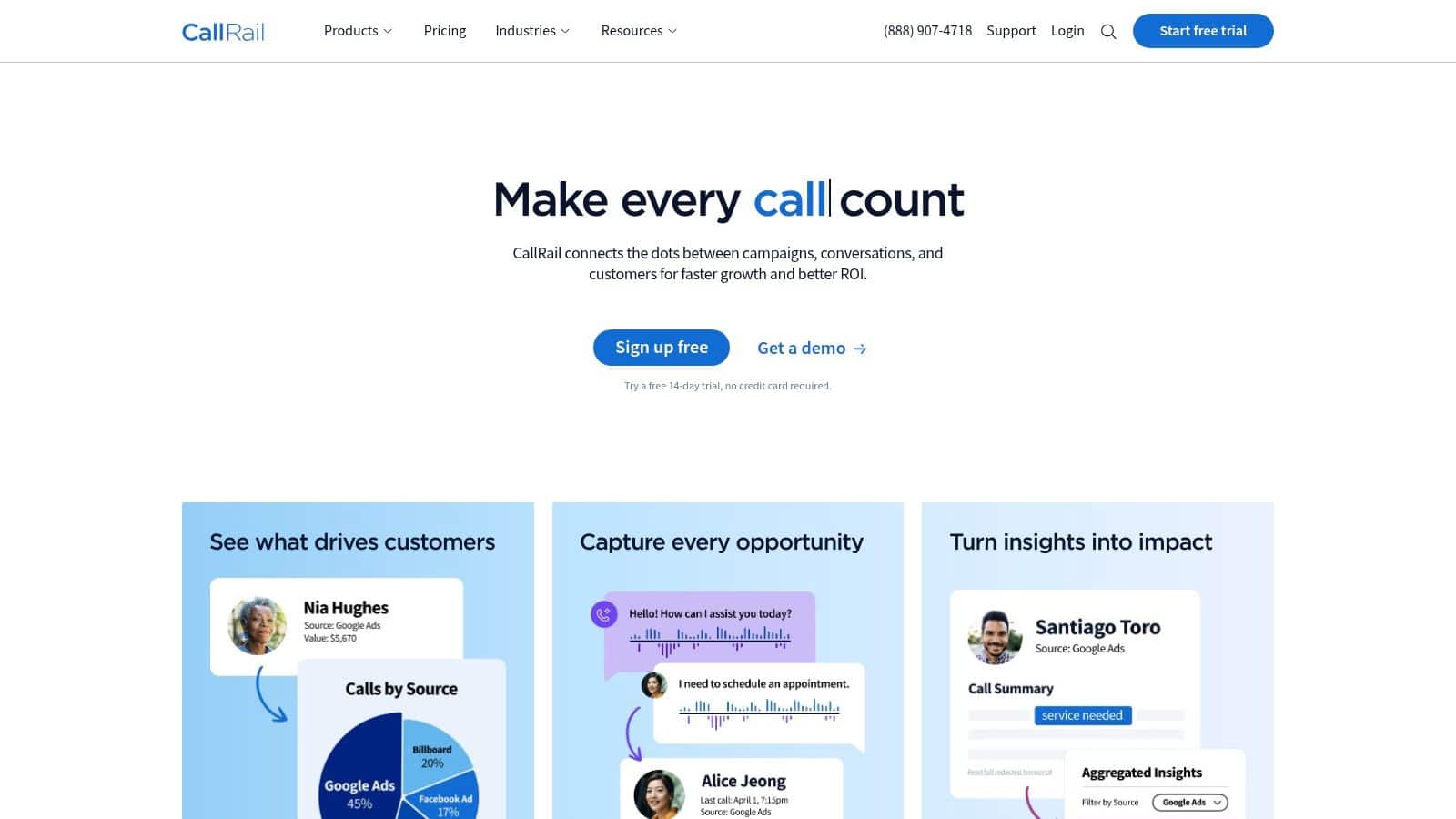
CallRail is usually the first platform agencies test because it gets the basics right without a long implementation cycle. It's built for dynamic number insertion, form tracking, call recording, and attribution reporting, and it also layers in AI conversation intelligence for transcripts, summaries, sentiment, and auto-tagging. For teams handling many local clients, that mix is valuable because it keeps reporting broad enough for marketers while staying simple enough for account managers to explain.
Its strongest case is speed. You can get from install to usable reporting quickly, and the integration list covers the systems agencies live in every day, including Google, Meta, HubSpot, and Salesforce. The platform also has healthcare-friendly options, including a BAA for customers who need it, which makes it easier to support regulated clients without bolting on separate compliance workflows. For missed-call follow-up, the agency guide to missed call recovery pairs well with what CallRail already captures.
Where CallRail fits best
- Agencies managing many local accounts: The reporting is easy to standardize across clients, so you're not rebuilding dashboards every time a new account comes on.
- Teams that want AI summaries without a data team: Transcripts and summaries help account managers review calls without listening to everything manually.
- Businesses that need quick attribution wins: DNI, source attribution, and form tracking cover the common use cases without a heavy operations lift.
The main drawback is cost creep. Metered minutes and numbers can add up when volume rises, and some users report surprise charges around API usage if nobody is watching consumption closely. That makes CallRail a strong fit when you want a polished, mainstream tool, but not always the leanest choice if your call volume is large and predictable.
3. WhatConverts
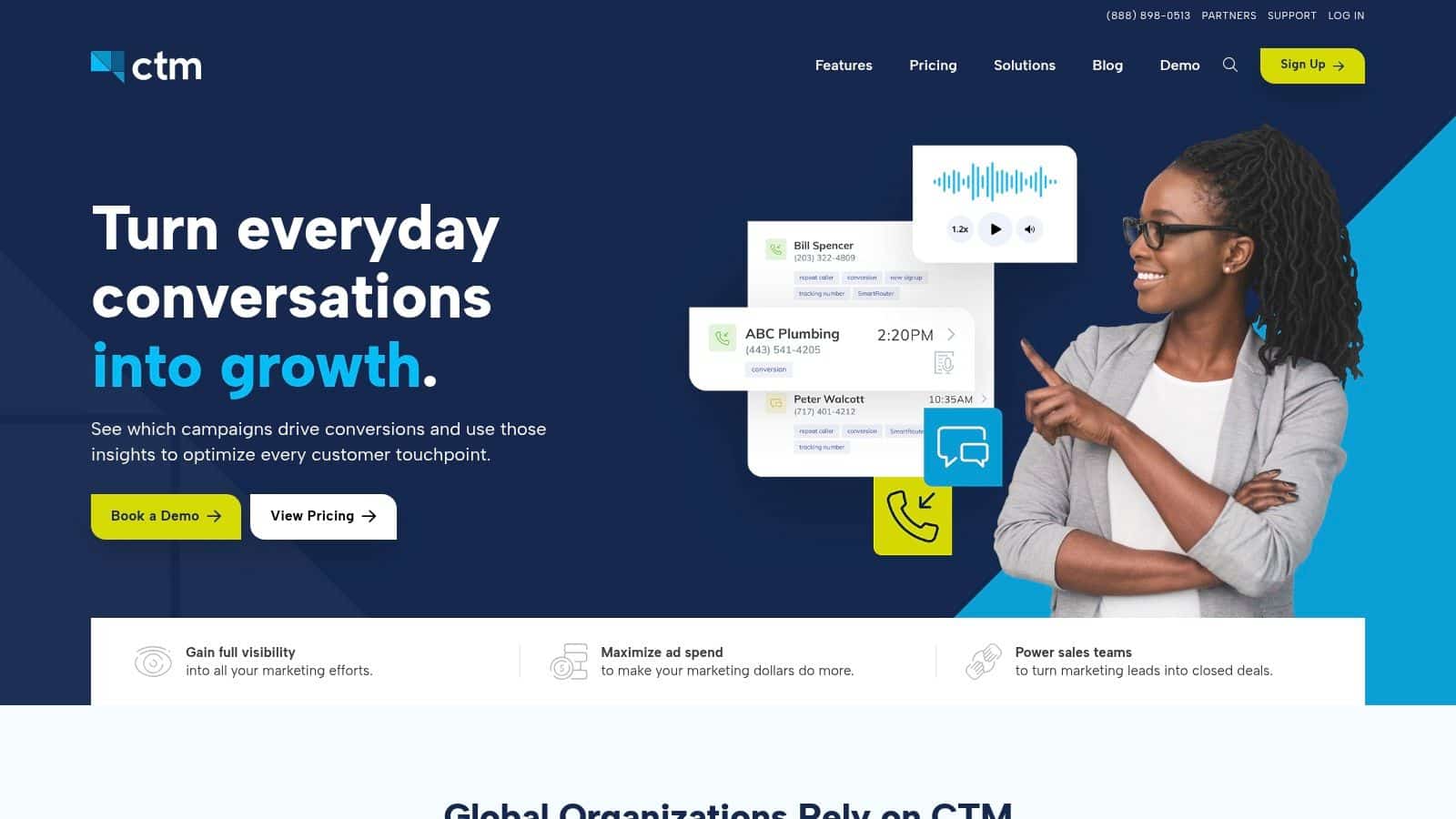
WhatConverts works well when a team needs calls, forms, chats, and even e-commerce activity tied to the same lead record. That matters because many agencies do not really have a call tracking problem. They have a conversion tracking problem. Calls are only one part of the pipeline, and WhatConverts is built to keep those channels together instead of sending your team to separate dashboards for each source.
The platform includes DNI, transcripts, recordings, AI lead summaries, keyword and intent detection, white-label options, and reporting that stays usable for agency work. Its pricing model is also easier to explain than some enterprise tools because usage is visible and the packaging is straightforward. That matters when clients want attribution they can understand, not a spreadsheet exercise.
For teams that want attribution tied to optimization work, the conversion optimization guide is a good companion read. WhatConverts works best when the team is not only counting leads, but also improving what happens after the lead arrives.
Why agencies like it
- Unified lead records: Calls, chats, and forms land in the same place, so reporting feels closer to a real funnel than a stack of separate reports.
- Agency-friendly reporting: White-label options and clean exports make it easier to present results to clients without rebuilding the same view every month.
- Useful for mixed-channel lead gen: If a campaign generates phone calls, web forms, and chat leads, the platform keeps the attribution story in one place.
The trade-off is that WhatConverts can feel broader than a team needs if the only goal is call tracking. That extra scope is helpful for agencies and SMBs that want one system for multiple lead types, but it also means you should confirm the workflow fits how your team reviews and qualifies leads. If your operation is call-heavy and simple, a more focused tool may be enough.
3. WhatConverts
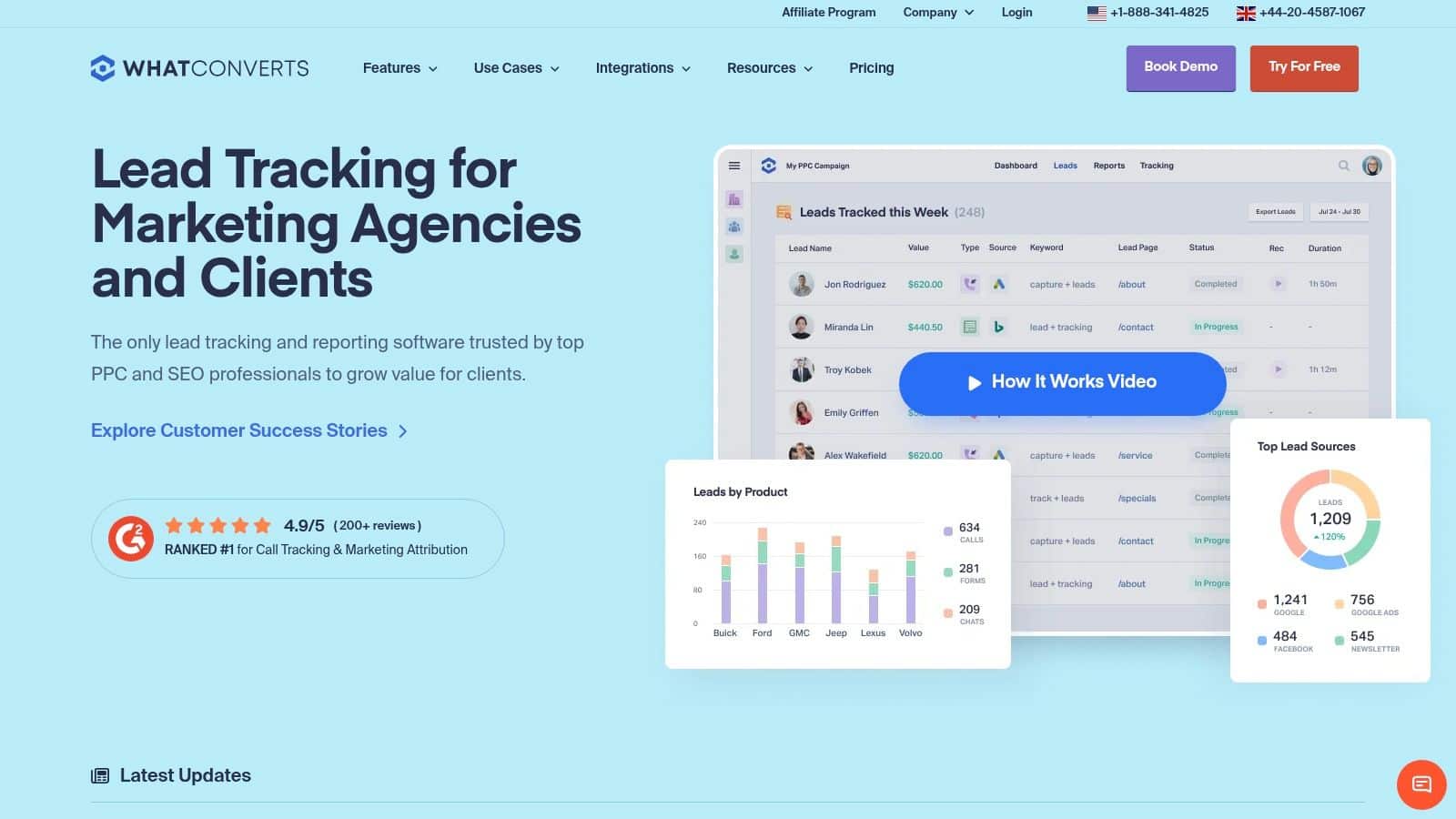
WhatConverts is one of the best choices when you want calls, forms, chats, and even e-commerce activity in one lead record. That unified structure matters because many agencies don't have a “call tracking” problem, they have a conversion tracking problem. Calls are just one part of the pipeline, and WhatConverts is built to keep those channels together instead of forcing you to compare separate dashboards.
The platform includes DNI, transcripts, recordings, AI lead summaries, keyword and intent detection, white-label options, and reporting that stays usable for agencies. Its pricing model is also easier to understand than some enterprise tools because usage is visible and the packaging is straightforward. That's a real advantage when you're explaining costs to clients who want attribution, not software archaeology.
If you're trying to connect attribution to conversion optimization, the conversion optimization guide is a relevant companion because WhatConverts works best when the team isn't only counting leads, but improving how those leads move through the funnel.
Why agencies like it
- Unified lead records: Calls, chats, and forms land in the same place, so reporting feels closer to a real funnel than a stack of disconnected events.
- Clearer usage visibility: If you're tired of guessing what a bill will look like, the calculator and rate structure help you plan.
- Simple packaging for clients: White-label reporting gives agencies a clean way to present results without building custom exports.
The downside is that usage can still climb quickly at scale, especially if you're processing a lot of answered calls. Some users also report VoIP interoperability issues, so it's worth testing your phone stack before you roll it out across every client. If your agency wants a practical multichannel tracker without jumping straight to enterprise complexity, WhatConverts is a strong middle ground.
4. Invoca
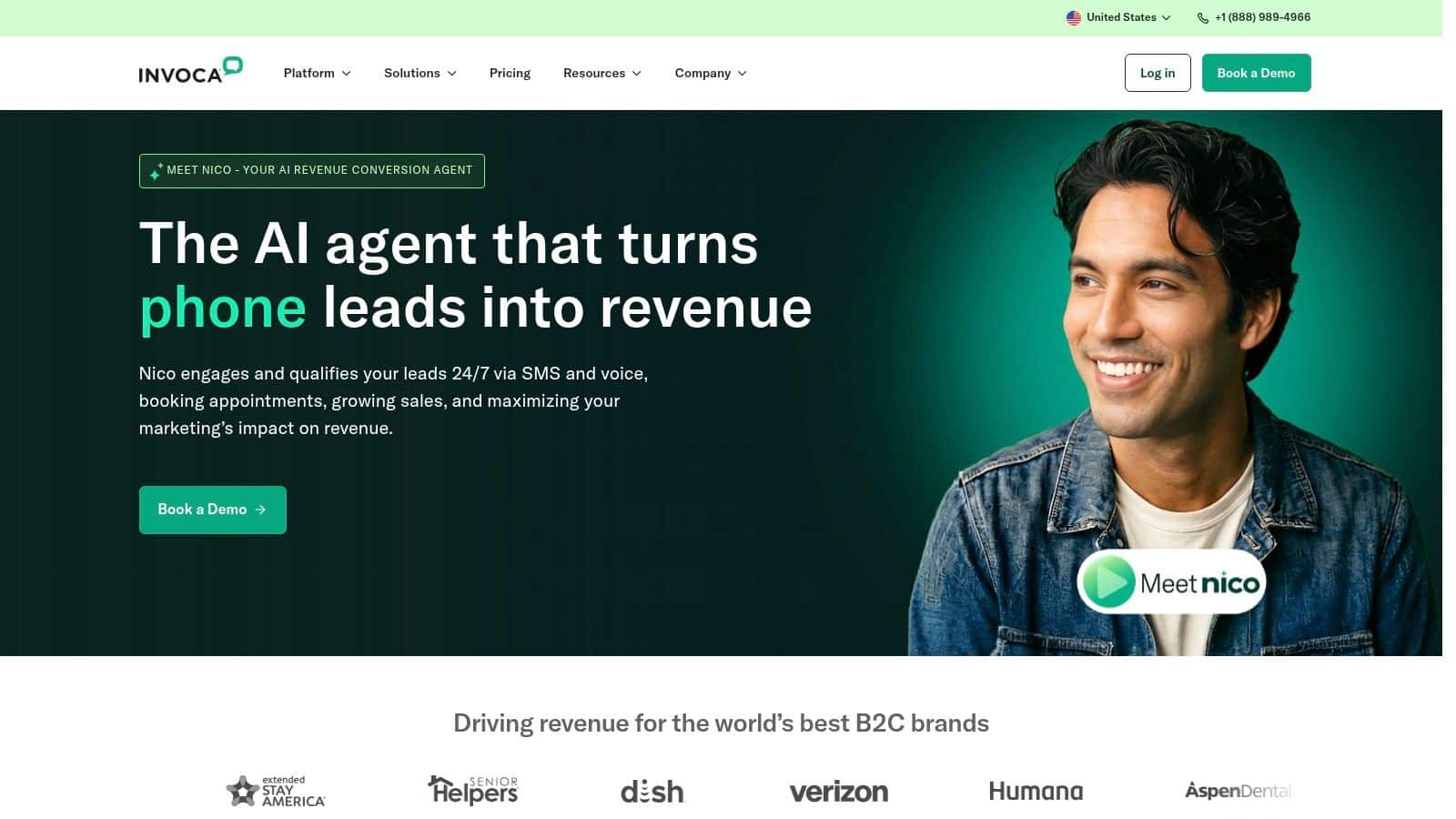
Invoca fits teams that need call intelligence, not just tracking. It is built around AI conversation analytics, outcome detection, digital-to-offline journey analytics, and integrations that turn first-party call data into something sales and marketing teams can use. For large B2C campaigns or a contact center with tight coordination requirements, the platform starts to make practical sense.
Its main value is broader than swapping numbers on landing pages. Invoca is designed to connect calls to revenue systems, so marketers can see how digital touchpoints lead to offline conversations and what happened after the call. That makes it a better match for companies with established data processes that want to add depth, rather than another dashboard to check.
The HighLevel CRM buyer's guide is worth a look for teams weighing where call data should live inside the customer system. The decision is often less about picking the most advanced tracker and more about deciding whether a dedicated platform belongs inside a broader CRM and operations stack.
Invoca makes the most sense when call tracking stops being a reporting problem and becomes a revenue operations problem.
The trade-off is implementation effort. Pricing is quote-based, and the total cost is usually too high for smaller businesses that only need basic attribution. It also requires coordination across marketing, operations, and analytics, since those teams usually all touch the rollout. That work is justified when call volume and revenue impact are high, but it is more platform than many local lead gen teams need.
5. Infinity
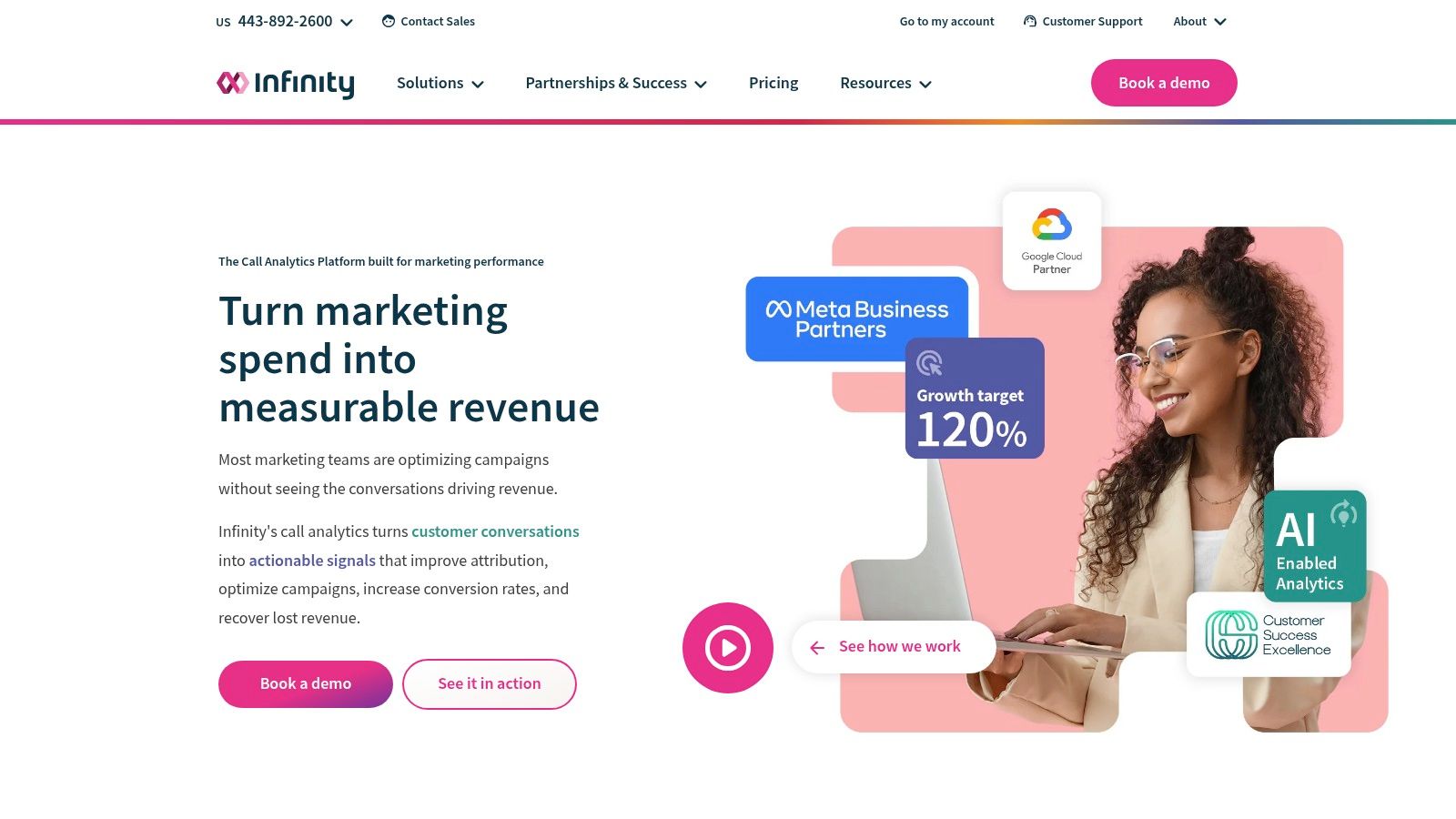
Infinity appeals to teams that want more than last-click attribution. Its focus is visitor- and session-level tracking, so the platform can connect keyword-level traffic to call outcomes and give marketers a clearer picture of how the full journey contributes to revenue. That's especially useful when you run search-heavy campaigns and need to understand which touchpoints create call intent, not just which ones happen right before the phone rings.
The practical value shows up in the reporting style. Instead of only showing that a call came from a campaign, Infinity is geared toward showing how the journey unfolded and which sources are worth doubling down on. It also integrates with tools like Google, Microsoft, Meta, and GA4, which matters if your reporting stack spans multiple ad ecosystems and analytics layers.
Best fit scenarios
- Multi-location advertisers: Session-level detail helps separate brand demand from location-level demand.
- Teams that need deeper keyword-to-revenue visibility: The reporting is stronger when attribution accuracy matters more than simple volume counts.
- Agencies with an analytics-minded client base: The integration stack fits teams that already use GA4 and platform-level reporting.
The downside is that pricing isn't fully public, and fair use policies add another layer to understand before rollout. The implementation also tends to be heavier than SMB-first tools, so it's better suited to teams that are comfortable investing in setup and ongoing reporting hygiene. If you want journey-level detail and you can support the rollout, Infinity is a strong dedicated option.
6. Nimbata
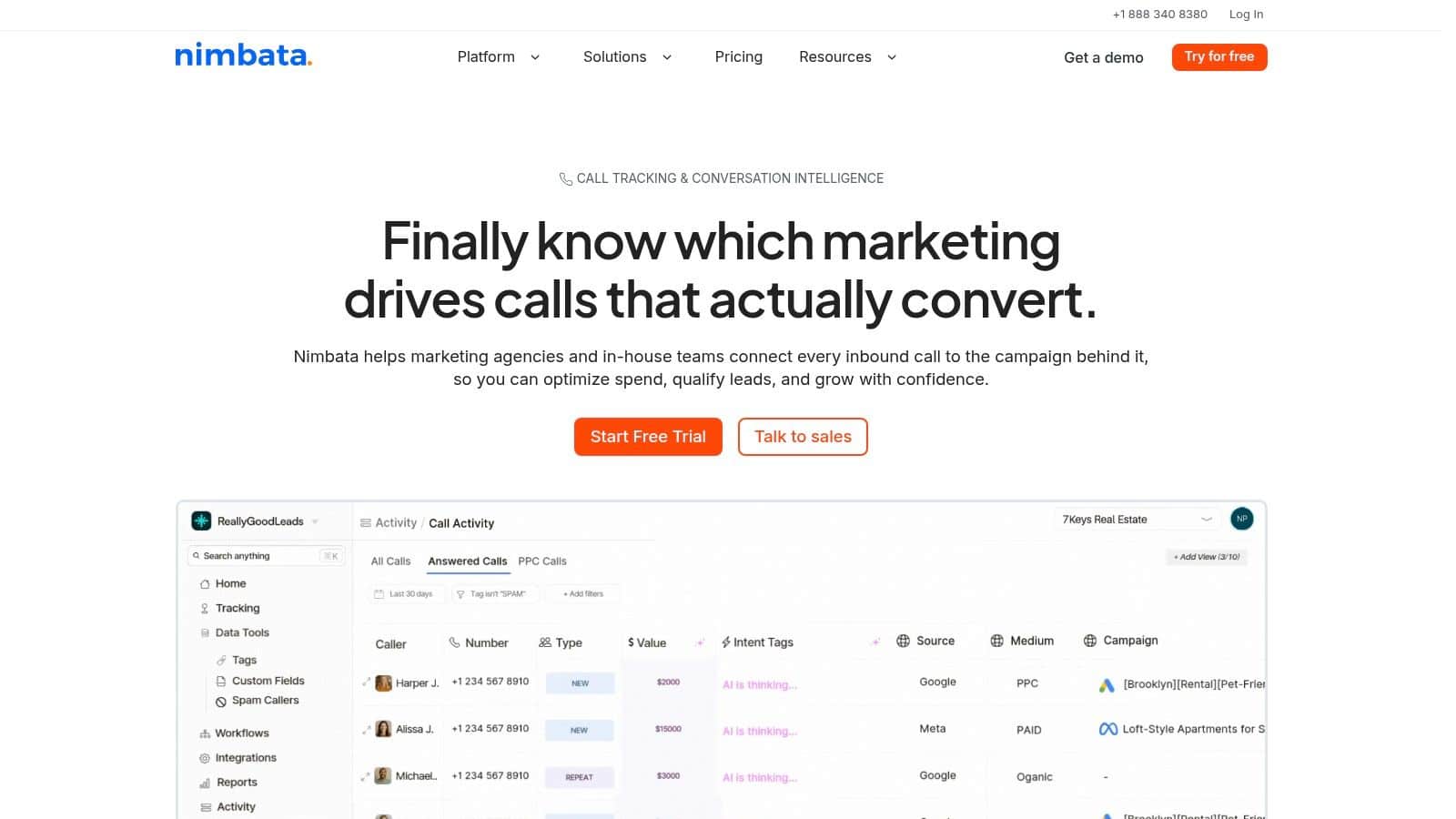
Nimbata stands out because it addresses a pain point many agencies feel, predictable billing. Its per-answered-call model in the U.S. gives businesses a clearer sense of what they're paying for, which is useful when call volume fluctuates and minute-based billing becomes harder to forecast. For agencies, local service brands, and campaigns that generate a lot of real calls, that can remove a lot of budget anxiety.
The tool still covers the essentials well, with DNI, AI tagging and scoring, Google Ads and GA4 integrations, outbound tracking, and agency workflows with unlimited seats. That combination matters because it lets teams close the loop on callbacks instead of treating outbound follow-up as a separate system. It's especially practical for businesses that want a cleaner billing model without giving up the ability to track campaign quality.
If your clients hate unpredictable call tracking invoices, Nimbata is worth testing early.
The trade-off is ecosystem scale. It's still usage-based, so numbers and add-ons can affect cost, and it doesn't have the same market visibility as bigger U.S. brands. That doesn't make it weaker, it just means buyers should pay attention to support expectations, integrations they rely on, and whether the billing model matches their service mix. For agencies that value predictability, Nimbata is one of the more practical dedicated choices.
8. Ringba
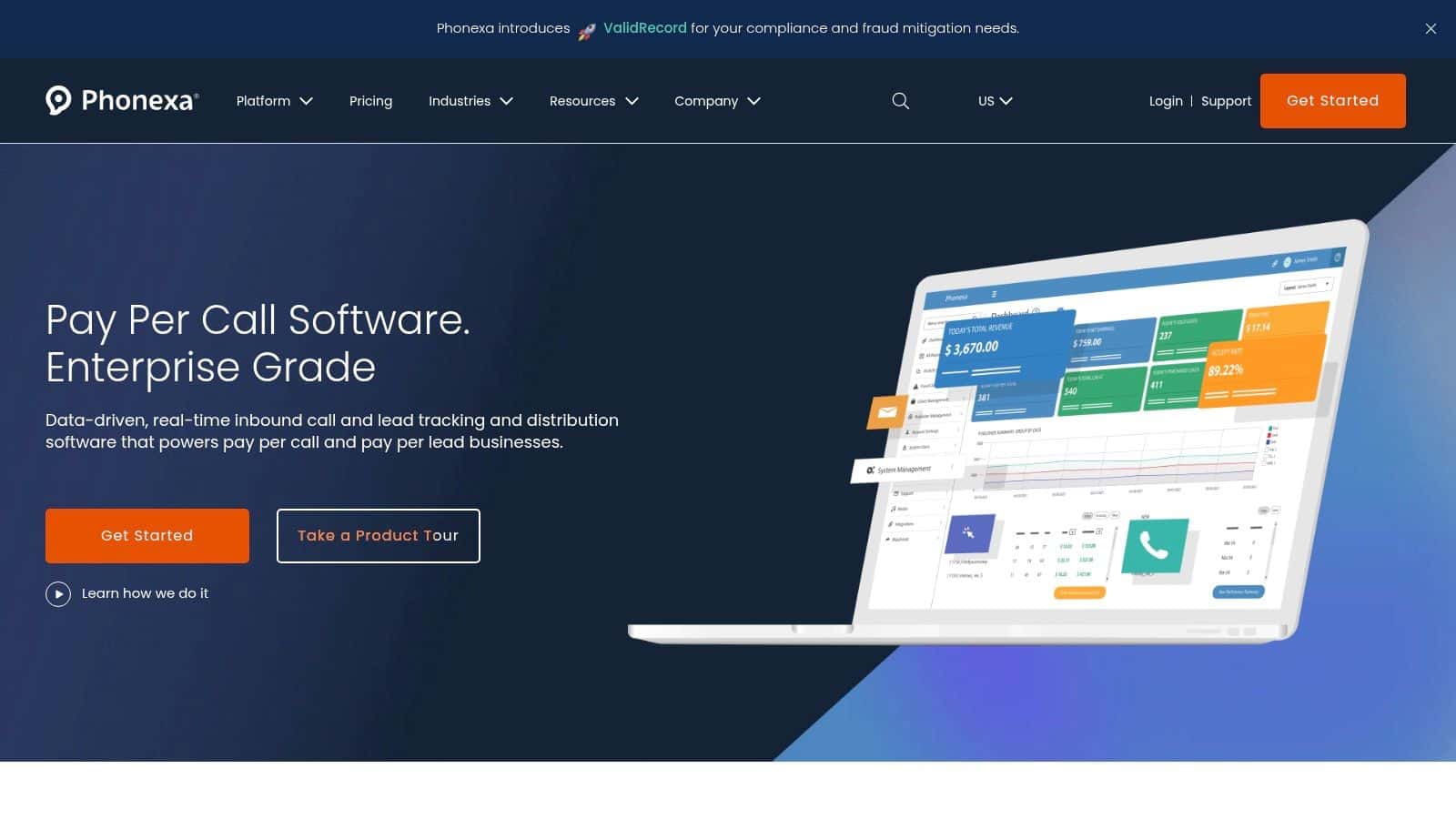
Ringba fits teams that manage call operations in real time and care about the economics behind each call. It includes call tracking, routing, ping trees, pay-per-call tools, white-labeling, instant caller profiles, and a TCPA Shield add-on for compliance. The platform is also known for metered pricing that is easy to understand, which matters if you want to see how usage affects cost without waiting through a long sales process.
The practical value shows up in the day-to-day work. Affiliate teams and lead sellers can route calls quickly, compare campaign performance as it happens, and set rules for who receives each call. That makes Ringba a better fit for operators who actively shape call flow instead of just reviewing reports after the fact. The starter tier also gives teams a way to test the platform before committing to a larger rollout.
For agencies comparing specialized tools with broader stacks, the question is whether Ringba's control is worth the setup work. A smaller SMB that only needs source attribution may find the configuration more detailed than necessary. A lead buyer or performance marketer running higher-volume campaigns may see that extra structure as the point, especially when routing rules and monetization logic need to stay tightly connected.
What works and what doesn't
- Works well for high-volume marketers: The routing and pay-per-call tools are built for speed and optimization.
- Works well for compliance-sensitive teams: The TCPA-oriented add-on gives risk-aware operators another layer to consider.
- Doesn't fit every SMB: The configuration depth can feel technical if you just want basic source attribution.
That trade-off is the main reason Ringba is not a universal fit. If your team needs simple tracking for a local service business, the setup can feel heavier than the job requires. If your model depends on routing logic, pay-per-call economics, or compliance controls, Ringba gives you the flexibility to handle that work without forcing it into a lighter reporting tool.
For agencies deciding between a dedicated platform and an all-in-one system like HighLevel, Ringba makes the strongest case when call operations are part of the revenue model itself. Teams that also need a structured way to review call quality after the fact may pair the platform with a content analysis guide to judge whether the calls they are buying or sending are worth the spend.
8. Ringba
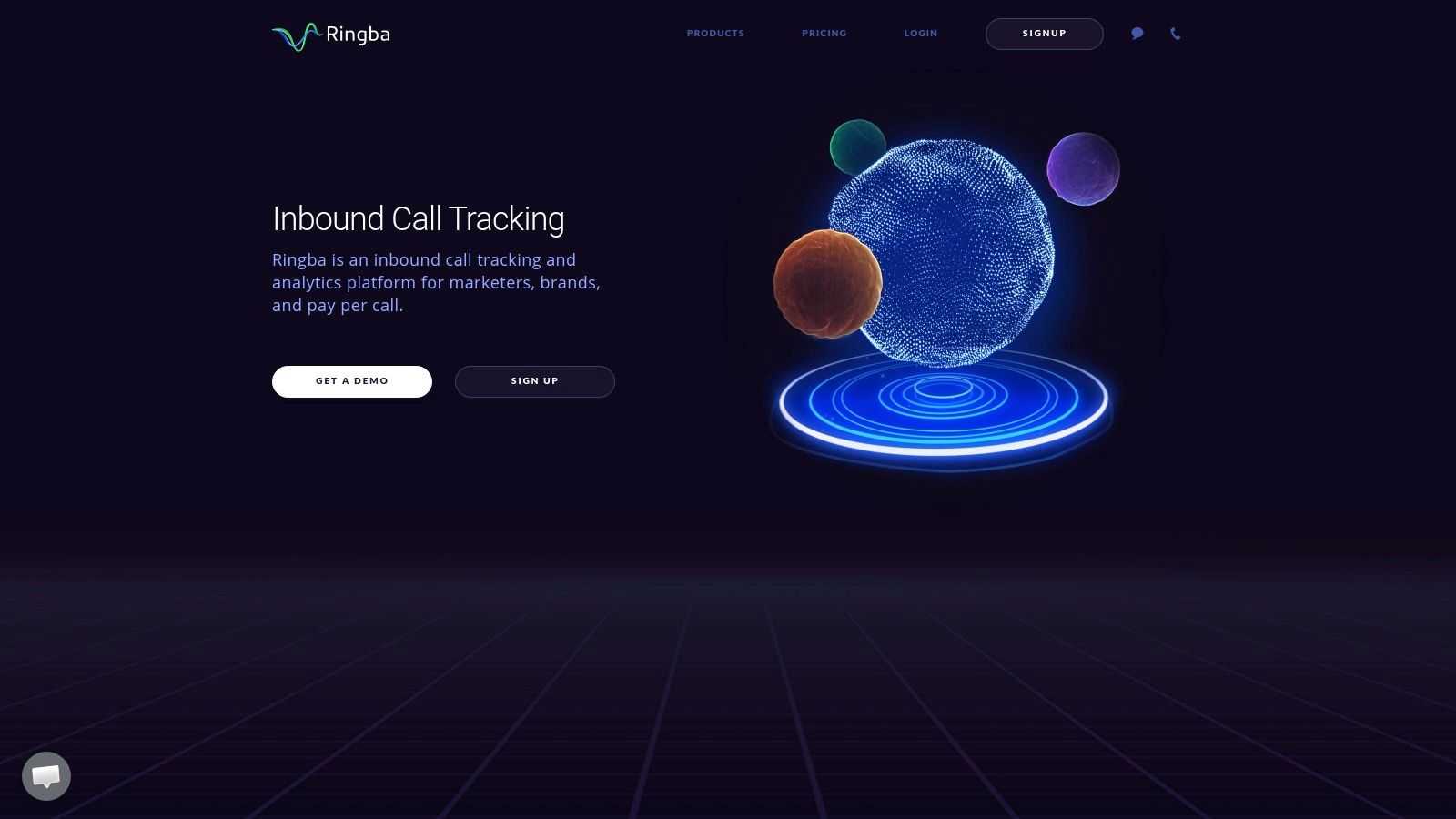
Ringba is a strong choice for teams that care about real-time call operations and performance marketing economics. It gives you call tracking, routing, ping trees, pay-per-call tools, white-labeling, instant caller profiles, and a TCPA Shield add-on for compliance. The platform has a reputation for being transparent about metered pricing, which appeals to teams that want to understand their cost structure without waiting for a sales call.
This is a platform for people who actively manage call flow, not just report on it. Affiliate teams and lead sellers can use Ringba to move calls through routing logic quickly, compare campaign performance in real time, and control who gets the call based on rules they define. The $0/mo starter tier also makes it easier to test the platform without committing to a large initial spend.
What works and what doesn't
- Works well for high-volume marketers: The routing and pay-per-call tooling are built for speed and optimization.
- Works well for compliance-sensitive teams: The TCPA-oriented add-on gives risk-aware operators another layer to consider.
- Doesn't fit every SMB: The configuration depth can feel technical if you just want basic source attribution.
That technical complexity is the main downside. If you're not running pay-per-call workflows or advanced routing, Ringba may be more than you need. But for teams where calls are inventory, not just leads, it's a powerful operating environment.
9. Marchex Marketing Edge and Conversation Intelligence
Marchex is aimed at larger teams that want conversation intelligence, quality assurance, and verticalized call tracking without completely rebuilding their current number setup. Its advantage is maturity. It supports both Marchex-managed numbers and existing setups, so businesses don't always need to port everything just to get better reporting and AI-driven insights.
The platform is especially useful in verticals like auto, healthcare, and multi-location businesses because its playbooks and analytics are built for those environments. That matters when the same call patterns keep repeating across locations or when QA teams need more than a simple transcript. The system focuses on outcome detection, agent performance, and trend analysis, which makes it more useful for sales enablement than a basic tracker.
There's also a useful research angle here. The content analysis guide is worth reading if your team wants to understand how transcript-heavy platforms turn call data into structured insights rather than just recording archives.
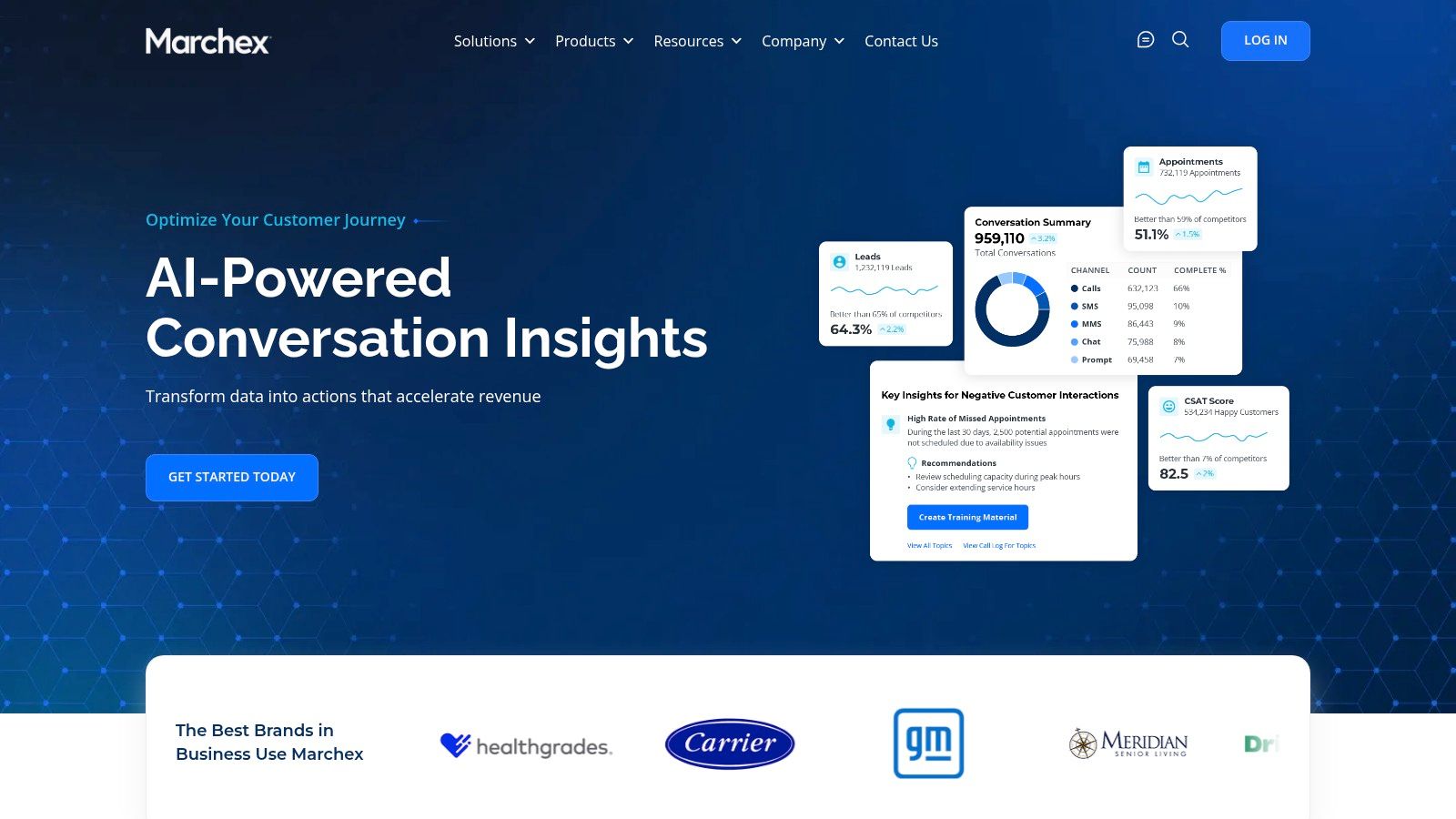
The trade-off is overhead. Pricing is not public, enterprise contracts are typical, and the platform has more weight than lightweight SMB tools. That's fine if you need analytics depth and verticalized workflows, but it's a bad fit if your team just wants a fast attribution layer. Marchex is strongest when call quality, coaching, and campaign insight all need to live in the same system.
10. Ruler Analytics
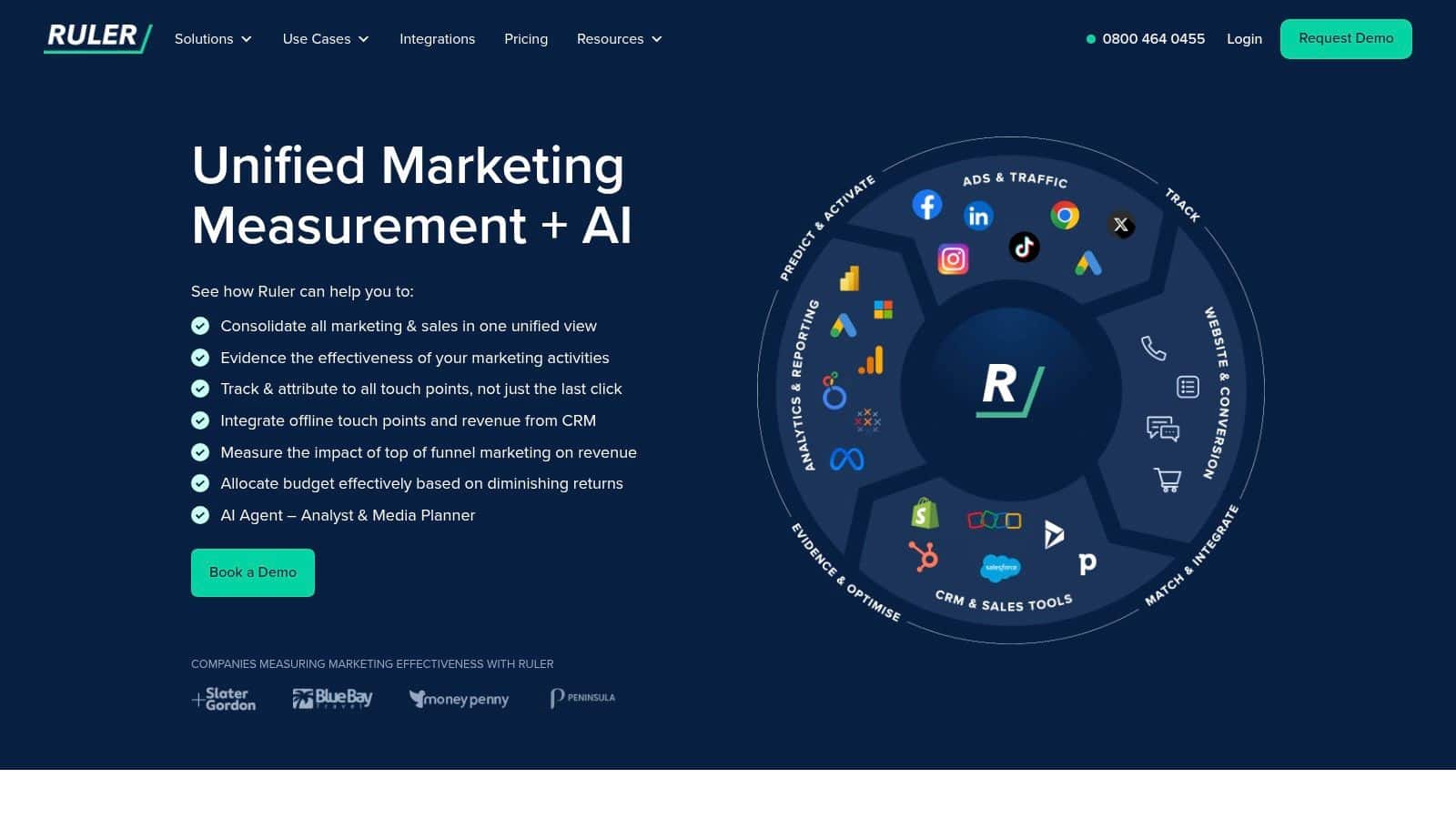
Ruler Analytics is a strong fit for teams that want call tracking to feed a larger attribution model. It combines dynamic call tracking, multi-touch attribution, CRM revenue linking, and marketing reporting, so the output is less about isolated call data and more about closed-loop ROI. Agencies and multi-location advertisers tend to like it when they need to connect spend, pipeline, and revenue without relying on separate spreadsheets.
Its bigger value is how it bridges marketing and sales. If your team already uses CRM and analytics tools heavily, Ruler can slot into that stack and make call data part of the wider reporting picture. That's especially useful when decision-makers want to see how lead sources behave after the first call, not just which ad triggered it.
For buyers who want a broader view of analytics tooling, the browse analytics features page is a useful reference point because Ruler is strongest when reporting architecture matters as much as lead capture.
Why it's a strategic choice
Ruler is not the cheapest path, and it scales with traffic volume, so teams should expect more cost and more implementation effort than with a basic call tracker. That extra effort is worth it when attribution accuracy affects budget allocation, media planning, or executive reporting. It's less attractive if you only need number swapping and call recordings.
The platform also broadens the conversation beyond phone calls by supporting deeper attribution logic and MMM options on higher tiers. That makes it more suitable for teams that have moved past “how many calls did we get?” and now need to answer “which channels created revenue, and how should we invest next?”
Top 10 Call Tracking Software Comparison
| Product | Core features ✨ | Unique selling points 🏆 | Target audience 👥 | Pricing / Value 💰 | UX / Quality ★ |
|---|---|---|---|---|---|
| CallRail | ✨ DNI; call transcripts & AI insights; form tracking; wide integrations | 🏆 Fast deployment; broad 3rd‑party ecosystem; HIPAA/BAA option | 👥 Agencies & local SMBs | 💰 Usage-based (minutes/numbers), can spike at scale | ★★★★ |
| CallTrackingMetrics (CTM) | ✨ DNI; built‑in softphone/agent app; advanced routing; AI analytics | 🏆 Robust routing, reseller/markup tools; ops-focused | 👥 Performance marketers & multi-seat agencies | 💰 Plan + numbers + minutes, pricing complexity | ★★★★ |
| WhatConverts | ✨ Calls, forms, chats & transactions unified; AI summaries | 🏆 Simple multichannel UI; clear usage pricing & white‑label | 👥 Agencies & SMBs needing unified conversion tracking | 💰 Transparent per-minute/number rates; low entry | ★★★★ |
| Invoca | ✨ AI conversation analytics; journey & outcome detection; APIs | 🏆 Enterprise-grade attribution & deep analytics | 👥 Large B2C brands & contact centers | 💰 Quote-based; higher TCO for SMBs | ★★★★ |
| Infinity | ✨ Visitor/session-level DNI; keyword → revenue attribution; analytics | 🏆 Session-level journey insights; strong integration set | 👥 Enterprises & agencies needing session detail | 💰 Not fully public; fair‑use policies may apply | ★★★★ |
| Nimbata | ✨ Per-answered-call billing; DNI; AI tagging; outbound tracking | 🏆 Predictable per-call pricing; agency plan with unlimited seats | 👥 Agencies & local service businesses | 💰 Flat per-answered-call = predictable; usage/add-ons apply | ★★★★ |
| Phonexa (Call Logic) | ✨ Real-time call tracking & routing; drag‑drop IVR; pay‑per‑call tools | 🏆 Purpose-built for performance marketing; managed services | 👥 Performance marketers & pay‑per‑call networks | 💰 Custom/quote, suited to high-volume ops | ★★★½ |
| Ringba | ✨ Call tracking; ping trees; pay‑per‑call management; TCPA add‑ons | 🏆 Transparent metered pricing; $0 starter tier; optimized for volume | 👥 Affiliates & high-volume performance marketers | 💰 Low per-minute/number rates; metered & transparent | ★★★★ |
| Marchex | ✨ DNI; extensive conversation intelligence; outcome & QA insights | 🏆 Verticalized playbooks (auto/healthcare/multi‑location); mature stack | 👥 Enterprises & multi-location brands | 💰 Enterprise contracts; quote-based | ★★★★ |
| Ruler Analytics | ✨ Dynamic call tracking; multi‑touch attribution; CRM revenue linking | 🏆 Closed-loop ROI reporting; MMM & AI planner on higher tiers | 👥 Agencies & multi-location advertisers | 💰 Pricier than basic trackers; scales with traffic | ★★★★ |
From Blind Spot to Competitive Edge
Choosing the right call tracking software changes what phone calls mean inside your business. Instead of treating calls as isolated events, you can connect them to campaigns, channels, and outcomes, then use that data to spend more intelligently, route faster, and coach more effectively. That matters because call tracking has moved far beyond simple forwarding, and the market growth noted earlier reflects how central attribution has become to marketing and sales measurement, according to Industry Research Biz and Research and Markets.
The right buyer decision usually comes down to two paths. Dedicated platforms like CallRail, CTM, WhatConverts, Nimbata, Ringba, and Ruler Analytics are better when your team wants focused attribution, reporting, or routing depth. Larger systems like Invoca and Marchex make more sense when conversation intelligence, governance, and enterprise workflows matter as much as call capture itself. If your business lives in a fragmented tool stack, an all-in-one platform can reduce context switching and follow-up gaps, but only if it replaces work rather than adding another place to check.
That's where the strategic framework matters. If your main pain is attribution blind spots, choose a tracker that gives you reliable DNI, CRM integration, and clean reporting. If your pain is missed calls, slow follow-up, or inconsistent sales handling, prioritize routing, automation, and conversation intelligence. If you're already building a broader operating system around leads, bookings, and reactivation, an integrated platform can be the better long-term fit because it keeps call data connected to the rest of the customer lifecycle.
The privacy angle matters too. As noted in the verified research, browser privacy changes have made keyword-level attribution less complete and less durable over time, which means the goal isn't perfect tracking, it's usable confidence. Teams that understand this shift will make better budget decisions because they'll treat call data as part of a blended attribution model rather than a magical single-source answer.
For agencies, the best tool is usually the one that your team can deploy repeatedly without creating a support burden. For SMBs, the best tool is the one that captures real calls, records useful context, and helps you respond faster without making the system harder to run than the business itself. That's why the best call tracking stack is rarely the one with the longest feature list, it's the one that matches how your team sells, serves, and follows up.
If you want a platform that bundles call tracking into a broader operating system for leads, follow-up, and client management, HighLevel is worth a look. It gives agencies and SMBs a way to keep phone attribution, missed-call recovery, and follow-up workflows in one place instead of stitching together separate tools. Visit HighLevel to see how it fits your workflow and decide whether an all-in-one stack makes more sense than another standalone tracker.
