


A missed call isn’t a minor ops issue. For service businesses, each missed call costs an average of $100 to $200 in lost revenue, and busy operators can lose over $75,000 annually due to unanswered calls according to Scheduling Kit’s missed call statistics.
That number changes how you should look at phone follow-up. A missed call text back system isn’t just a convenience feature in your CRM. It’s a revenue recovery workflow. When it’s configured well, it catches leads in the short window between “they called you” and “they called someone else.”
Most setups fail because they’re too blunt. They text every missed call, including wrong numbers, accidental taps, and hang-ups that were never real opportunities. The smarter approach is to build a filter-first system that responds fast to genuine leads and ignores obvious non-leads.
Table of Contents
- Why Every Unanswered Call Is a Revenue Crisis
- The Core Components of a Successful System
- Building Your Missed Call Automation Workflow
- Crafting Text Messages That Get a Response
- Timing Compliance and Best Practices
- Measuring Success and Optimizing Your System
Why Every Unanswered Call Is a Revenue Crisis
The problem with missed calls is that the loss happens twice.
First, you lose the immediate sale. Then you waste the money and effort that generated the call in the first place. If a prospect clicked your ad, found your Google Business Profile, or got referred by a past customer, the phone call was the conversion moment. Missing it means your acquisition work did its job, but your intake process failed.
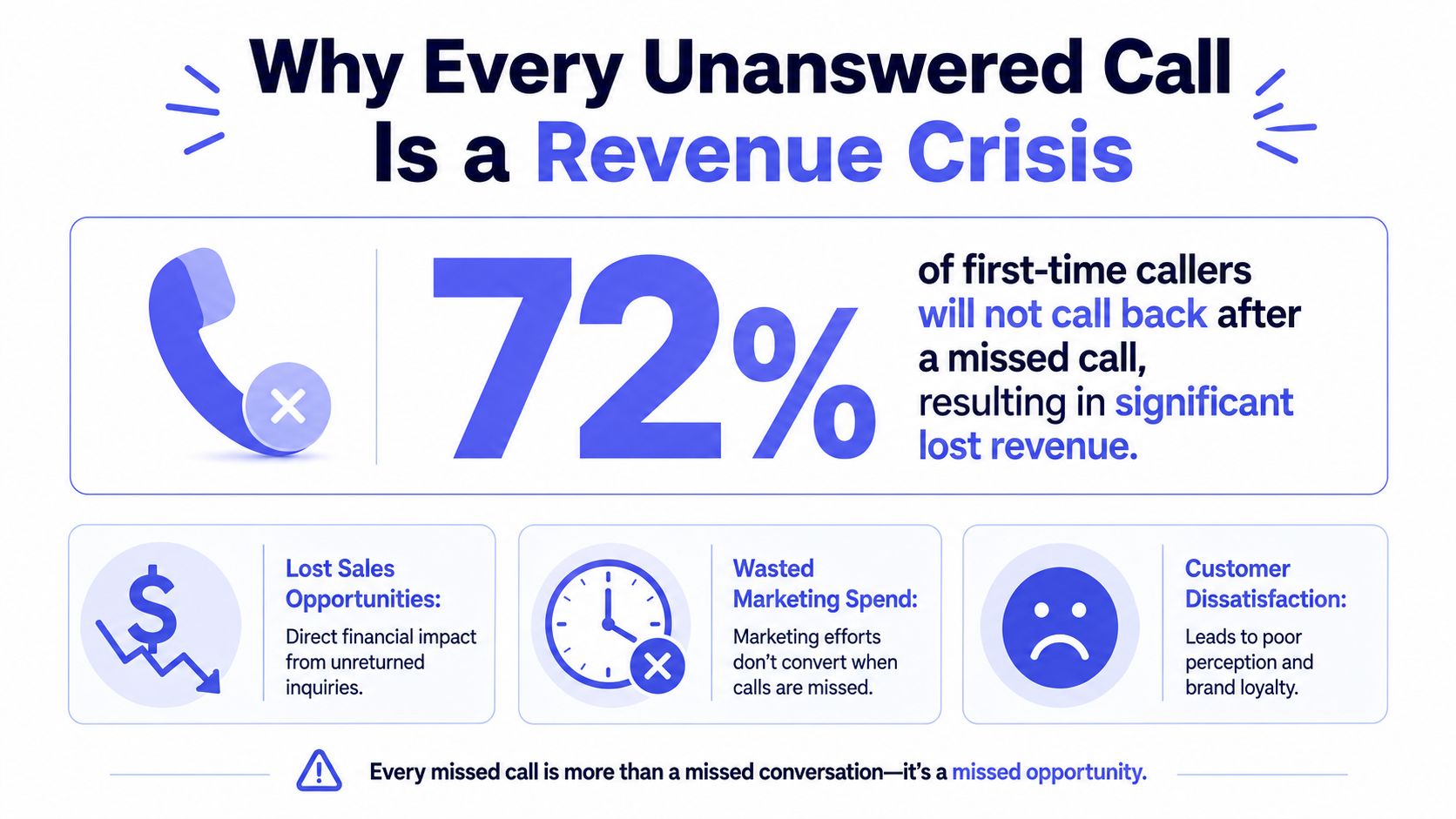
That’s why agencies working with home services, healthcare, hospitality, and similar inbound-heavy categories should treat missed call handling as infrastructure. You can tune ads, landing pages, and booking forms all day, but if the phone rings and nobody responds, the leak stays open.
A lot of businesses start by trying to tighten front-desk coverage or voicemail callback habits. That helps, but it doesn’t solve the speed problem. Callers rarely wait around for manual follow-up. A properly configured missed call text back system closes that dead air immediately and keeps the conversation alive long enough for a real person to step in.
Practical rule: If a business depends on inbound calls to book jobs, unanswered calls belong in the same category as broken forms and failed payments.
There’s also a strategic difference between notification and recovery. A missed call alert tells your team something went wrong. A missed call text back gives the caller a response path while your team is still busy. That’s the point. It buys time without making the lead feel ignored.
If you’re also looking at broader systems for preventing missed calls for businesses, it’s worth pairing prevention with recovery. You want both. Fewer misses on the front end, then automated salvage when a miss still happens.
For teams using an integrated CRM and phone workflow, Streamline missed call follow-up and booking is the operational goal. Not “send a text.” Book the appointment, assign the lead, and move it forward.
The Core Components of a Successful System
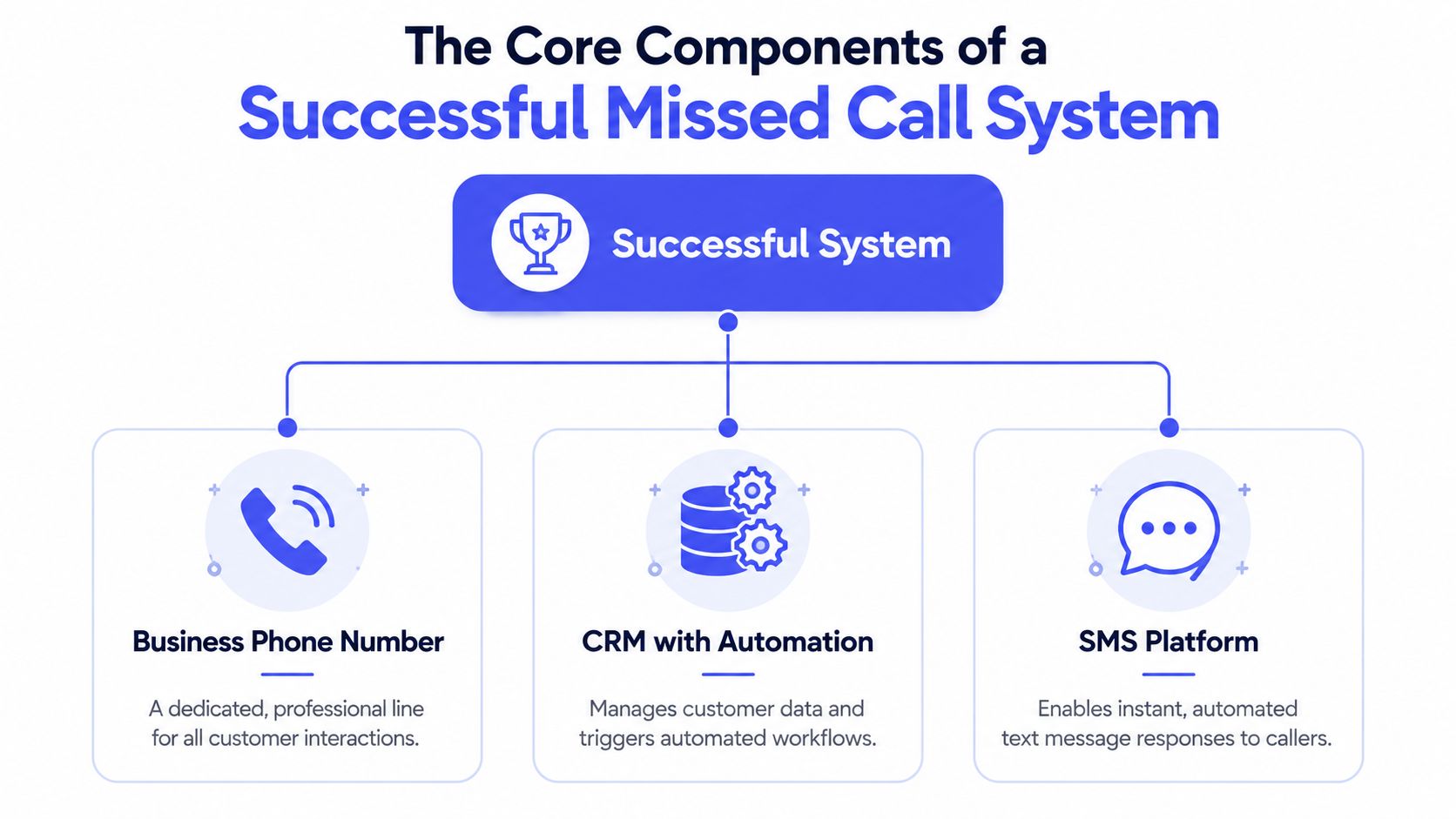
A working missed call text back setup only needs a few parts. A profitable one needs the right logic between them.
At a minimum, you need a business phone number that can generate call events, a CRM or automation layer that can react to those events, and an SMS platform that can send and receive messages in the same thread. If any one of those pieces is disconnected, the workflow gets clumsy fast.
The phone number has to be operational, not decorative
A surprising number of businesses still treat the business number like a forwarding endpoint. Calls come in, but the number itself isn’t part of a system that can trigger workflows, write records, or maintain conversation history.
For missed call text back, the number should do three things well:
- Generate clear call outcomes: The system needs to know whether the call was answered, missed, abandoned, or sent to voicemail.
- Preserve caller identity: The text should come back from the same business number the person dialed whenever possible.
- Support routing logic: New leads, existing customers, after-hours calls, and overflow scenarios shouldn’t all go down the same path.
The CRM is where the revenue logic lives
The automation layer shouldn’t just fire an SMS. It should create or update the contact, tag the lead source when possible, assign ownership, and log the interaction so the next human sees context instead of an isolated message.
Platforms with built-in conversations and workflow tools are often easier to manage than stitched-together apps. If you’re evaluating unified systems with marketing and sales AI, the useful question isn’t whether AI exists. It’s whether the system can apply rules cleanly at the call-event level.
The missed call text back itself is only one step. The real value comes from what the CRM does immediately after the text goes out.
Smart filtering is the difference between useful and noisy
Most guides stop at “send an instant auto-text after every missed call.” That sounds efficient. In practice, it creates junk conversations and unnecessary SMS spend.
The better pattern is to filter before you fire. According to Clicky Owl’s missed call text back guide, calls under 5 seconds often represent accidental dials or hang-ups and should usually be excluded from automation triggers. They also note that using a ring-count threshold such as requiring 3 or more rings can reduce unwanted texts to non-leads.
That one nuance matters more than most template tweaks. If a delivery driver fat-fingered the number or someone hung up instantly, your “Sorry we missed your call” text doesn’t feel helpful. It feels random.
A smart system usually includes some mix of:
- Duration filters: Ignore very short calls.
- Ring thresholds: Trigger only when the caller gave the business a fair chance to answer.
- Business-hour conditions: Use different copy or suppress certain actions after hours.
- Contact checks: Existing customers may need a service message. New leads may need a booking-oriented one.
Building Your Missed Call Automation Workflow
The build should be simple enough for an account manager to audit and strong enough for a sales team to trust. When I map this inside a visual workflow builder, I keep the first path short. Trigger, qualify, text, assign, notify.
Use a service business lens when you build it. A plumbing company, med spa, legal intake team, or HVAC shop doesn’t need a clever automation. They need a caller who didn’t get picked up to stay in the conversation long enough for someone to close the loop.
A platform with calling, SMS, CRM, and workflows in one place makes that easier to manage. One example is HighLevel, Inc., which includes call tracking, missed-call text-back, a unified conversation inbox, and workflow automation inside the same operating environment.
Start with the trigger and the filter
The trigger is the missed call event. In most systems, that means the call rang but wasn’t answered by a user or routed conversation handler.
The first branch should not be the SMS. It should be the filter.
According to Prestyj’s conversion analysis for contractors, the first missed-call SMS should be triggered within 10 to 30 seconds to maximize recovery. The same analysis notes that sending between 1 and 5 minutes reduces the recovery window to a 25 to 35 percent response range, and delays beyond that hurt conversion because the caller often contacts a competitor.
That timing pressure is exactly why the workflow needs to decide fast. My preferred starting logic looks like this:
- Missed call event fires
- Check call duration
- Check ring threshold if available
- Check whether the contact is already opted out
- Check time-of-day branch
- Send SMS immediately
- Create task or assign owner
- Notify team member in inbox or app
If the call fails the duration filter, end the workflow. No text. No task. No clutter.
Write the first action for speed
The first outbound text should acknowledge the miss and give the caller one easy next step. Don’t ask for too much. Don’t send a link in the first message unless your team has a clear reason to do it.
A practical first text often follows this structure:
- business name or rep name
- quick apology or acknowledgement
- one low-friction question
- clear promise of follow-up
For teams experimenting with conversational automation after the first reply, this guide on AI for customer texts is a useful reference point. The mistake to avoid is letting AI write messages that sound like a campaign when the caller expected a human service response.
Build note: Keep the first message transactional in tone. The caller asked for contact by calling you. Your text should feel like a fast callback in written form.
Route the reply and the ownership
Once the message is sent, the workflow moves from recovery to handling. Many agency builds still fall apart at this stage. The text goes out. The caller replies. Nobody owns the thread.
Set ownership rules before launch. If the lead source is tied to a location, rep, or pipeline, assign it immediately. If the business has a dispatcher or office manager, route the conversation there first. If the account uses round robin, keep it visible in the inbox and create a task with urgency tags.
For longer follow-up paths after no response, use automated drip campaigns carefully. A missed call sequence should be short and operational, not promotional. The point is to recover an active inquiry, not drop someone into a nurture funnel that reads like marketing automation.
Here’s where the workflow earns its keep in practice. A homeowner calls a plumbing company while water is leaking under the sink. The office is on another line. The call is missed. If the system sends a clean text right away, tags the contact, routes the thread to the dispatcher, and flags the inquiry as new, the business still has a live chance to win the job.
A voicemail-only process doesn’t create that same opening.
Add the second-touch fallback
The first text handles urgency. The second touch handles hesitation.
If the caller doesn’t reply, a follow-up message later can recover conversations that stalled after the initial acknowledgement. Keep this one lighter than the first. The message should remind, not pressure.
Examples of useful second-touch intents:
- Availability check: “Just checking in. Do you still need help with this?”
- Call-back offer: “We can call you back when you’re free. Reply with a good time.”
- Service confirmation: “If you reached out about service, text back here and we’ll help.”
If there’s no response after that, stop the automation path and let your standard lead handling process decide what comes next.
Crafting Text Messages That Get a Response
Good missed call text back copy doesn’t sound automated, even when it is. The fastest way to lower replies is to write something that feels like a blast message from a marketing department.
What works is short, specific, and easy to answer. The caller already showed intent by dialing. Your text only needs to reopen the conversation.
What good missed call texts do
The strongest messages share a few traits, even across different industries.
They identify the business quickly. They acknowledge the missed call without overexplaining. They ask one question. They give the caller a low-effort path to respond.
A missed call text should read like a receptionist catching up, not a funnel trying to convert.
Personalization helps when it reflects real context. Use the contact’s first name if your CRM already knows it. Use the location or service category if the number is tied to a specific branch or team. But don’t stuff every custom field into the text. A heavy message feels templated.
You also want the call to action to stay soft. “How can we help?” often works better than “Book now.” Early friction kills response quality.
Missed Call Text Back Templates
| Scenario | Message Template | Key Elements |
|---|---|---|
| New lead during business hours | Hi {{first_name}}, this is {{user_name}} with {{business_name}}. Sorry we missed your call. What can we help with today? | Identity, apology, one question |
| First-time caller with unknown name | Hi, this is {{business_name}}. Sorry we missed your call. Please text us what you need help with and we'll follow up shortly. | No forced personalization, simple response prompt |
| After-hours inquiry | Hi, you've reached {{business_name}}. We missed your call after hours, but we did get it. Text us what you need and our team will follow up when available. | Sets expectation, keeps thread open |
| Existing customer | Hi {{first_name}}, this is {{business_name}}. Sorry we missed you. If this is about your current service, text us here and we'll get back to you. | Recognizes relationship, reduces confusion |
| Urgent service category | Hi, this is {{business_name}}. Sorry we missed your call. If you need immediate service, text a short description here and we'll respond as soon as we can. | Encourages fast triage without overpromising |
| Second follow-up | Just checking back from {{business_name}}. If you still need help, reply here and we'll follow up. | Low pressure, easy re-entry |
A few copy choices matter more than people think:
- Use plain language: “Sorry we missed your call” lands better than “We apologize for the inconvenience.”
- Ask one thing: A single reply prompt beats a multi-part questionnaire.
- Avoid marketing tone: No offers, no hype, no brand slogans in the first message.
- Match the business model: A med spa can sound polished. An emergency restoration company should sound direct and available.
If your team wants to improve messaging quality inside a CRM environment, HighLevel SMS campaigns offers useful ideas on organizing message flows and keeping copy tied to action.
One more practical point. The best-performing script on paper still fails if replies sit unattended. Copy and operations have to match. If the text sounds personal, the follow-up has to feel personal too.
Timing Compliance and Best Practices
Fast response gets the lead back into conversation. Guardrails keep the system professional enough to run every day without creating noise or avoidable risk.
According to Prestyj’s 2026 revenue-loss analysis, automated missed-call text-back messages sent within one minute recover up to 93% of leads that would otherwise be lost and generate approximately $3,500 in additional monthly revenue on average for a service business. That’s the business case for urgency. It doesn’t remove the need for rules.
Speed matters but guardrails matter too
A missed call text back should be immediate, but not indiscriminate.
If a call comes in at a time when the business cannot engage, your message should acknowledge that reality instead of pretending someone is standing by. If the caller is an existing customer, the message can point them toward support context rather than a generic new-lead response. If they’ve opted out before, the automation should stop before sending anything.
Compliance also starts with message intent. Keep the first text transactional. The caller initiated contact, and your message is a direct response to that contact. That doesn’t mean every follow-up decision is harmless. The more promotional your text becomes, the more you create problems for yourself.
Operational standard: The first message should help the caller continue the conversation they started. It shouldn’t try to sell them something new.
Include opt-out handling in the system design. If someone replies with a stop request, the platform should suppress future messaging automatically. That’s basic hygiene.
Operational rules that keep the system clean
Strong builds usually follow a short set of house rules:
- Set office-hour branches: During open hours, route to a live owner fast. After hours, set expectations and queue follow-up.
- Separate new leads from known contacts: The message and assignment logic often shouldn’t be identical.
- Limit automated follow-up: One immediate text and one light follow-up is usually enough for this workflow.
- Watch the inbox: A missed call text back only works if someone handles the reply thread promptly.
- Register and monitor business texting: Make sure the business messaging setup is approved and maintained through the phone platform being used.
The trade-off is straightforward. The more aggressively you automate, the more important your filters, time windows, and suppression rules become. Businesses don’t need more texts. They need better decisions about when a text should be sent at all.
Measuring Success and Optimizing Your System
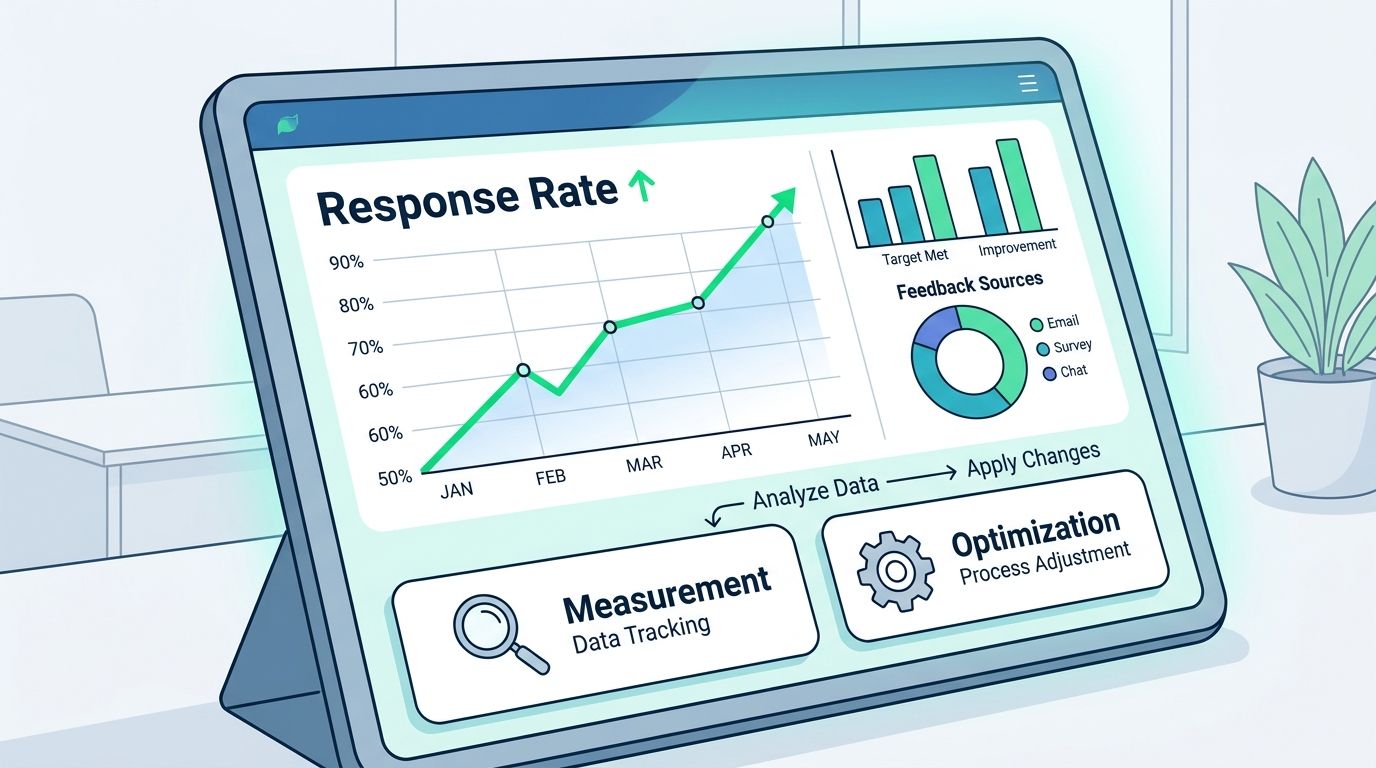
Most agencies launch the workflow, confirm that texts are sending, and move on. That’s not enough. A missed call text back system should prove itself in the pipeline, not just in the activity log.
You don’t need a giant reporting stack to manage this. You need a clean definition of success and a habit of checking the same few indicators every week.
Track the right metrics
Start with workflow-level visibility, then move to business outcomes.
The most useful metrics are usually:
- Missed calls that qualified for text-back: This tells you whether your filters are too loose or too strict.
- Reply rate: Are callers responding to the first message?
- Conversation-to-appointment rate: Of the people who replied, how many reached a booked next step?
- Time-to-first-human-response: After the automation opens the thread, how long until a staff member takes over?
- Recovered lead quality: Are these real opportunities or mostly low-intent inquiries?
In a CRM with call and conversation reporting, you should also review tracking call performance alongside SMS outcomes. A text-back workflow can look healthy in isolation while the underlying phone routing still creates too many misses.
What to test without breaking the workflow
Optimization should stay controlled. Change one thing at a time.
Good tests include opening-line variations, question style, and message tone. One version might lead with the rep’s name. Another might lead with the business name. One asks “How can we help?” Another asks “Is now a good time for a quick call back?” Both are reasonable, but they create different reply behavior.
You can also test operational changes:
- Filter refinement: If junk conversations keep slipping through, tighten duration or ring logic.
- Ownership routing: Compare dispatcher-first versus rep-first assignment.
- After-hours copy: A clearer expectation-setting message may improve next-day recovery quality.
- Second-touch wording: Keep the follow-up light and see which phrasing reopens more threads.
The goal isn’t to make the workflow more complicated. It’s to remove friction one decision at a time.
The highest-performing systems tend to look boring in the builder. Short logic. Clear branches. Minimal copy. Strong ownership. That’s usually a sign of discipline, not lack of sophistication.
A smart missed call text back system should do three things reliably: ignore obvious non-leads, respond quickly to real ones, and hand the conversation to the right person without delay. If those three pieces are working, optimization becomes incremental instead of urgent.
If you want one system to handle missed-call text-back, CRM follow-up, conversations, booking, and call tracking in one place, HighLevel is worth evaluating as part of your stack.
