


Why do so many agencies keep buying tools that solve isolated problems, then act surprised when the work still feels fragmented? The Best Agency Software Stack is not about collecting the most apps, it is about building a clean operating system for leads, delivery, reporting, and retention. Recent 2026 stack guides point to a layered model with clear systems of record, not tool sprawl, and that shift matches how agencies now work across CRM, project management, reporting, communications, and tracking infrastructure.
The best stack depends on what your agency needs to control. If you need the fewest moving parts, an AI-first all-in-one like HighLevel can replace a lot of overlap, and the GoHighLevel agency guide is a useful place to see how that model works in practice. If you need broader enterprise depth, HubSpot or Zoho One can anchor a larger operating model. If your revenue depends on automation, reviews, or white-label delivery, different tools win for different reasons. That is the comparison most lists miss.
One more thing. The right stack should reduce context switching, protect margin, and make follow-up more reliable. If your current setup still leaves leads in inboxes, reporting in spreadsheets, and client data scattered across tabs, you are paying a hidden tax every day. For a quick audit companion while you read, you can also use this free email spam checker.
Table of Contents
- 1. HighLevel
- 2. HubSpot
- 3. ActiveCampaign
- 4. Keap Pro and Max
- 5. Vendasta
- 6. Zoho One
- 7. SharpSpring by Constant Contact
- 8. Birdeye
- 9. Bitrix24
- 10. Ontraport
- Top 10 Agency Software Stack Comparison
- Making the Final Call Find Your Ideal Stack
1. HighLevel
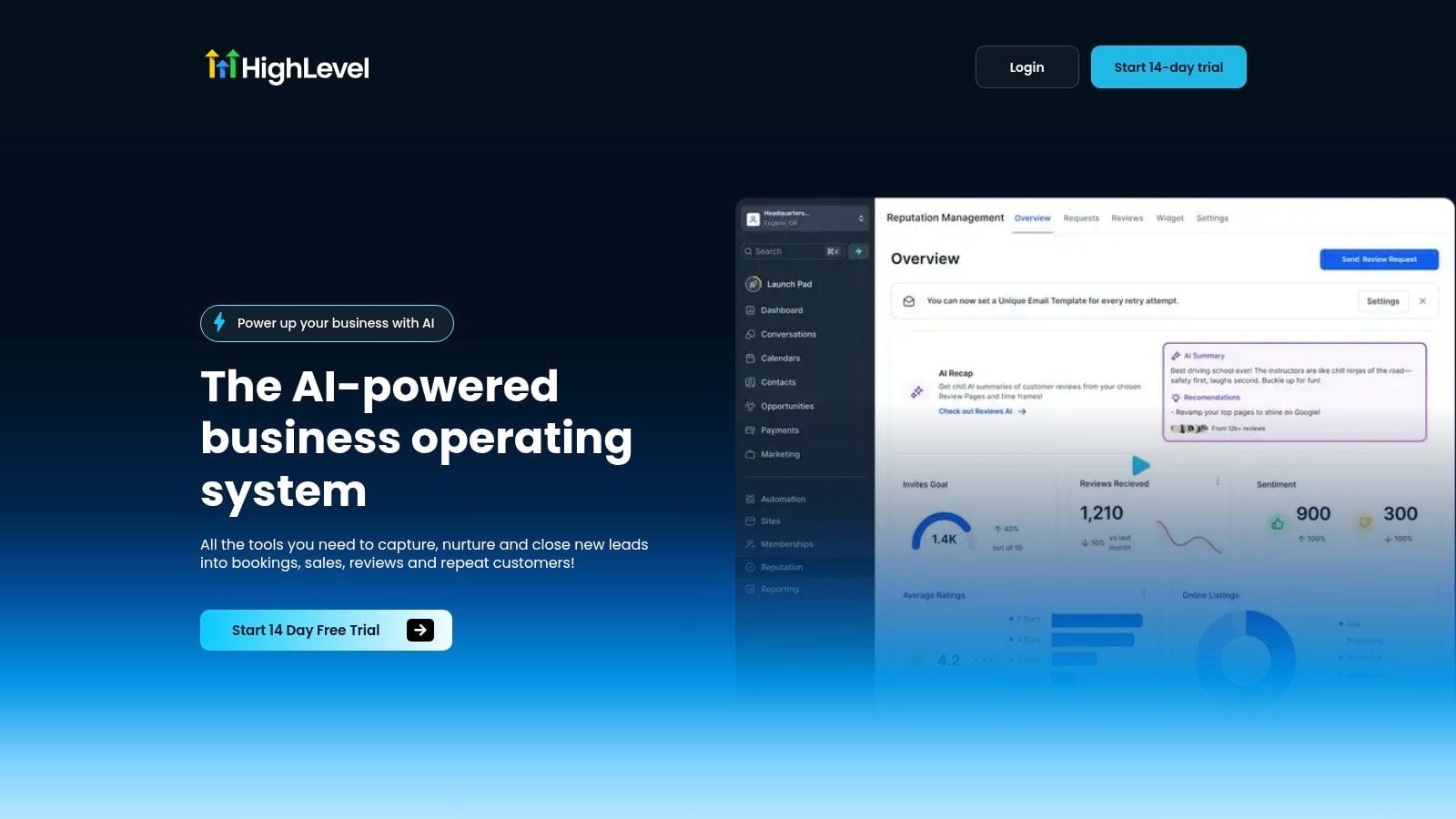
HighLevel fits agencies that want one place to manage the full client journey. It combines CRM, unified messaging, funnels, bookings, payments, reputation, and reactivation in a mobile-ready workspace, so the team can keep handoffs inside one system instead of stitching together separate apps. For agencies comparing stack options, that matters because each function needs a clear system of record, not another overlapping point tool.
HighLevel’s real strength is how much revenue work it keeps in one workflow. Conversations can move across SMS, Messenger, Instagram DM, WhatsApp, and live chat, while workflows and Conversation AI keep follow-up moving when the team is offline. Agencies also get a direct path from capture to payment through paid calendars, invoices, Text-2-Pay, Tap-2-Pay, and one-click upsells. That is often the difference between getting a lead and closing it.
Practical rule: if your team still loses leads between form fills, inbox replies, and booking pages, an all-in-one stack like HighLevel usually creates more value than adding another niche tool.
It also handles two areas many agency stacks handle poorly, reputation and reactivation. Automated review requests, AI review replies, and affiliate tracking help turn completed work into social proof and referrals. The agency structure matters too, with unlimited sub-accounts on the Unlimited plan and published plans that include unlimited contacts (HighLevel).
For agencies that want a closer look at implementation, a comprehensive guide for agencies shows how the platform is used as an operating system, not just a CRM. The trade-off is the learning curve. Broad feature depth can overwhelm small teams that only need one narrow function.
Best for: digital agencies, local service marketers, coaches, franchises, and SaaS-style agency operators.
Weak spot: the breadth can be too much if you only want a single-purpose tool.
2. HubSpot Customer Platform CRM Suite
Can one platform really cover sales, marketing, service, content, and operations without turning into a mess for the team? HubSpot is one of the few agency-friendly systems where that answer can be yes, as long as you are deliberate about how far you let it expand. The Smart CRM starts free, and the platform grows through modular Hubs, which gives agencies a path to support email automation, pipeline management, help desk work, and CMS needs in one environment. That modular setup fits the broader shift toward stack architecture that separates functions while still keeping the system manageable, as outlined in stack architecture guidance.
Its key appeal is breadth without clutter at the interface level. An agency can begin with CRM, then add Marketing Hub, Sales Hub, Service Hub, Content Hub, or Operations Hub as client needs become more complex. That makes HubSpot a strong fit for firms that want one core platform to standardize around, while still leaving room for more advanced workflows later.
The trade-off shows up in planning, not capability. HubSpot can do a lot, but the seat model and hub bundling need careful attention as the stack grows. Costs and packaging become harder to predict once paid seats and multiple Hubs start stacking together, especially if you are rolling out the system across several client teams (HubSpot).
For agencies comparing CRM choices directly, the essential agency CRM software guide is a useful companion because it frames HubSpot against more specialized agency CRMs. In practice, HubSpot works best for agencies that want a mature ecosystem and solid native connections across adjacent functions. It is also a better fit when the team is comfortable trading some pricing simplicity for a wider toolset and stronger long-term flexibility.
Best for: SMB to mid-market agencies that want an enterprise-grade customer platform.
Weak spot: cost and packaging complexity can creep up as the stack grows.
3. ActiveCampaign
ActiveCampaign earns its place when lifecycle automation matters more than all-in-one breadth. Agencies often use it when they need behavior-driven email sequences, segmented nurturing, and a CRM that ties directly into marketing engagement. That makes it a strong option for lead nurturing and retention, especially when the team wants precise triggers instead of broad, generic automation.
The standout piece is the visual automation builder. It lets teams create workflows around behavior, split testing, and pipeline progression without needing a developer for every change. The CRM layer is integrated, so sales follow-up can reflect what a contact opened, clicked, or ignored. That creates a tighter handoff between marketing and sales than many lighter email tools manage.
What works: agencies with a strong nurture strategy get useful control over timing, segmentation, and trigger logic.
What does not: if you want a full business operating system, ActiveCampaign is too specialized to carry the whole stack alone.
Its biggest advantage is flexibility. Solo operators and larger teams can both use it, but the usefulness scales with how disciplined the agency is about lifecycle design. If you’ve got a clear lead magnet, consult flow, and post-sale nurture system, ActiveCampaign supports that structure well. It’s also backed by onboarding and training resources that help new accounts get moving (ActiveCampaign).
For agencies comparing automation options, the marketing automation guide for agencies is a helpful reference point. ActiveCampaign works best when you already know what behaviors you want to automate, rather than hoping the platform will define the process for you.
Best for: agencies that live on email automation and lead nurturing.
Weak spot: not the right choice if you need broader ops, payments, or white-label delivery.
4. Keap Pro and Max
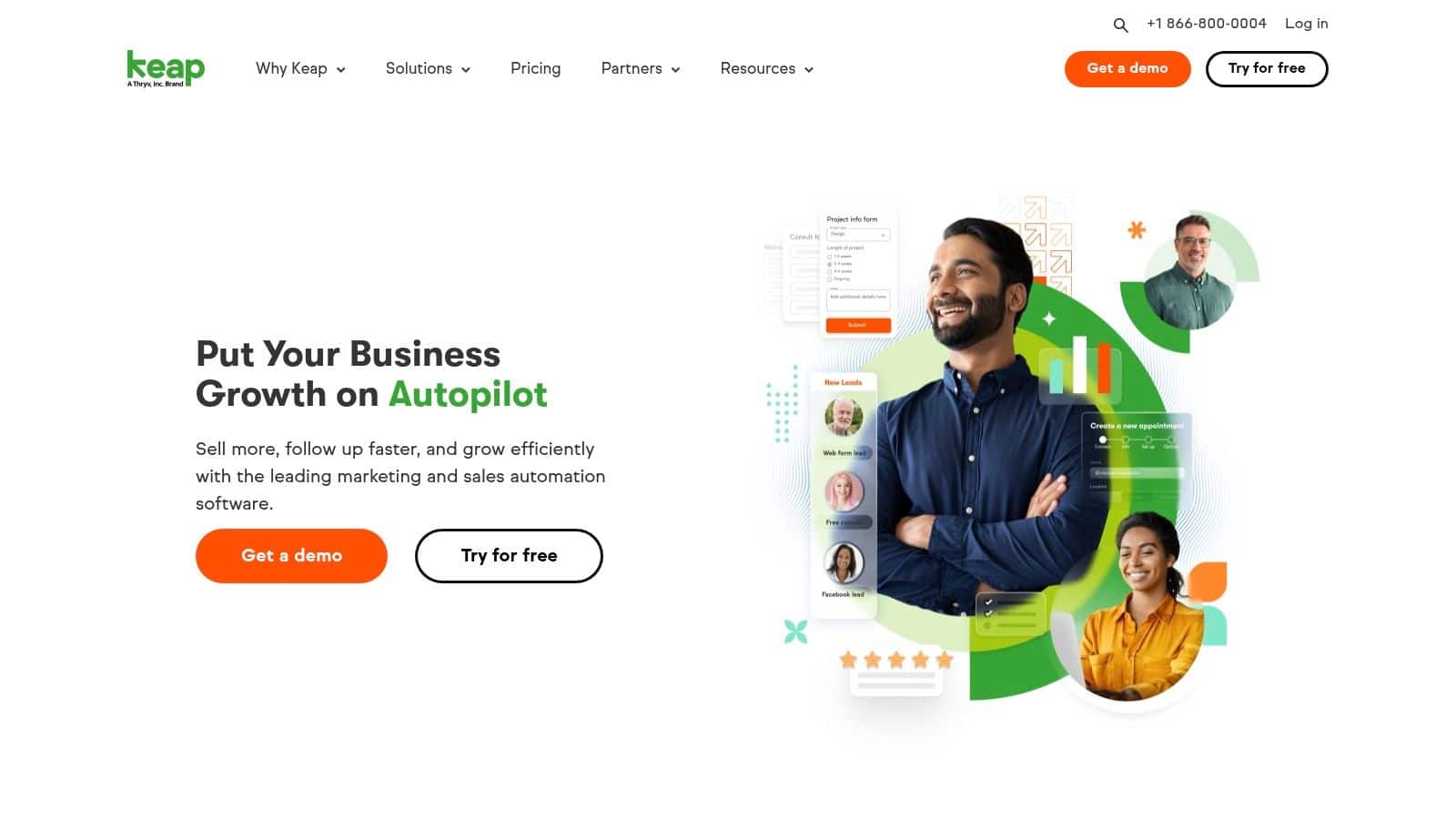
Keap fits the part of the market that wants simple quote-to-cash execution. It combines CRM, marketing and sales automation, landing pages, appointments, invoicing, payments, text marketing, and ecommerce, which gives local-service agencies and solopreneurs a practical run-the-business toolkit. It’s especially attractive when the primary bottleneck is getting from inquiry to paid appointment, not building a complex enterprise architecture.
The strongest part of Keap is its operational focus. Built-in invoices, checkout pages, and Keap Pay help move money faster, while visual automations can trigger on email, SMS, pipeline changes, and tasks. That keeps it grounded in business outcomes instead of abstract platform promises. If your agency sells directly to small businesses, that kind of clarity matters.
Keap’s simplicity is also its constraint. It’s easier to understand than a sprawling enterprise suite, but it’s not designed for highly complex multi-department deployments. That means agencies with layered delivery teams, multiple handoff points, or advanced reporting needs may outgrow it faster than they expect.
The Pro and Max editions add more advanced controls such as lead scoring, ecommerce, and analytics, but the core product already tells you what it wants to be. It’s a practical revenue engine for SMB operators who need quotes, payments, scheduling, and follow-up in one place (Keap).
If your agency sits in the local-services lane, Keap can be a cleaner fit than a more bloated platform. It’s not the flashiest stack choice, but it is often one of the fastest ways to straighten out basic client acquisition workflow.
Best for: SMB agencies, local service businesses, and solo operators.
Weak spot: less suited to complex enterprise-style agency operations.
5. Vendasta
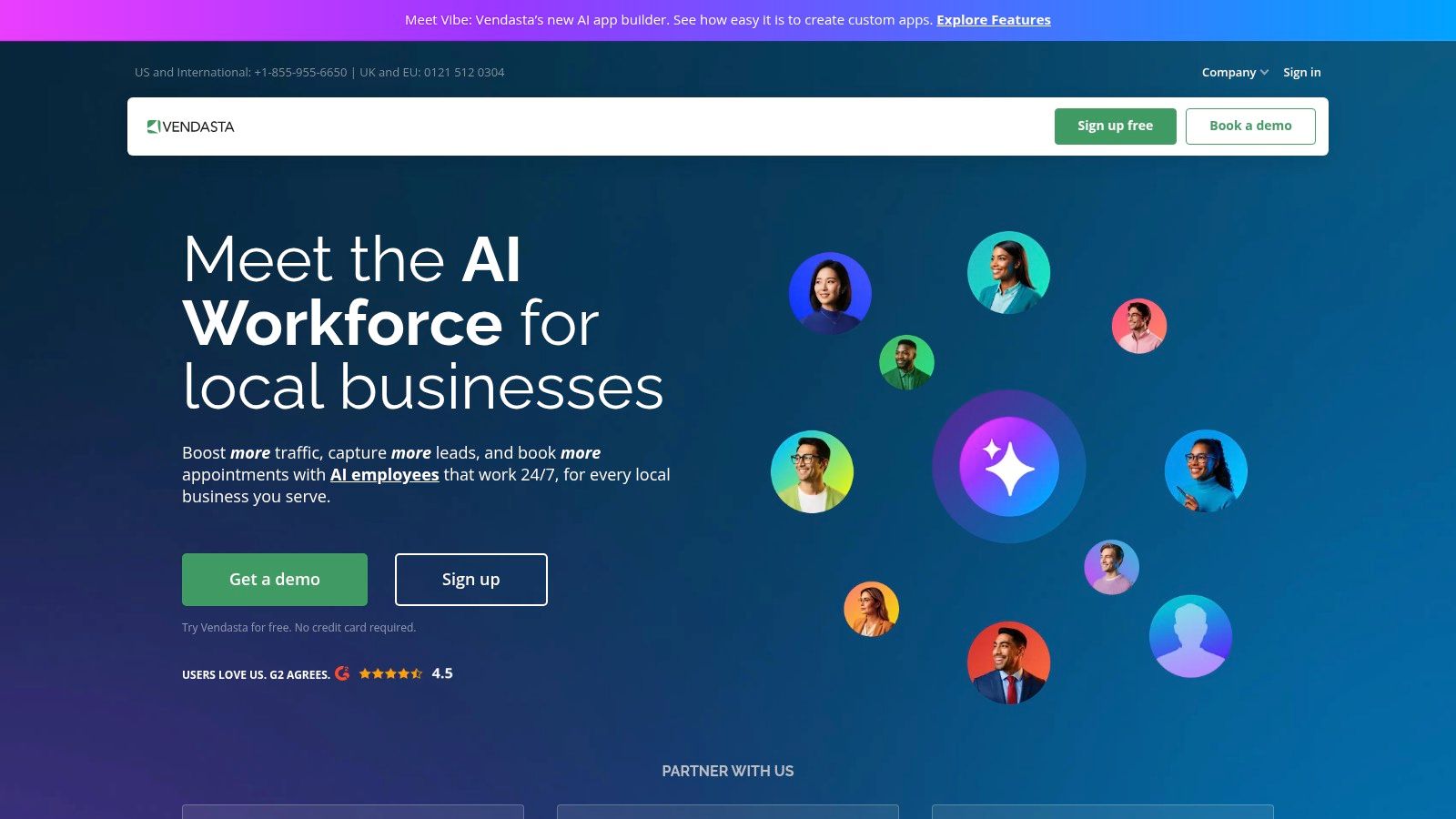
Vendasta is different from most agency platforms because it’s built around selling and fulfilling digital products through a white-label marketplace. That makes it a strong fit for agencies that want to add SEO, listings, websites, social, and ads services without building every capability in-house. Instead of hiring specialists for every category, the agency can package offerings and manage delivery through one operating layer.
The trade-off is control versus speed. Vendasta helps you expand your catalog quickly, and the client portal improves transparency, but you still need to manage vendor quality and margin discipline carefully. A resell model can work well, yet it also introduces dependency on third-party fulfillment. If the vendor misses, your brand absorbs the pain.
Its agency appeal is the breadth of what can be sold, not just what can be tracked. Unlimited accounts and users on partner plans make it easier to organize a growing book of clients, and the branding kit and sales enablement materials help teams move faster when they’re packaging services. For agencies looking to become broader solution providers, that’s a meaningful advantage (Vendasta).
Agencies that lean too hard on resale without quality control usually discover the same problem twice, once in delivery, once in retention.
Vendasta works best for operators who want to build a marketplace-style agency offer. If the goal is to resell software and services under your own brand, it gives you a useful head start. If the goal is pure internal workflow efficiency, other tools on this list are cleaner.
Best for: agencies that want to expand service lines through white-label fulfillment.
Weak spot: vendor delivery quality has to be managed closely.
6. Zoho One
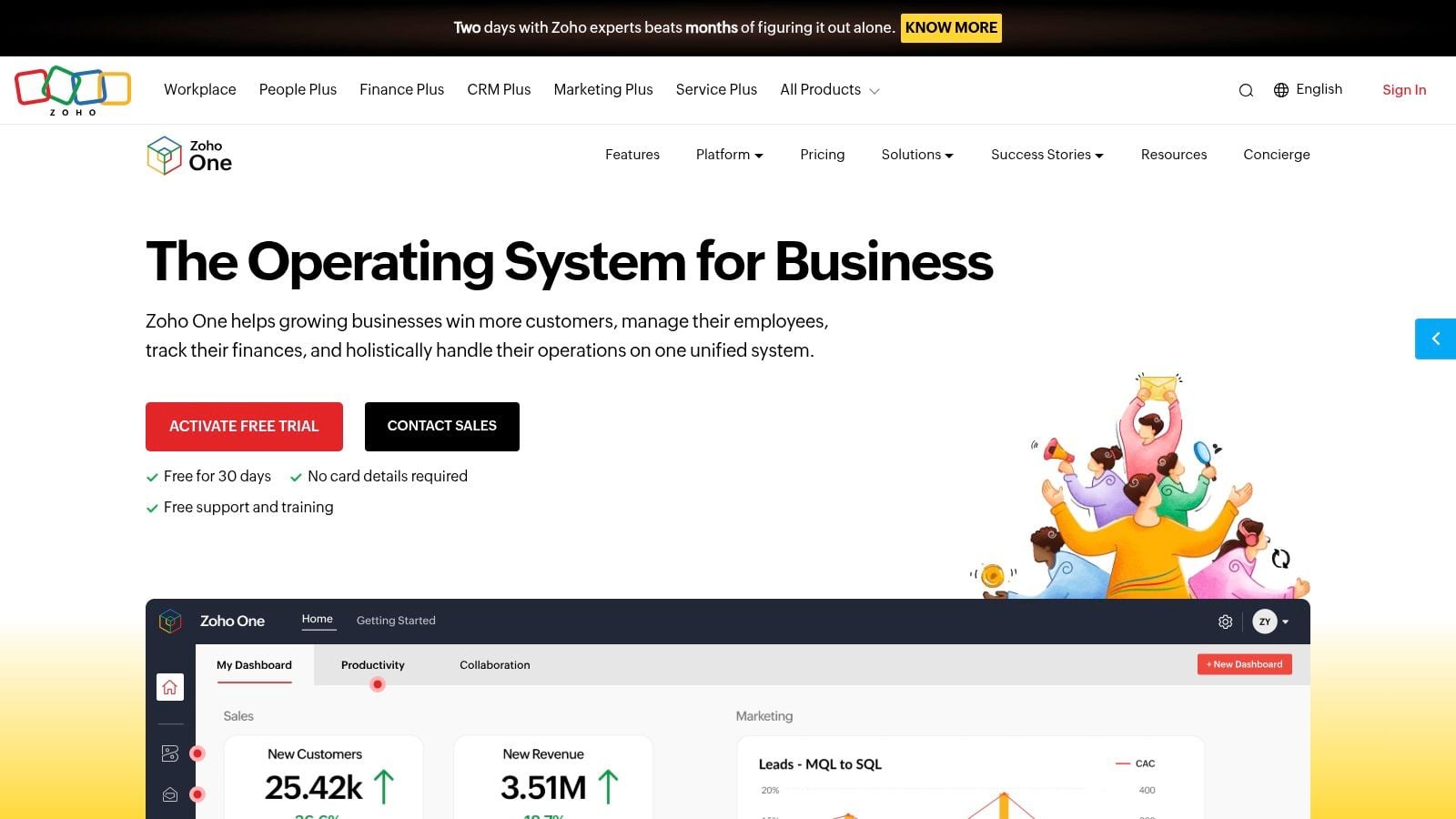
Zoho One is the broad-vendor option for agencies that want a full business stack under one subscription. With more than 40 integrated apps covering CRM, campaigns, forms, surveys, social, books, desk, projects, analytics, and sign, it reaches far beyond a single marketing workflow. That breadth makes it attractive for agencies that need sales, service, finance, and operations to live in one ecosystem.
The strongest case for Zoho One is value density. Instead of paying separate vendors for each layer, agencies get a wide software family that already speaks to itself. Centralized admin and SSO help keep the environment manageable, and the suite includes enough depth to support a serious operational backbone. For teams trying to reduce vendor count, that’s a real advantage.
The challenge is governance. A suite this broad can become messy if nobody owns configuration standards, permissions, and app sprawl. Zoho One rewards agencies that treat the stack like infrastructure, not a grab bag of enabled features. The platform does give you multiple licensing models and add-ons, but the setup still requires deliberate administration (Zoho One).
This is one of those platforms that becomes more valuable as your internal discipline improves. If you map your processes well, Zoho One can give you a remarkably coherent operating environment. If you don’t, the breadth becomes overhead.
Best for: agencies that want a unified vendor across sales, marketing, service, finance, and operations.
Weak spot: administration and governance take effort.
7. SharpSpring by Constant Contact
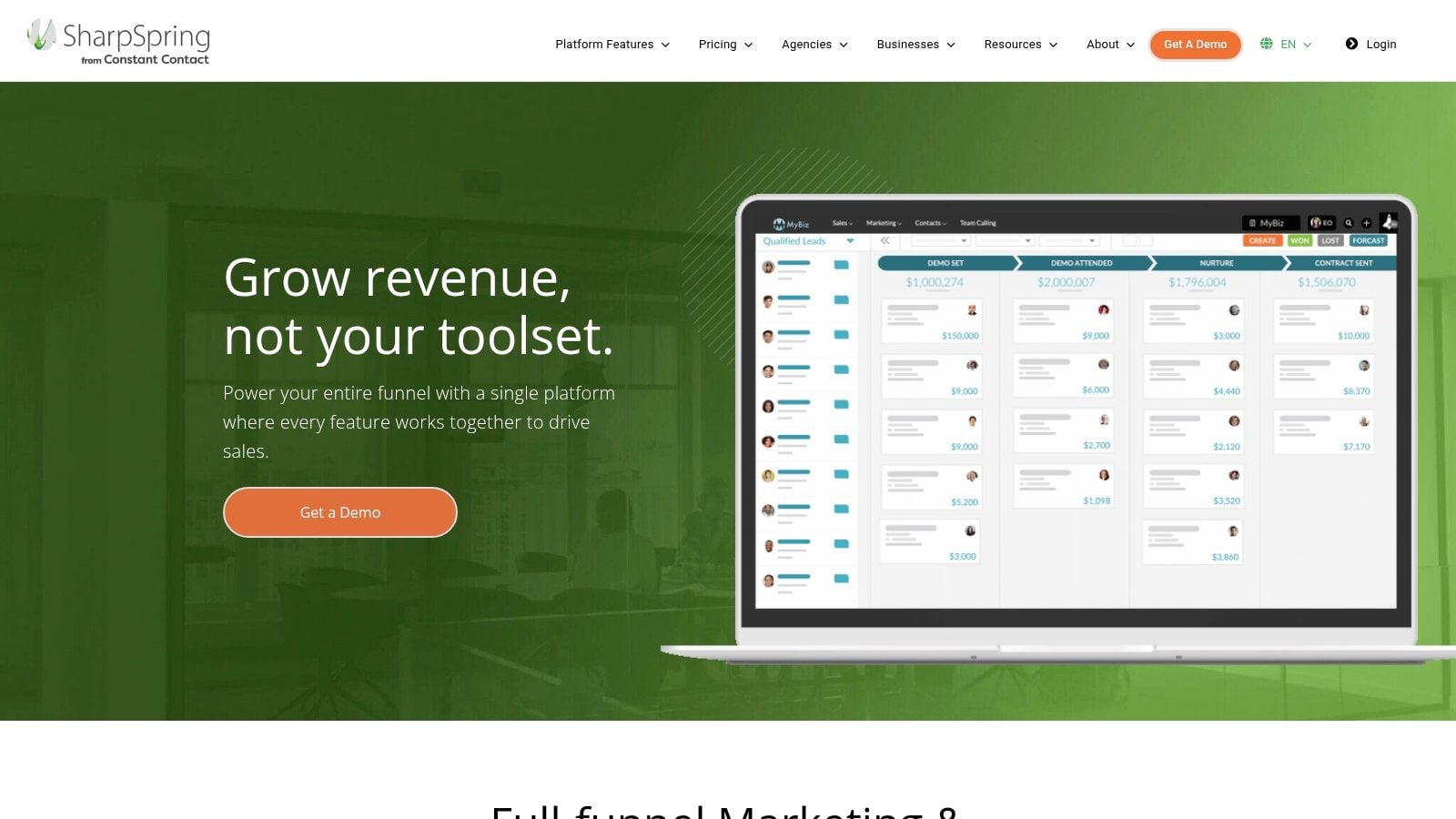
SharpSpring has long been associated with agency-friendly marketing automation, and that orientation still matters. It combines CRM, behavior-based email automation, forms, landing pages, and reporting, which makes it a solid choice for multi-client agencies that want a platform built with agency use in mind. Its white-label option is especially relevant for firms that package software as part of a managed service.
The main value is campaign visibility. Agencies can see how automation and campaign activity connect to ROI, and the platform is structured to support that kind of reporting. That makes SharpSpring useful when the agency needs to explain performance to clients without cobbling together a reporting workflow from scratch.
The downside is commercial transparency. Pricing is typically quote-based, so teams need a sales conversation before they can compare it cleanly against other options. That can slow down evaluation if you’re trying to move quickly or compare against tools with simpler public pricing. The upside is that the platform has been shaped around agency packaging rather than generic SMB marketing alone (SharpSpring).
For agencies evaluating the HighLevel category, the Is GoHighLevel the best white-label CRM for agencies piece is a useful cross-check. SharpSpring still has a place, but the category has become more competitive, and the best fit depends on how much all-in-one control you want.
Best for: agencies that want marketing automation plus white-label positioning.
Weak spot: pricing clarity can be limited until you talk to sales.
8. Birdeye
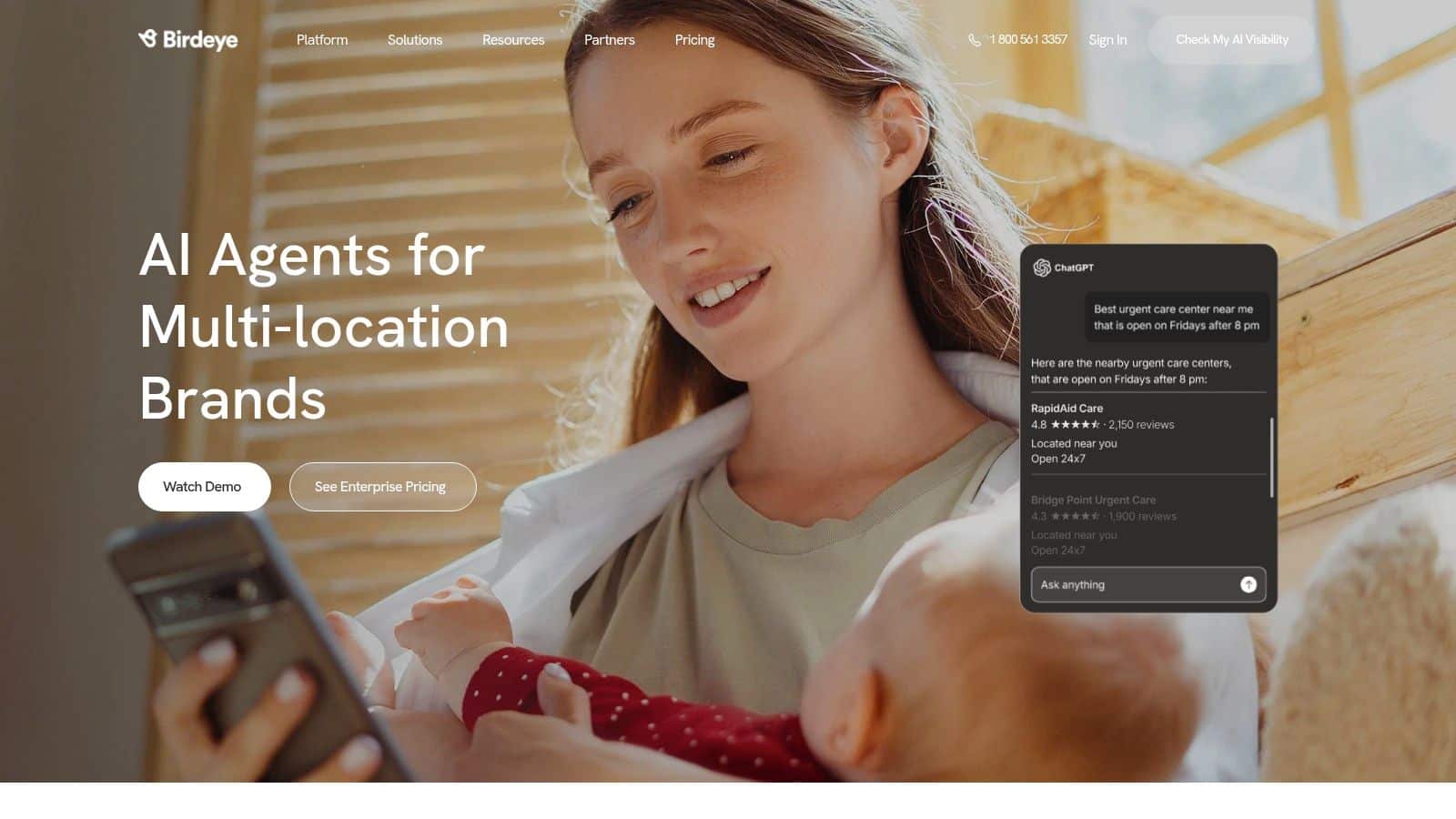
Birdeye is a strong fit when an agency’s client base lives or dies by reputation, messaging, and local engagement. It’s best known for reviews, but its broader CX footprint includes unified messaging, social chat, and integrated payments. That makes it especially relevant for agencies serving local, multi-location, and franchise brands where response speed and trust signals matter.
The unified inbox is the practical feature to pay attention to. SMS, webchat, email, and social messaging can all sit in one workflow, which reduces the chance that a message gets buried in a channel nobody is watching. Auto-receptionist functions, voicemail transcription, and callback workflows help teams respond in a more structured way.
Birdeye also extends into payments, which is useful because agencies often have to manage service and transaction flow in the same client account. Text, email, card readers, QR, website, and social DM payments give the platform more range than a reputation-only product. That helps reduce the number of separate systems a local-growth agency has to maintain (Birdeye).
The trade-off is pricing structure. Like many CX platforms, cost can vary based on features and the number of locations. That’s manageable for the right clients, but it means agencies have to model the economics carefully before rolling it out widely.
Best for: agencies serving local, multi-location, and franchise brands.
Weak spot: cost can rise as locations and feature demands increase.
9. Bitrix24
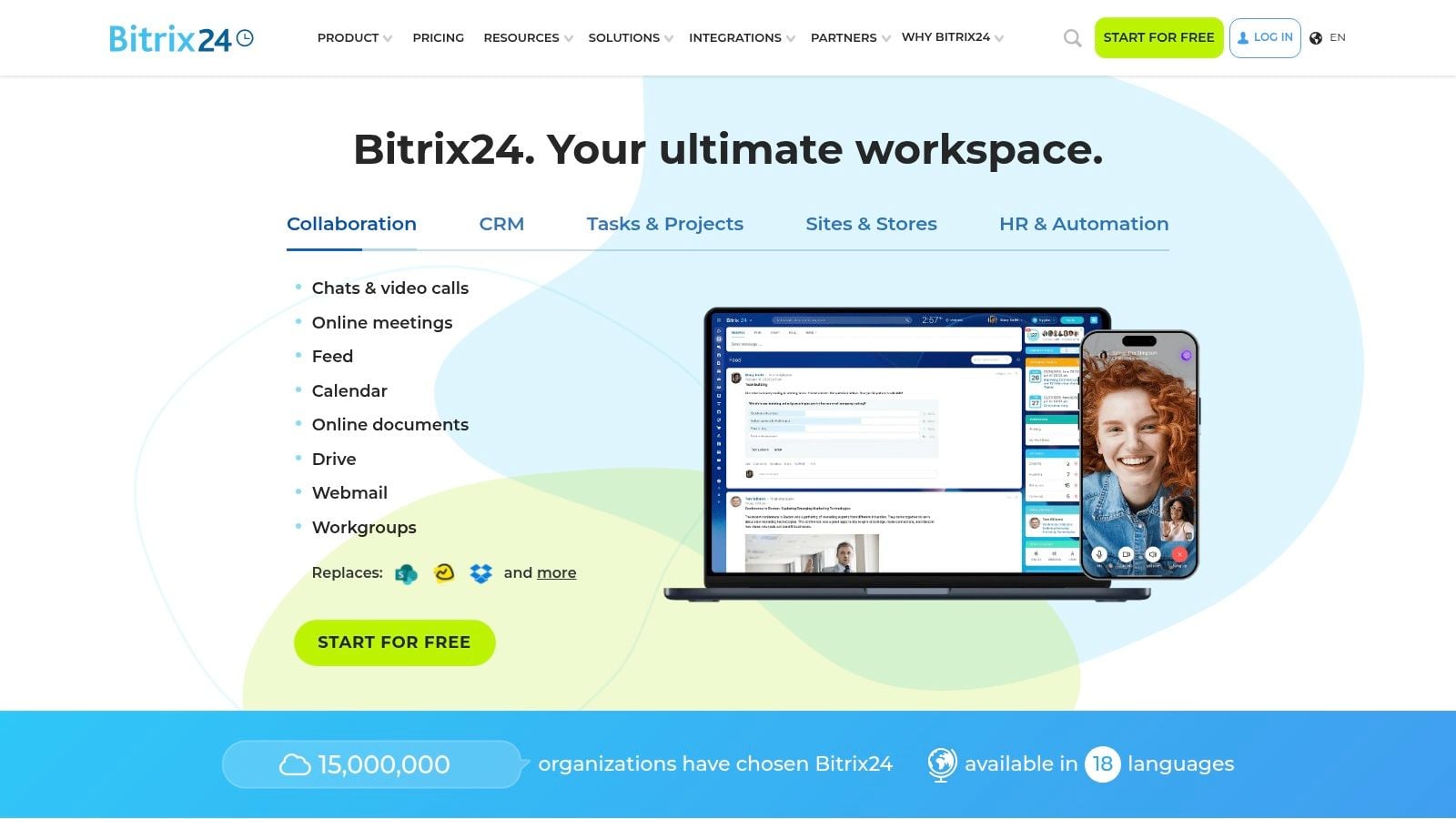
Bitrix24 is the value play for agencies that want broad functionality without per-seat pain. It combines CRM, phone, chat, contact center, website and landing page tools, tasks, projects, and basic automation. That makes it useful for agencies that need both client management and internal work execution in one platform.
Its pricing model stands out because it avoids the usual per-user trap on paid tiers, and there’s a free plan available as well. For smaller agencies, that can make experimentation easier. You can set up a team environment, test real workflows, and decide whether the platform fits before committing more heavily.
The downside is complexity. Broad feature coverage often means a steeper setup curve, and Bitrix24 is no exception. Teams may need real configuration time to make the UI and workflow feel clean. If you don’t have someone who can own setup, the platform can feel heavier than the sticker price suggests.
The internal communications and project-management overlap can be a benefit, though. Agencies that want one place to manage tasks, client conversations, and pipeline movement can get a lot done here. If your tech stack has too many small tools and not enough operating discipline, Bitrix24 can simplify the environment in a very direct way (Bitrix24).
For agencies trying to connect missed calls to faster follow-up, the HighLevel missed call text back guide is a useful framing piece because it shows how a simple workflow can protect inbound demand. Bitrix24 gives you breadth, but you’ll need to design the workflow carefully.
Best for: agencies that want low-cost breadth and task management.
Weak spot: setup complexity can slow adoption.
10. Ontraport
Ontraport makes the most sense for agencies and service businesses that need memberships, gated content, payments, and automation in one place. Its pages, forms, subscriptions, and membership capabilities give it a strong position for education offers, course businesses, and other models where content access is part of the product. That’s a narrower use case than some broader suites, but it’s a very practical one.
The strength is that it reduces the number of tools required to run a content-based funnel. You can build pages, protect content, manage roles, collect payments, and automate follow-up without stitching together a separate CMS, paywall, and CRM. That simplicity is valuable when the business model depends on a smooth member journey rather than a complex enterprise workflow.
The trade-off is ecosystem depth. Ontraport doesn’t have the same breadth of third-party extensions as the biggest platforms, so specialized integrations can be a limitation. That doesn’t make it weak, it just means it’s more self-contained. Agencies that love control and simplicity may like that. Agencies that want a huge app marketplace may not.
Because the platform covers CRM, visual automations, email and SMS, and membership delivery, it can work well for coaches, creators, and service firms with recurring offers (Ontraport). It’s a better fit for a focused funnel than a sprawling multi-client enterprise stack.
Best for: course creators, membership businesses, and agencies selling gated content.
Weak spot: fewer extensions than the largest ecosystems.
Top 10 Agency Software Stack Comparison
| Product | Core features | Quality | Price / Value | Target & USP |
|---|---|---|---|---|
| 🏆 HighLevel | CRM + unified inbox (SMS/Messenger/IG/WhatsApp), funnels, Conversation AI, bookings, payments, reputation | ★★★★★ | 💰 Starter $97/mo · Unlimited $297/mo · unlimited contacts | 👥 Agencies & SMBs · ✨ Native AI, unlimited sub-accounts, Text‑2‑Pay, mobile-first |
| HubSpot Customer Platform (CRM Suite) | Smart CRM + Marketing/Sales/Service/CMS hubs, automations, reporting | ★★★★★ | 💰 Free CRM; paid Hubs & seat/contact pricing (Starter→Enterprise) | 👥 SMB→mid-market agencies · ✨ Enterprise-grade integrations & ecosystem |
| ActiveCampaign | Email/CX automation, visual workflows, CRM, site/event tracking | ★★★★ | 💰 Contact-based tiers; scales with list size | 👥 Agencies & growth marketers · ✨ Advanced behavior-driven automations |
| Keap (Pro & Max) | CRM, visual automations, invoices/checkout, appointments, Keap Pay | ★★★★ | 💰 Contact/user pricing; Pro/Max tiers (SMB-focused) | 👥 Local service businesses & solopreneurs · ✨ Fast quote‑to‑cash primitives |
| Vendasta | White-label marketplace, CRM, client portal, fulfillment & resell tools | ★★★★ | 💰 Partner/wholesale pricing; custom quotes | 👥 Agencies expanding product catalog · ✨ White‑label SaaS marketplace & fulfillment |
| Zoho One | 40+ integrated apps (CRM, Desk, Books, Projects, Analytics, etc.) | ★★★★ | 💰 Single-subscription models (All Employee / Flexible User) · high value density | 👥 Agencies wanting full business stack · ✨ Central admin, SSO & broad app set |
| SharpSpring by Constant Contact | CRM with behavior-based email automation, landing pages, agency packaging | ★★★ | 💰 Quote-based agency pricing; contact sales | 👥 Agencies needing white-label · ✨ Agency-focused packaging & reporting |
| Birdeye | Reputation management, unified messaging, omnichannel payments & inbox | ★★★★ | 💰 Custom/location-based pricing; quote required | 👥 Local & multi-location brands · ✨ Reviews + 2-way messaging + text-to-pay |
| Bitrix24 | CRM, telephony/contact center, sites/landing pages, tasks/projects | ★★★ | 💰 Flat plan pricing + generous free tier; cost-effective | 👥 Budget-conscious agencies & teams · ✨ Free tier & flat-pricing (not per-seat) |
| Ontraport | CRM, visual automations, pages/membership, order forms & subscriptions | ★★★★ | 💰 Tiered plans focused on membership/ecommerce funnels | 👥 Coaches, course creators & service businesses · ✨ Native membership sites & payments |
Making the Final Call Find Your Ideal Stack
The right Best Agency Software Stack depends on which bottleneck is costing your team the most time. If tool sprawl is the problem, consolidation matters. If follow-up is slow, automation matters. If reporting is weak, shared data matters. If fulfillment is messy, the stack has to support delivery, not just lead capture. For agencies that want one operating system instead of a patchwork of apps, HighLevel is the strongest all-around option because it brings CRM, conversations, funnels, bookings, payments, reputation, and AI into one working environment.
That matters because agencies rarely fail from a lack of features. They lose time when sales, fulfillment, and client communication live in separate tools that do not share the same workflow. HighLevel is built for that problem, which is why it stands out in a side-by-side comparison of agency stack choices. If your team wants help producing supporting content around those workflows, an SEO Content Writing Platform can fit into the stack without changing the core operating model.
HubSpot is the safer fit if your clients expect enterprise-grade breadth and you want a polished platform that can scale with a more established process. ActiveCampaign makes more sense when lifecycle automation is the main lever. Keap works better for local-service quote-to-cash flows. Vendasta fits agencies that want to white-label and resell services. Zoho One offers the broadest vendor consolidation play, but it only pays off if someone on your team is willing to manage it carefully.
SharpSpring still has a place for agencies that want automation and white-label delivery in one package, while Birdeye is the specialist option for reputation and messaging across local and multi-location businesses. Bitrix24 gives strong value if budget pressure is high, and Ontraport is a practical fit for membership-heavy offers and content-driven funnels. Each platform can work, but each one solves a different operational problem better than the others.
The practical rule is simple. If you want one platform to capture, nurture, close, and re-engage without stitching together a larger stack, choose HighLevel. If your agency already has a more established operating model and needs broader CRM depth, look at HubSpot or Zoho One. If your pain is narrower, pick the tool that removes the actual bottleneck instead of buying more software than your team can use well.
Before you decide, review your lead flow, follow-up gaps, and client handoffs, then test each platform against a real workflow rather than a feature checklist. If you want to compare the all-in-one approach directly, start with HighLevel and measure whether it reduces enough friction to replace the tools you already rely on.
