
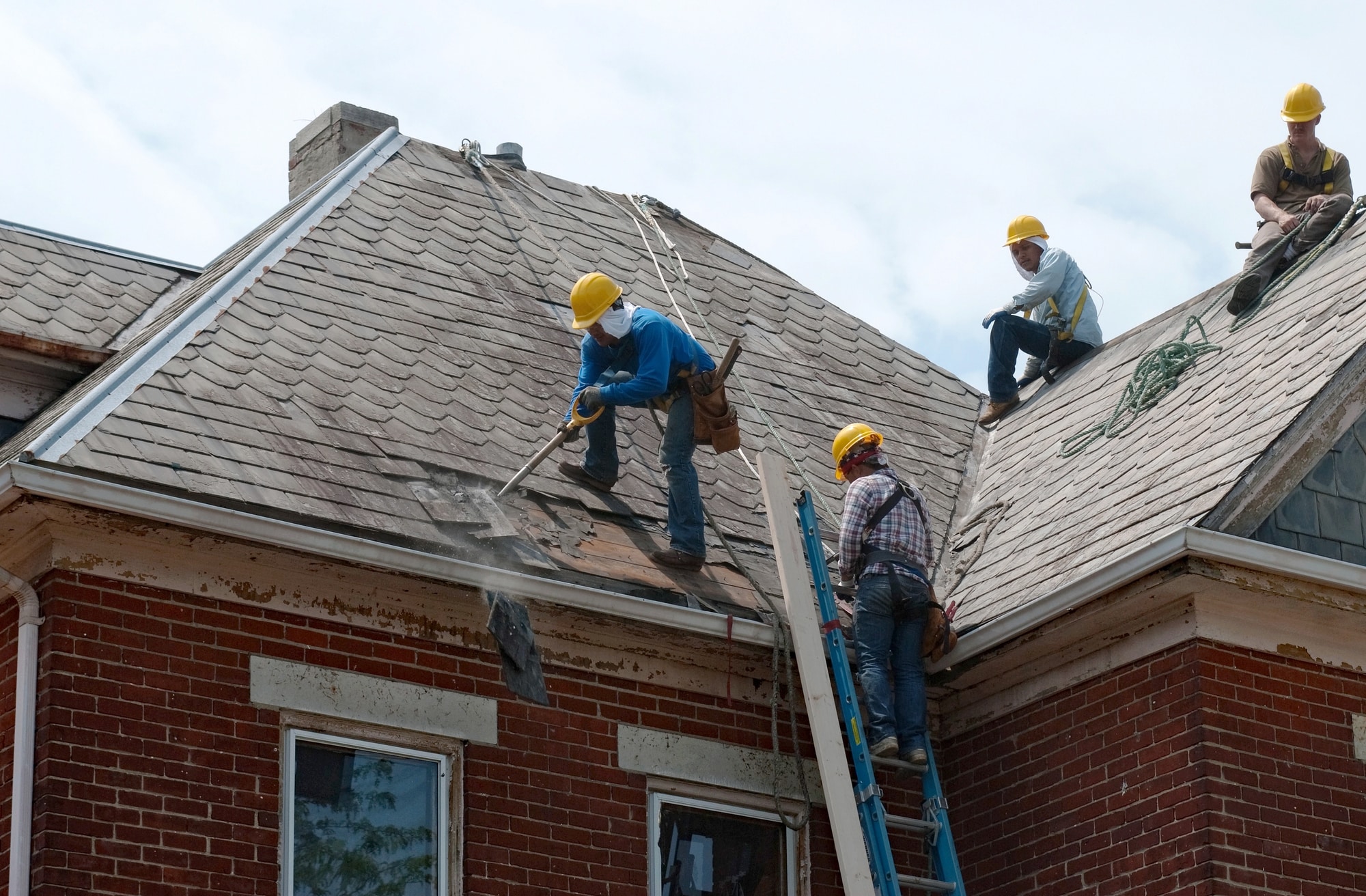

A roofing office can stall fast when leads live in one system, estimates in another, and payment follow-up sits in an inbox that nobody opens at the right time. The practical problem is not just organization, it is response speed. Roofr’s CRM timing analysis found that roofers using a CRM close deals faster on average than those who do not, which is why the strongest candidate for the best CRM for roofing companies is usually the one that shortens the path from inspection to signed contract and payment.
Roofing software in 2026 is moving toward all-in-one platforms that keep estimating, scheduling, payments, reviews, and follow-up in one place. Recent roofing roundups keep putting roofing-native systems such as Roofr, AccuLynx, JobNimbus, and QuoteIQ near the top, and one guide names Roofr the best overall while calling AccuLynx the best full-platform CRM for roofing. The pattern is clear in The 2026 roofing software roundup, which reflects how far the market has moved away from generic pipeline tools.
That shift changes the buying question. The issue is no longer whether a roofing company needs a CRM. The real question is which platform matches the workflow from lead capture to payment without making the team jump between five different apps. I also include GoHighLevel’s solution for contractors because some roofing teams want a broader contractor platform rather than a roofing-only system, and that distinction affects setup, follow-up, and day-to-day use.
Table of Contents
- 1. HighLevel
- 2. AccuLynx
- 3. JobNimbus
- 4. Roofr
- 5. Builder Prime
- 6. Jobba Formerly FCS Roofing Software
- 7. Dataforma
- 8. Leap Formerly JobProgress
- 9. JobTread
- 10. Followup CRM
- Top 10 Roofing CRMs, Side-by-Side Comparison
- Next Steps Choosing and Implementing Your Roofing CRM
1. HighLevel
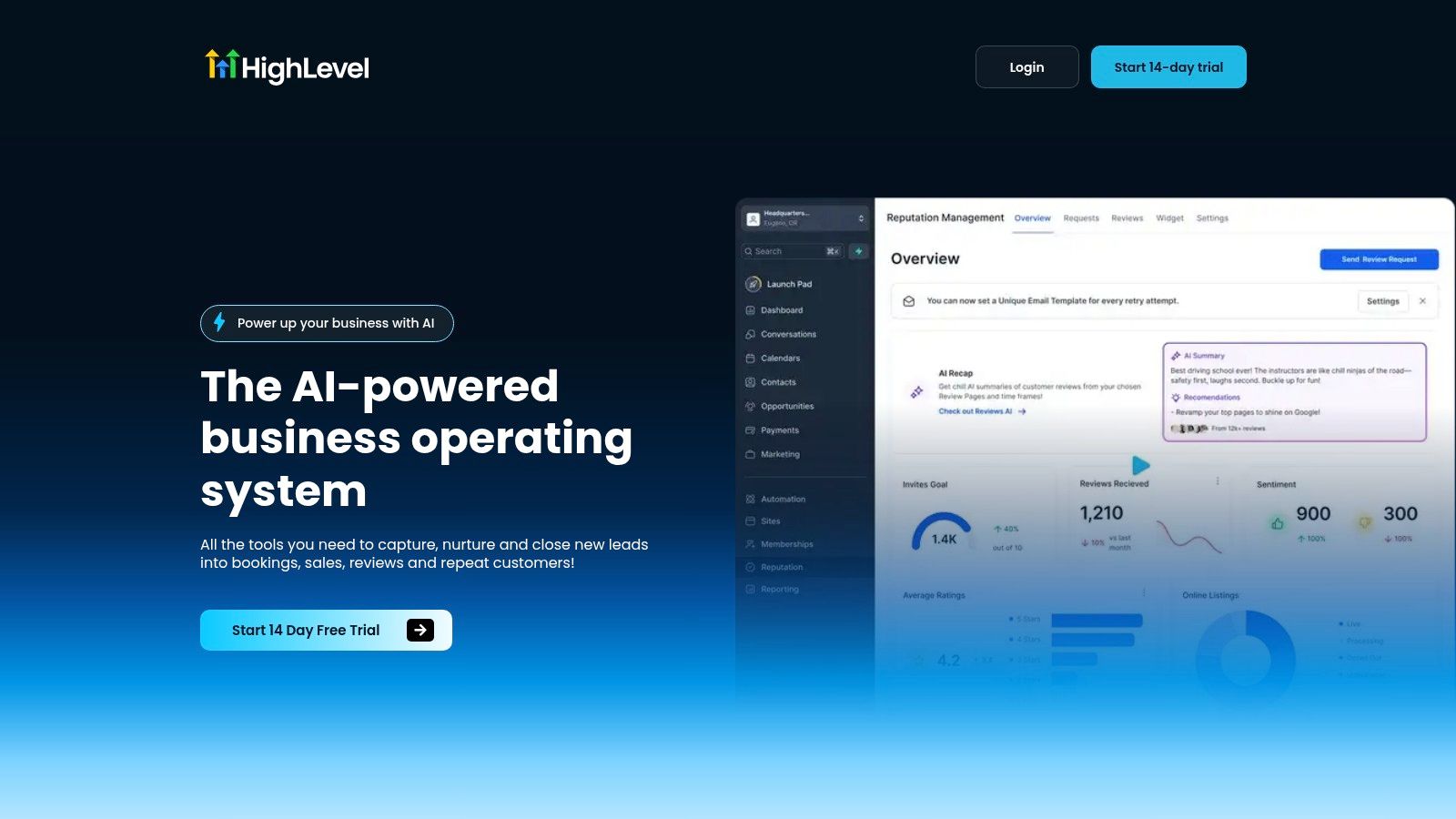
A roofing office that is losing time between lead capture, scheduling, estimate follow-up, and payment collection usually feels the need for a tighter system before it feels the need for another feature. HighLevel fits that problem well because it brings CRM, multi-channel messaging, funnels, appointment flows, invoices, payments, and reputation management into one workspace. For contractors who are trying to cut down on duplicate work, the value is less about having many tools and more about keeping the handoff between them inside one process. Its contractor-focused positioning is also clear in the way it presents itself as a white-label marketing CRM built to organize leads, track jobs, and close more deals, and GoHighLevel for contractors and home services gives a useful fit check for roofing teams.
Why roofers notice it quickly
HighLevel stands out because the pieces connect. A lead can enter through a form or funnel, move into a pipeline, get booked for an appointment, and then continue into payment and review collection without the team jumping between disconnected systems.
That matters in roofing because the operational delay is usually not the estimate itself, it is the gap between first contact and the next action. If office staff keep retyping the same lead details into separate tools, the issue is no longer just organization. It affects speed to response, follow-up consistency, and how often a lead successfully reaches the sales stage.
HighLevel’s published pricing makes the tradeoff easier to evaluate than many roof-specific suites. The Starter plan is listed at $97/month, and the Unlimited plan is listed at $297/month, with a 14-day free trial and unlimited contacts on published plans. HighLevel pricing and platform details helps roofing companies compare one platform against the cost and friction of several separate tools, which is often the more relevant financial question.
For teams comparing broader software options, the 2026 guide to construction CRM is also a useful reference point because roofing buyers often end up choosing between contractor-focused CRMs and more general construction systems.
Best fit and tradeoffs
HighLevel is a strong fit for agencies, solo operators growing into multi-location work, and local service businesses that want one system for capture, nurture, close, and reactivation. For roofing companies, the practical appeal is automation depth, unified messaging, and the ability to keep follow-up moving while the estimate is still fresh.
The tradeoff is setup effort. HighLevel can support a wide range of workflows, but roofing teams still need to define which processes they want to standardize before the platform produces real value. That makes it better for businesses that want to design their workflow carefully, and less attractive for crews that only need a simple job tracker.
2. AccuLynx
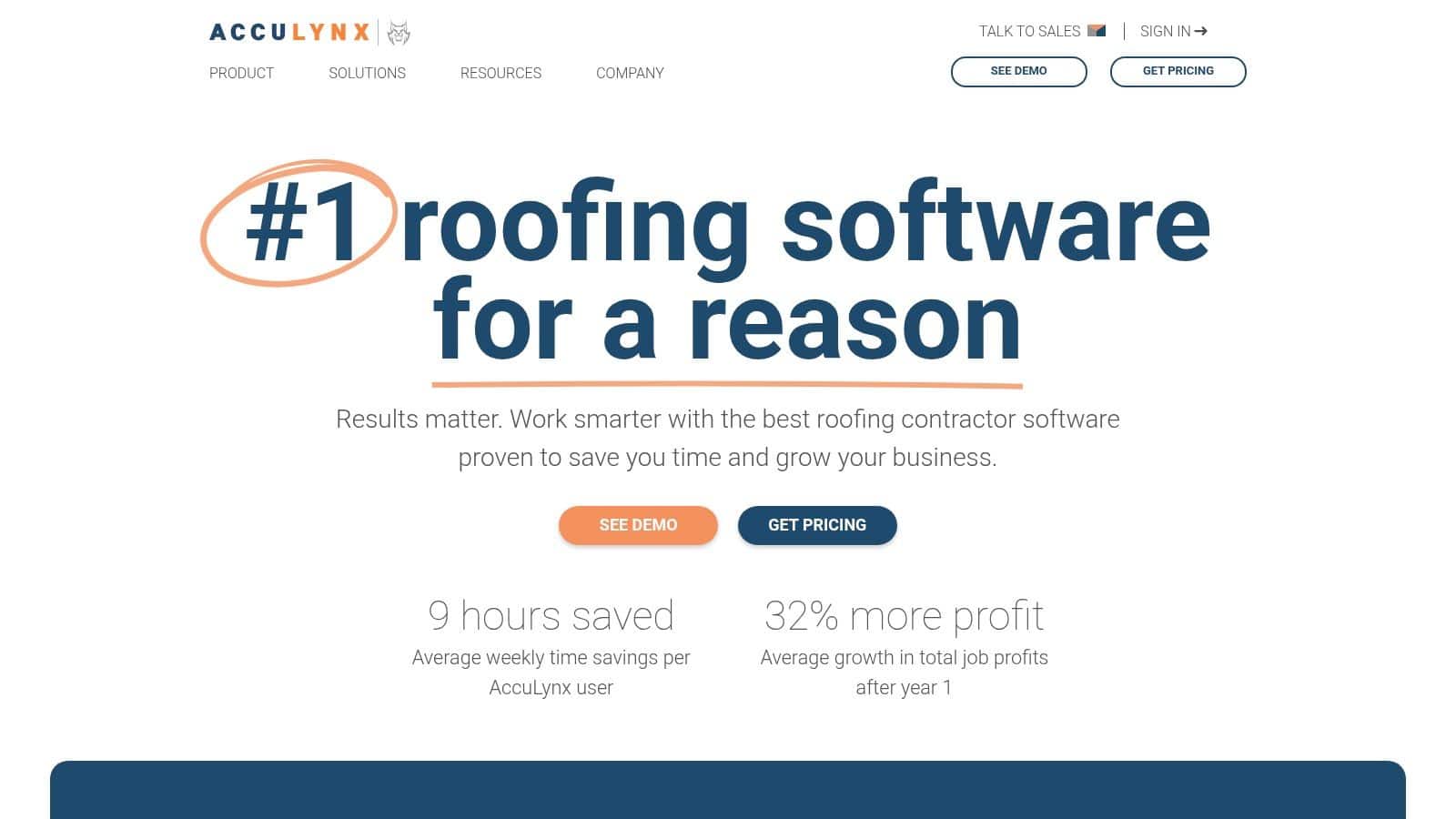
AccuLynx is one of the clearest examples of a roofing-native CRM built around the full job lifecycle. The reason it keeps appearing in 2026 rankings is direct, it centers the work roofers manage, lead intake, estimating, production, and invoicing. Roofing software roundups consistently point to its roof-specific workflow depth, especially for teams that need measurement, supplier links, photo documentation, and production tracking inside one system. The roofing CRM comparison guide explains the technical value of that setup, since every integration point removed reduces re-entry and cuts delay. For teams focused on reputation and handoff quality, the platform also fits the logic of the small business reputation management guide, because it helps keep office work, customer communication, and field activity pointed in the same direction.
Where it earns its reputation
AccuLynx is strongest once a roofing business has moved past basic contact tracking. Teams that use aerial measurement integrations, live material pricing, customer portals, and document management get a more complete operating system than they would from a generic sales CRM. That makes it a strong fit for storm-restoration and retail roofing companies that need sales, operations, and production to stay connected.
The platform’s tradeoff is part of what makes it specialized. Pricing is quote-based, so buyers do not get the same upfront clarity they would get from lighter tools. Costs can also rise once add-ons enter the mix, especially if the team needs signatures or other expanded capabilities.
Roofing buyers should compare AccuLynx with the amount of office work it removes from estimating and production.
Who should look hardest at it
If you run a larger roofing operation and the bottleneck is post-sale coordination, AccuLynx deserves a close look. It is built for contractors who need more than lead tracking, which is why it stands apart in roofing-specific evaluations. As a roofing operations hub, it helps the office keep field work, customer communication, and production status moving in the same direction.
If your shop is small and wants simple pricing, the platform may feel heavier than necessary. If your job volume and production complexity are high, that same depth is the reason it stays near the top of best-crm-for-roofing-companies lists.
3. JobNimbus
JobNimbus keeps appearing in roofing evaluations because it combines CRM and project management without trying to behave like a generic sales platform. Independent roofing coverage describes it as one of the closest options to a true all-in-one roofing system, with lead tracking, one-click estimating, mobile documentation, scheduling boards, automations, and customer billing support. That combination explains why many residential roofing teams rely on it as their main operating layer.
The practical value shows up in the handoff between stages. A lead can become an estimate, the estimate can become a scheduled job, and the job can continue through billing and reporting without the office stitching together separate point solutions. The same roofing coverage notes integrations with tools like EagleView, CompanyCam, and QuickBooks, which matters because many roofers already depend on those systems. If you need a roofing CRM that can scale from small crews into a more structured operation, JobNimbus belongs near the top of your shortlist, as our 2026 guide to construction CRM confirms.
JobNimbus also publishes pricing publicly, which gives smaller teams more visibility than quote-only platforms. That does not make it light, but it does make budgeting easier to evaluate before a sales call. The more important point is how it balances flexibility and depth. You are not limited to a basic pipeline, and you are not pushed into enterprise-style complexity either.
The tradeoff to plan for
The main downside is the learning curve. Contractors who want a simpler tool often find JobNimbus dense at first, because it includes enough functions to support larger operations. That is manageable if the team gets proper training and the business is willing to clean up its process. It becomes a problem if the expectation is immediate adoption without that work.
If your sales process is messy, JobNimbus will expose it fast.
That visibility can help a growing roofing company, because it shows where estimates stall, where jobs sit idle, and where billing falls behind. It can also create friction if the team is not ready to standardize how leads, jobs, and invoices move through the pipeline.
For roofers comparing CRMs by workflow depth, JobNimbus sits in a useful middle ground. It gives more structure than a light contact tool, while stopping short of the heavier operational systems that suit larger, more centralized offices.
4. Roofr
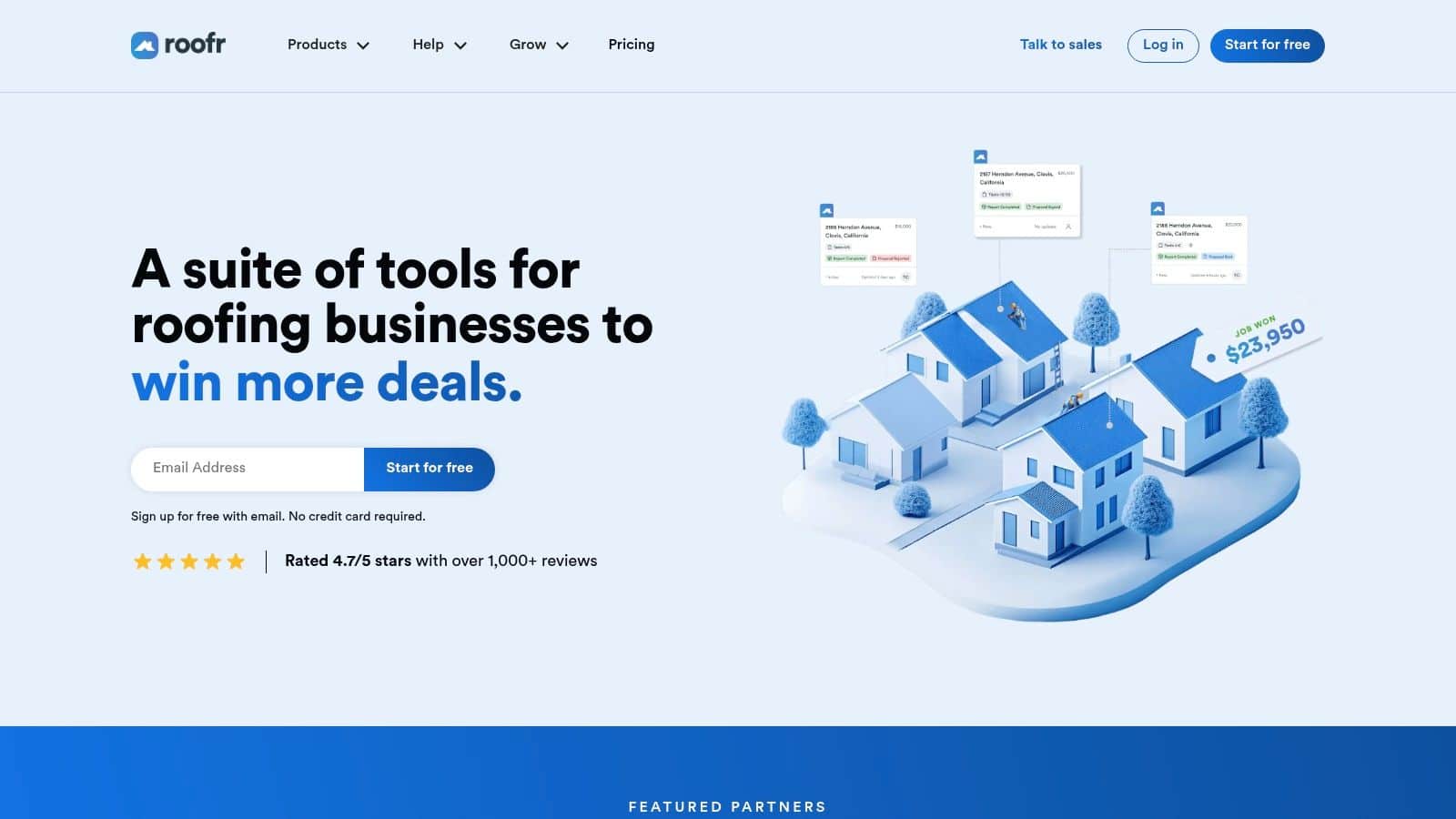
Roofr stands out in this roundup for one specific reason, speed from inspection to proposal. That matters because roofing teams lose time at handoffs, especially when measurements, estimates, and follow-up live in separate tools. Roofr’s CRM guidance points in the same direction, and it aligns with the broader roofing workflow shift toward faster lead capture, quicker follow-up, and faster proposal delivery.
Why lean teams keep choosing it
The appeal is straightforward. Roofr combines lightweight CRM tools, proposals, e-signatures, payments, and integrated roof measurement reports in one workflow. For a small roofing company, that removes a lot of manual transfer work. You do not have to move data from a measurement app into a proposal app and then into a payment tool. That shorter path is the point.
That focus on speed also makes Roofr easier to evaluate for teams that want a tight operational loop rather than a broad business platform. Its strength is estimating and proposal speed, not broad business management, a distinction also made in our guide for agency proposal software. The result is a tool that fits companies trying to reduce lag between the field and the signed agreement.
Roofr’s small-business positioning also matters. Roofr for small roofing businesses presents it as a practical option for teams with fewer than 10 crews, because it brings satellite measurements, a CRM pipeline, digital proposals, and invoicing or payments into one place. That is a useful reminder that the right CRM depends on whether the priority is feature depth or operational simplicity.
For roofing owners comparing systems, the CRM software comparison guide is a helpful way to sort tools by workflow coverage rather than by brand familiarity.
Where it stops short
Roofr is not the deepest full CRM in this roundup. It is strongest at estimating and proposal delivery, while broader business management sits outside its core advantage. That makes it a strong fit for small, fast-moving teams that care about closing and collecting faster, especially if they want to avoid paying for a heavier suite.
The tradeoff shows up when production management becomes more complex. Teams that need richer oversight across scheduling, crew coordination, and job-level administration may find Roofr too light. Teams that mainly want to move from inspection to quote to payment with less software friction often see that narrower design as the reason it performs well.
5. Builder Prime
Builder Prime is a strong contender for roofing companies that need structure across multiple locations or roles. It’s built for home-improvement contractors, which includes roofing, and its value lies in the visibility it gives you across the job lifecycle rather than just the top of the funnel. That matters for businesses that have outgrown “everyone sees everything” spreadsheets.
A better fit for growing teams
The main draw is contractor-specific workflow support. Estimating, proposals, e-signatures, production tracking, role-based permissions, and multi-location visibility make it useful for companies that need accountability across more than one branch or crew. It’s a practical choice when sales, operations, and ownership all need different levels of access.
The platform also comes across as more structured than many general CRMs because it’s designed around home-improvement operations, not just lead follow-up. That can help roofing businesses that are trying to enforce a repeatable process, especially once multiple managers get involved.
Where caution is smart
Pricing details aren’t always fully exposed without a demo, so you’ll want to evaluate fit carefully before making assumptions. The platform also uses a structure where user-based pricing can add up as the team grows, which means the total cost of ownership needs real attention.
Practical rule: if your org chart is getting more complicated, permission controls matter almost as much as estimating features.
Builder Prime works best when your roofing company needs visibility, controls, and repeatability. It’s less compelling if you’re still looking for the lightest possible system and don’t need multi-location governance yet.
6. Jobba Formerly FCS Roofing Software
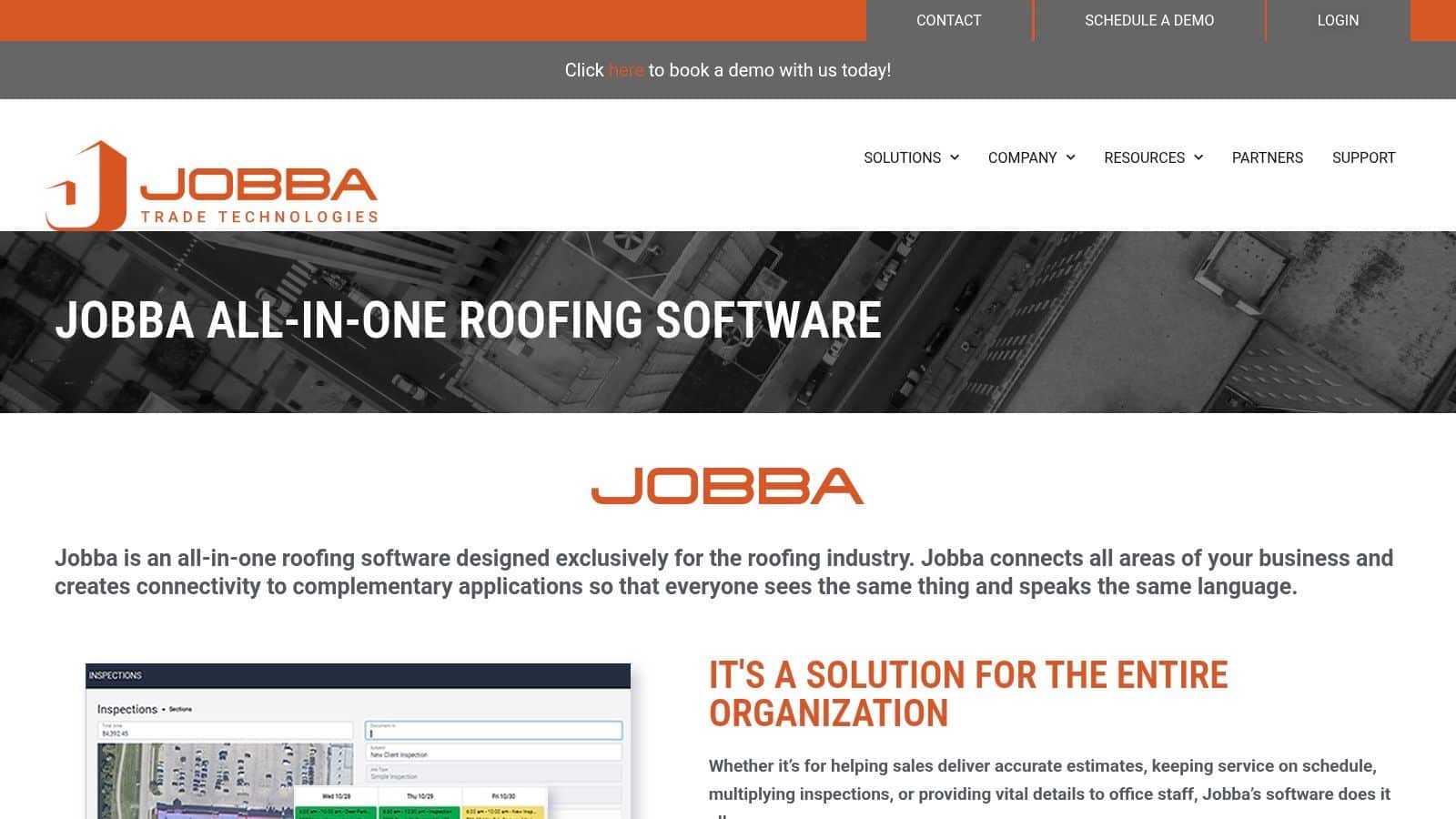
Jobba is built specifically for roofers, and that exclusivity is its biggest strength. It covers sales, CRM, service and inspections, and client portal functions, which makes it a credible choice for teams that don’t want a general construction platform pretending to understand roofing. The product’s heritage as FCS Roofing Software also signals why it shows up frequently in commercial and service-oriented roofing discussions.
Where the roofing-only focus helps
A roofing-only platform can be easier to map onto real work because the product language already matches how roofers talk about jobs. Jobba’s blend of deal tracking, proposals, e-signatures, service tools, and portal access makes it attractive when a business wants one system across sales and post-sale service.
That matters in commercial and service divisions where the relationship doesn’t end at the signed contract. Warranties, inspections, and recurring service work all benefit from a platform that understands roof management as an ongoing relationship instead of a one-time close.
The comparison guide angle is important here too. The CRM software comparison guide is relevant if you’re trying to separate “roofing native” from “construction adjacent,” because those choices are not the same thing in practice.
What to watch
Jobba’s biggest weakness is pricing transparency. Quote-based software can be fine if the fit is strong, but it makes early comparison harder. It also means you need to ask sharper implementation questions than you would with a self-serve tool.
If your company wants a roofing-specific platform that covers more than just sales, Jobba belongs on the list. If your priority is open pricing and fast self-serve onboarding, it may take more back-and-forth than you want.
7. Dataforma
Dataforma is the commercial roofing option in this group. It leans into service tickets, work orders, warranties, inspections, and long-term roof management, which is why it shows up in commercial and facility-management conversations more than in small residential-shop discussions. That focus makes it one of the more specialized tools here.
Best when service relationships matter
Commercial roofing often lives on recurring maintenance, warranty response, and portfolio oversight. Dataforma is built for that reality, not for one-off homeowner sales. Its CRM, customer portal, document handling, mobile app, and reporting support teams that need to keep a long paper trail on each site.
The platform also makes sense for businesses that need accounting and operational connections without treating roofing like a generic sales motion. That distinction matters because commercial jobs often span multiple visits, documents, approvals, and service records.
The realistic downside
Dataforma is not the lightest tool in the market. The user interface and learning curve can feel heavier than newer SMB platforms, and pricing requires a sales conversation rather than a public plan page. That isn’t a dealbreaker for the right customer, but it does make the evaluation process slower.
If your team manages commercial properties, warranty work, or service programs, Dataforma is worth serious consideration. If you mostly sell residential reroofs and want a simpler front-end sales motion, it may be more platform than you need.
8. Leap Formerly JobProgress
Leap, formerly JobProgress, is built for contractors who need structure across document-heavy jobs. It has a meaningful roofing presence because it combines CRM pipelines, estimating, e-signatures, scheduling, and mobile continuity in a way that supports field and office workflows. For companies handling insurance-driven work or projects with lots of paperwork, that combination is attractive.
Why it shows up in roofing conversations
The platform’s strength is that it doesn’t treat documents as an afterthought. Estimates, permits, photos, and job records can live together, which helps companies that need a clean trail from first contact through completion. That’s a practical advantage in roofing, especially when claims or approvals are involved.
Leap’s mobile continuity is also important. Field teams need to use the system away from the office, and a platform that keeps desktop and mobile experiences closer together can reduce friction for crews and sales reps.
The limitation to understand
The interface can feel clunky, and that’s the most common concern you’ll hear from users. A powerful system that’s hard to operate creates drag during rollout, especially if your team expects a quick learning curve. Pricing is also usually handled through a demo, so you’ll need to evaluate total cost after factoring in users and add-ons.
Leap fits roofing businesses that value workflow structure and document control more than minimalist design. If your team can tolerate some complexity for operational depth, it deserves a look.
9. JobTread
JobTread is one of the better options for roofing teams that care about estimating, job costing, and financial control. It’s a construction management platform with a built-in CRM, which means the workflow starts with the sale but doesn’t stop there. For roofers who want tighter visibility into costs, schedules, documents, and client portals, that makes a lot of sense.
Where it adds real value
JobTread’s estimating and financial controls are its biggest pull. That’s important because many roofing teams don’t lose money at the quote stage, they lose it later when costs drift or job tracking gets sloppy. A platform that keeps job costing in the same system as the CRM can help reduce that disconnect.
The usability reputation also matters. Teams often choose it because it’s more approachable than some heavier suites, which can shorten onboarding if you’re replacing spreadsheets or a patchwork of tools. That can be a real advantage during implementation.
What it doesn’t try to be
JobTread is not the strongest marketing CRM on this list. Its lead generation and campaign features are lighter than the all-in-one marketing platforms, so you may still want outside tools if your focus is aggressive top-of-funnel growth.
That doesn’t make it weak. It just means it solves a different problem. If your roofing business wants better estimating discipline, job costing, and financial visibility, JobTread can be a strong operational choice.
10. Followup CRM
Followup CRM is built for construction sales discipline, and that focus is exactly why roofing teams use it. It is designed to manage leads, bids, follow-up cadence, dashboards, and sales forecasting, which makes it especially useful for teams that know they’re losing opportunities because follow-up slips. Followup CRM’s construction focus is the headline, but the better takeaway is that it prioritizes sales process over broad production management.
Best for disciplined sales teams
This is the tool for companies that want pipeline visibility and consistent follow-up more than full field operations. It’s especially useful when managers need to know which estimates are aging, which bids need attention, and which reps are performing the work. For roofing companies with a strong lead flow, that visibility can tighten the sales side quickly.
The integration story also matters. Followup CRM connects with accounting and ERP systems like ComputerEase, Foundation, and Sage Intacct, which makes it more credible for construction companies that already have back-office infrastructure.
Where it fits in the stack
Followup CRM is not a full production or field management suite, and that’s not a flaw if you plan to pair it with operational software. It’s strongest when it owns the sales process and another system handles the rest of the job lifecycle.
For roofing companies that need better close rates, better rep accountability, and cleaner forecasting, it’s one of the sharper tools in the category. For companies wanting one system for everything, it’ll likely need a companion platform.
Top 10 Roofing CRMs, Side-by-Side Comparison
| Product | Key capabilities | Unique strength (✨) | Target audience (👥) | Pricing/value (💰) | Quality (★) |
|---|---|---|---|---|---|
| HighLevel 🏆 | CRM + unified inbox, funnels, calendars, payments, reviews, broadcasts, Conversation AI | ✨ AI-native automations + true all‑in‑one stack; unlimited sub‑accounts/contacts | 👥 Agencies, marketers, local businesses, franchises | 💰 14‑day trial · Starter $97/mo · Unlimited $297/mo · unlimited contacts | ★★★★★ |
| AccuLynx | Roofing CRM, estimating, production boards, supplier integrations, aerial measurements | ✨ EagleView/SkyMeasure + live material pricing for accurate estimates | 👥 Roofing contractors, storm‑restoration & retail teams | 💰 Quote‑based (add‑ons possible) | ★★★★★ |
| JobNimbus | CRM, pipelines, estimates/e‑sign, job costing, scheduling, integrations | ✨ Flexible CRM + project management that scales for crews | 👥 Residential roofing teams; small→growing crews | 💰 Public plans available (tiered) | ★★★★ |
| Roofr | Lightweight CRM, instant proposals, e‑sign, payments, integrated roof measurements | ✨ Fast setup; proposals + measurements in one app | 👥 Startups, lean roofing teams | 💰 Simple starter plan (confirm current pricing) | ★★★★ |
| Builder Prime | CRM, estimating, proposals/e‑sign, production tracking, multi‑location views | ✨ Franchise & multi‑location visibility with role permissions | 👥 Home‑improvement contractors, franchises | 💰 Transparent fee structure (demo recommended) | ★★★★ |
| Jobba (FCS) | CRM, estimates/proposals, service/inspections, client portal, vendor connectivity | ✨ Broad roofing sales→production→service workflows (commercial focus) | 👥 Commercial & service roofing divisions | 💰 Quote‑based / demo required | ★★★★ |
| Dataforma | CRM with service tickets, inspections, work orders, mobile app, document mgmt | ✨ Built for commercial service, warranties & multi‑site management | 👥 Commercial roofing & facility managers | 💰 Contact sales for pricing | ★★★★ |
| Leap (JobProgress) | CRM, estimating, e‑sign, job tracking, scheduling, mobile app | ✨ Mobile‑first contractor workflows with field continuity | 👥 Contractor trades (roofers) & field teams | 💰 Pricing via sales/demo | ★★★★ |
| JobTread | Estimating, job costing, schedules, POs, invoicing, CRM, workflows | ✨ Robust estimating & financial controls for builders/roofers | 👥 Builders & roofers needing tight cost control | 💰 Contact sales / tiered plans | ★★★★ |
| Followup CRM | Lead & bid tracking, cadence, tasks, reporting, accounting integrations | ✨ Sales discipline & forecasting focus for construction teams | 👥 Roofing sales teams; forecast‑driven shops | 💰 Public info; often paired with PM tools | ★★★★ |
Next Steps Choosing and Implementing Your Roofing CRM
The right CRM choice depends less on brand recognition and more on workflow fit. A roofing business that lives on fast estimates and quick closeouts doesn't need the same system as a commercial service company managing inspections, warranties, and recurring maintenance. The most useful shortlist starts with your actual bottleneck, not the product list.
If your biggest problem is speed to quote and speed to payment, Roofr and HighLevel both deserve a hard look for different reasons. Roofr is the sharper fit when you want roofing-specific estimating and lean simplicity, while HighLevel makes more sense when you want the CRM to sit inside a broader marketing and follow-up engine. If your biggest problem is production complexity, AccuLynx, JobNimbus, and Jobba have more to offer because they go deeper into the roofing workflow.
Implementation matters just as much as selection. A CRM will not fix disorganized lead intake if your team still lets calls go to voicemail without a follow-up rule. It won't fix slow estimates if no one owns the inspection-to-proposal timeline. It won't improve collections if invoicing lives in a separate habit on someone's desktop.
Use a short pilot before you switch everything. Map three things first, lead capture, estimate delivery, and payment collection. Then test whether the CRM reduces handoffs, keeps notes visible, and makes it easier for the team to move a job forward without asking where the file lives.
Migration should also be simple and controlled. Export contacts, deals, notes, and pipeline stages from the old system. Rebuild only the fields you use, not every field the old platform allowed. Then train the office team first, because the office usually controls the data quality that makes the rest of the rollout work.
The best roofing CRM is the one your team will use every day. If a platform improves follow-up, shortens proposal turnaround, and makes it easier to collect payment and reviews, it's doing the job that matters. If it adds complexity without removing friction, keep looking.
HighLevel gives roofing companies one platform for lead capture, follow-up, booking, payments, and reputation management, which is exactly the kind of stack reduction this category needs. If you want a CRM that helps your team move faster from inquiry to estimate to close, take a look at HighLevel and see how its all-in-one workflow could fit your roofing operation.
