


You're probably doing it now, juggling a spreadsheet for quotes, a separate app for scheduling, and a trail of texts, missed calls, and reminder notes that never quite live in one place. That is why the best CRM for painting contractors is not a generic contact database. It keeps estimates, follow-up, booking, invoicing, and review requests attached to the same job, so you spend less time searching for information and more time closing work. Painters who want cleaner follow-up also need a system that can enhance customer engagement through social CRM, because lead response and reputation management often overlap in a small service business. To improve local business online reputation, contractors can also connect CRM workflows to review collection and response processes through this guide.
A sample of about 200 businesses in one industry discussion found DripJobs at 19.7%, PaintScout at 10.3%, PepCloud at 7.4% in franchise settings, EstimateRocket at 6.9%, GoHighLevel at roughly 6%, and Jobber at 5.4%. That spread suggests painting contractors still choose by workflow fit rather than by market consensus (YouTube discussion). The practical takeaway is straightforward. A solo painter rarely needs the same setup as a five-crew shop, and estimating workflow often matters more than a polished pipeline.
If you want the short list, start with HighLevel if you care about unified follow-up and automation, PaintScout if estimating accuracy is where deals slow down, Jobber if you want a polished field-service hub, and Housecall Pro if your business depends on booking and customer communication. For a painting shop comparing CRMs, the question is which platform matches how your crew quotes, schedules, gets paid, and asks for reviews.
Table of Contents
- 1. HighLevel
- 2. Jobber
- 3. Housecall Pro
- 4. DripJobs
- 5. QuoteIQ
- 6. Estimate Rocket
- 7. PaintScout
- 8. Builder Prime
- 9. CorkCRM
- 10. FieldPulse
- Top 10 Painting Contractor CRMs, Features & Pricing
- Your CRM Migration Blueprint
1. HighLevel
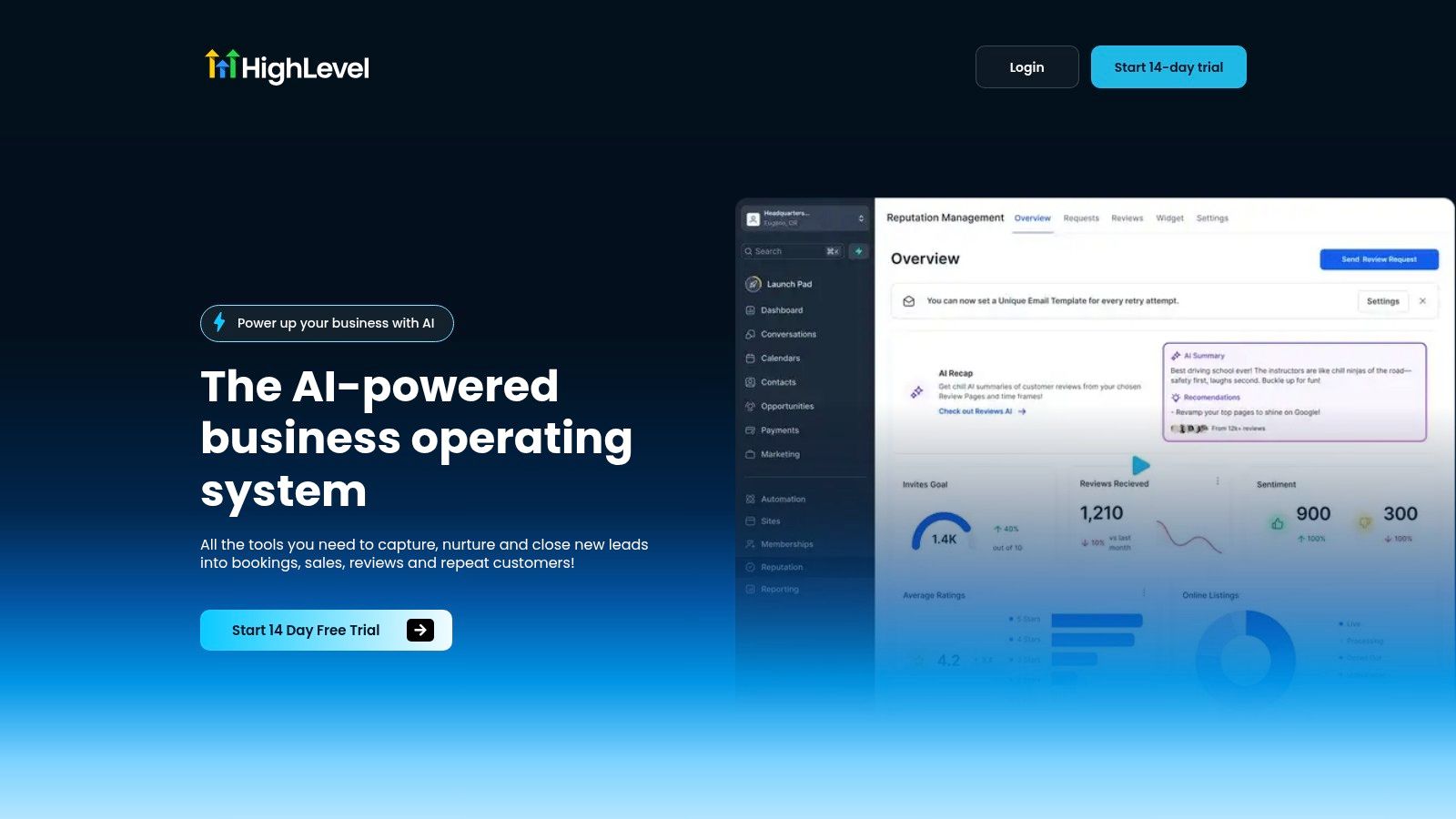
HighLevel stands out because it tries to replace the usual pile of disconnected tools with one operating system. For painting contractors, that means CRM, unified conversations, calendars, invoicing, payments, review automation, and visual workflows can sit in the same workspace instead of being stitched together after the fact. The platform also publishes a 14-day free trial, a Starter plan at $97/month, and an Unlimited plan at $297/month, which gives you a clear sense of the investment before you commit to onboarding.
Why painters keep looking at HighLevel
The strongest fit is workflow control. GoHighLevel supports CRM workflows used for painting businesses, including lead capture, estimate follow-up, and pipeline management for paint jobs, and it also supports online booking plus appointment scheduling for quote requests and job scheduling. It can handle SMS follow-up and missed-call text-back automation, which helps when a homeowner calls after hours and the lead would otherwise cool off before morning.
HighLevel's broader value shows up after the estimate goes out. Unified conversations help when leads come from web forms, SMS, and social messages, and reputation tools can automate review requests after completion. For a painting contractor, that means less time jumping between systems and more time running the same process every time a lead moves from inquiry to completed job.
Practical rule: if your office time gets eaten by callbacks, reminders, and review requests, a platform like HighLevel usually earns its keep faster than a narrow CRM.
Who it fits best
HighLevel makes the most sense for agencies, freelancers who want to scale, local service businesses, multi-location operators, and contractors who want one system to capture, nurture, close, and reactivate customers. It is especially useful if you need to standardize lead handling across multiple crew members or franchise-like locations.
The tradeoff is complexity. A platform with this much breadth needs setup time, and smaller painting crews that only need quoting and basic scheduling may find the stack heavier than they want. For teams weighing fit against feature depth, HighLevel's CRM selection advice can help frame the decision before rollout. If your business needs automation depth, reputation management, and mobile access in one place, HighLevel is one of the more strategically interesting options in the category. For a contractor-focused overview, see the internal guide on HighLevel for contractors' lead management.
2. Jobber
Jobber is a field-service platform for painting companies that want a clear day-to-day operating system. It covers leads, quotes, scheduling, dispatch, invoicing, payments, and customer communication without adding a lot of complexity. Because the name is familiar in the home-service space, office staff and field crews often need less time to get comfortable with it.
Jobber is a strong fit if your painters spend more time in trucks and on job sites than at desks. The mobile experience stands out, and the client hub lets customers approve quotes and handle payments without much back-and-forth. That helps move work from estimate sent to estimate won with fewer delays.
Where Jobber makes sense
For painters, Jobber's value is practical rather than flashy. Online booking, quoting with markups and job costing, scheduling with GPS route optimization, invoicing, payments, and mobile time tracking cover the everyday rhythm of a residential shop well. A small crew that wants a system without heavy admin training can usually move quickly with it.
The cost picture becomes more complicated as the team grows. Verified market data in the brief shows that software economics can vary by more than 3x depending on whether a contractor chooses a lighter SMB stack or an enterprise platform, and Jobber sits in the middle of that pressure point. That makes it a sensible operational choice, but not always the lowest-cost option over time.
What to watch
Jobber's biggest limitation is reporting depth compared with larger construction ERPs. That does not make it weak, it means it fits teams that want speed and clarity more than extensive back-office analytics. If your main priorities are reliable scheduling, customer communication, and a mobile-first interface, Jobber stays near the top of the list.
The best use case is a crew that wants a clean system their estimator will open every day.
For painters trying to improve their local reputation after the job is done, Jobber also connects well to the broader idea of improve local business online reputation, which can matter when reviews become a growth lever in your market.
3. Housecall Pro
Housecall Pro fits painting contractors that need quick quoting and orderly scheduling without building a process from scratch. It is a mature home-service CRM, so the core workflows are familiar, and the surrounding ecosystem is broad enough that contractors can usually find tutorials, third-party guidance, and trade-specific examples when they need them.
Housecall Pro works well as an operations platform for home-service businesses that quote often, schedule often, and rely on reminders to keep jobs moving. Painters use it for estimates, proposals, scheduling, dispatch, payments, and automated customer communication. For a business centered on residential work or a steady lead flow, that mix can support the day-to-day workflow without forcing a major process change.
Why it belongs on this list
The main advantage is workflow familiarity. Housecall Pro is designed to be easy to learn, and its feature set matches the routine motions painters care about, quote, book, remind, invoice, and get paid. Smaller teams can move quickly because the platform does not demand a long implementation cycle.
Cost still needs a close look. Verified market context shows that painting CRM pricing can vary widely as teams move from lighter SMB tools to more advanced systems, and Housecall Pro sits in the middle of that tradeoff. SouthArc Digital's comparison of painting CRM options for 2026 places that discussion in the context of full annual cost, not just the sticker price, which is the right way for painters to judge value (SouthArc Digital).
Where it can fall short
Higher-tier features are often where the platform becomes more useful, so the total price can rise as a company scales. That pattern appears across this category, but it matters more for painting shops because quote volume is high and margins can shrink when software starts cheap and then adds cost through extras. Teams that want a strong general-purpose platform with a mature ecosystem still have a good reason to evaluate it carefully.
For contractors comparing software categories and narrowing down the right fit, the internal guide to compare proposal management tools helps frame the tradeoffs between broader automation and narrower operations tools.
4. DripJobs
DripJobs fits painting businesses that lose work because estimates sit too long without follow-up. The platform centers on automated text and email drips, proposals with Good, Better, Best packages and e-sign, appointments, jobs, invoicing, and payment collection. For a contractor whose close rate drops when the office team gets busy, that workflow matters more than a broad feature list.
DripJobs also stands out because its process reflects trade-specific needs rather than generic service business software. As noted earlier, the verified market discussion identifies DripJobs as the most used platform in the sample, at 19.7%, which points to strong adoption among painting contractors. That does not make it the right fit for every shop, but it does show that its follow-up model has practical traction.
Follow-up is the product
DripJobs is strongest when a business treats fast follow-up as part of the sales process. Automated drip sequences can nurture cold leads, re-engage prospects who said they needed time to think, and keep the estimate moving without depending on memory or manual reminders. That is especially relevant in painting, where homeowners often compare several bids before they choose.
Practical rule: if your estimates usually go out but your follow-up is inconsistent, automation will usually create more revenue than a prettier dashboard.
The proposal flow also reduces friction at the close. Customers can sign e-proposals without extra back-and-forth, which cuts down on small delays that can stall a sale after pricing is already done. For painters, that matters because the sale is often won or lost on speed and consistency after the estimate, not on the estimate itself.
Where to be careful
DripJobs does not try to cover every part of a contractor's operation. Its SMS is customer-only, not a full crew texting system, and some advanced change-order and template features are tied to higher plans. Larger shops that want one shared layer for office and field communication may find that limiting.
Contractors who want deeper estimating or self-serve quote intake should compare proposal management tools before deciding, because DripJobs is stronger on follow-up than on estimator-heavy workflows. The best fit is a painting shop that already knows follow-up is costing jobs and wants software that enforces that discipline.
5. QuoteIQ
QuoteIQ stands out because it is built around painter-specific estimating and AI-assisted workflows. For a painting contractor, that means room-by-room estimates, photo-to-quote support, satellite measurement, and self-serve quote and booking widgets can live in one system. The platform's public pricing starts at $29.99/month and it offers a 14-day free trial, which makes it straightforward to test before rolling it out across a crew (QuoteIQ).
Estimating is the center of gravity
QuoteIQ is built around the sequence painters follow, not just generic pipeline management. Its estimation tools are designed for same-day quoting, and its published feature set emphasizes surface measurement, automated quote follow-up, and customer self-quoting through embeddable forms. That makes it a serious candidate when the main bottleneck is getting a clean estimate in front of the homeowner quickly.
The 2026 comparison content also positions QuoteIQ as a platform that can replace several tools at once for painting businesses sized roughly 1 to 30 employees. That claim is paired with surface measurement, AI estimating, and automated follow-up, which matters because painting businesses often need those functions to work together rather than as separate add-ons (QuoteIQ).
Where it stands out
QuoteIQ's appeal is that it reduces tool sprawl. Instead of stitching together CRM, estimating, scheduling, invoicing, and marketing automation, a contractor gets one system with native workflows that support the quote-to-close process. That fits painters who do not want to assemble an operating stack from scratch.
When comparing one platform to three separate subscriptions, consider how much friction you want to keep in the business.
The tradeoff is trust and familiarity. Some contractors will prefer the interfaces they already know from Jobber or Housecall Pro, especially if the team is already trained on those systems. If the priority is quote speed, measurement, and automated follow-up in a single workflow, QuoteIQ is hard to ignore.
6. Estimate Rocket
Estimate Rocket is one of the more established names in painting software, and it stays relevant because it focuses on the estimating and project-management handoff. Contractors use it for CRM functions, client communication, proposals, e-sign, work orders, change orders, invoices, and photo documentation. It's a strong fit when you want professional proposal output without abandoning operational control.
Estimate Rocket also has a clear place in the market because it appeals to established painting companies that care about mature estimating workflows and QuickBooks Online sync. For a lot of contractors, that combination matters more than flashy automation. The internal comparison guide on compare proposal management tools is useful if you're weighing how much your proposal process itself should do.
Why it still matters
A lot of comparison content treats estimating as just one module inside a bigger CRM. Estimate Rocket pushes the other way, it treats proposals, job workflows, and follow-up as the heart of the process. That can be a smart fit for painters whose sales process is detailed, especially when jobs need change orders and document handoff between office and field.
The verified data in the brief makes a larger point here. Most comparison pages still frame the decision as a generic “best CRM” shortlist, but the primary buying criterion in painting is often estimating quality, not just lead tracking. Estimate Rocket stays relevant because it handles the estimate-to-production handoff in a way many generic systems don't.
What to expect
This is not the lightest or cheapest option in the field, so it tends to make more sense for established companies than for brand-new solo shops. Its strengths are maturity, document flow, and the ability to keep the sales side and production side aligned once a job is sold.
If your team needs a focused environment for proposals, change orders, and invoices, Estimate Rocket is a credible middle path between a simple field-service CRM and an enterprise construction suite. It's especially attractive when your current bottleneck is not lead capture, but what happens after the estimate is accepted.
7. PaintScout
PaintScout deserves a separate look because it's one of the few platforms that was clearly designed for painting estimating first. The system emphasizes fast, accurate estimates, branded proposals, and e-sign, with production-rate calculators for interior, exterior, and cabinet work. That makes it a favorite when pricing consistency is the main operational problem.
PaintScout also lines up with the market insight that estimating quality is a major underserved angle in the painting CRM space. The vendor's own positioning centers on accurate estimates and same-spot proposal signing, which matches the way many contractors close jobs. That's especially valuable when estimate turnaround is the difference between getting picked and getting ignored.
Best when estimating is the bottleneck
PaintScout is the best choice for contractors who want painter-specific estimating rather than a broad field-service app with painting templates added on top. The feature set supports production-rate logic, branded proposals, and follow-up tools, all of which help contractors move from walkthrough to signed proposal faster and with less manual adjustment.
The 2026 industry discussion in the verified data also flagged estimating as a real buying criterion, and PaintScout is one of the clearest examples of that focus. If your business already has scheduling and invoicing covered elsewhere, PaintScout can be the exact tool you need to tighten the quote process without replacing your whole stack.
Where it is limited
PaintScout is not a full operations platform. Scheduling and dispatch are limited compared with full field-service CRMs, so many contractors would still need another system for the rest of the workflow. That's the tradeoff, you get strong painter-specific estimating, but you don't get a complete operating system out of the box.
That said, some teams don't need a complete operating system. They need a quoting engine that produces professional proposals quickly and consistently, and PaintScout does that job well. If you're trying to separate the sales problem from the operations problem, this is one of the cleanest tools in the category.
8. Builder Prime
Builder Prime is built for contractors who want more lifecycle visibility than a lightweight CRM usually provides. For painting businesses, that means CRM, lead routing, estimating, production management, reporting, and text messaging can all live in one place. It's a stronger fit for teams that have outgrown basic scheduling and now need more control over how jobs move through the business.
Builder Prime is also a useful reminder that not every painting company is the same. Some shops are mostly residential and small crew focused, while others are managing multi-crew projects and need deeper production oversight. Builder Prime serves the second group better than the first.
Where it fits in the market
Its biggest strength is structure. Pipeline reporting and production scheduling help managers keep an eye on the entire sales-to-delivery process, which can be useful if you have multiple crews or more than one estimator. If you need visibility across a wider operation, that depth matters more than a lightweight interface.
Builder Prime's limitations are practical. Pricing is by request, so budgeting takes an extra sales conversation, and the interface can feel more operations-heavy than some smaller teams want. That doesn't make it bad, it just means the product is better aligned to growing businesses with more moving parts.
Best use case
If your painting company is moving from “owner manages everything manually” to “office team and field team both need shared visibility,” Builder Prime is worth considering. The platform is designed for trades, which gives it a better workflow fit than a generic CRM, and the production side is deeper than many alternatives in this roundup.
For a contractor comparing systems by business stage, Builder Prime usually lands in the middle. It's more operationally serious than the entry-level apps, but less specialized than a painter-only estimating product. That can be exactly what you need if your crew size and project complexity are both growing.
9. CorkCRM
CorkCRM is one of the few options that feels specifically built for painting companies from the ground up. It centralizes lead capture, appointment booking, proposals, job scheduling, invoicing, timecards, and reporting, which gives smaller teams a focused system without the baggage of a massive field-service suite. It also offers a 14-day trial, which makes it approachable for contractors who want to test quickly.
CorkCRM is compelling because it tries to keep the learning curve manageable. That matters in the painting world, where owners often need the office side to work without spending a week training the whole crew. If the goal is painter-specific software that feels simpler than the enterprise-style alternatives, CorkCRM earns a look.
Why smaller teams may like it
The advantage here is focus. CorkCRM standardizes proposals and job stages around painting workflows, so the system feels more aligned to the trade than a generic CRM would. That can help a small shop move from scattered notes and text threads into a more repeatable process.
The tradeoff is ecosystem size. Smaller niche platforms often have fewer integrations and less community support than larger field-service players, so you need to confirm your accounting, marketing, and communication tools will fit. That's especially important if you already depend on a specific payment processor or bookkeeping stack.
A good fit for simpler operations
CorkCRM is most attractive to contractors who want a painter-focused system without a steep learning curve. If you're not trying to run a franchise, a large commercial operation, or a highly customized automation stack, that simplicity can be a feature instead of a limitation.
For painting companies that just want one clean place to manage lead, estimate, schedule, and invoice, CorkCRM is a realistic contender. It probably won't satisfy every advanced workflow, but it can be enough for teams that want structure without overbuilding their process. For deeper construction-specific context, the internal guide on HighLevel's construction CRM insights is worth a look.
10. FieldPulse
FieldPulse is a broad field-service suite that works for painters who need estimate-to-invoice workflows, scheduling, dispatch, price books, and job costing in one platform. It's especially appealing for growing teams and larger commercial jobs where configurable workflows matter more than a minimal interface. The platform also offers optional modules like a built-in phone system and forms, which can help centralize more of the office load.
FieldPulse is a good example of a tool that leans toward depth. If your operation has office staff, field staff, and a need for more controlled processes, that can be exactly what you want. If you're a small repaint crew, it may feel like more system than you need.
Strengths for growing painters
The feature set makes sense for a business with increasing complexity. Estimates and invoices, scheduling and dispatch, project management, customer portal, online booking, and optional VoIP all support a more structured operation. That's useful when you're trying to keep track of multiple jobs, multiple crews, and multiple customer touchpoints without losing accountability.
The main advantage is configurability. As painting businesses grow, they often discover that their primary challenge isn't merely lead tracking, but how estimates become jobs, how jobs become invoices, and how office staff keep operations running smoothly. FieldPulse is built to manage that kind of workflow.
Where to be careful
Pricing is custom-quoted, so you won't get the same immediate transparency you get from some SMB tools. That can be fine for larger teams, but it makes quick comparisons harder. It may also be more platform than very small crews need if they only want quoting, reminders, and payment collection.
FieldPulse belongs in the conversation because it covers the operational side of the trade well. If your painting business is growing into a more complex service operation and you want one place to manage scheduling, costing, and customer communication, it's a serious option.
Top 10 Painting Contractor CRMs, Features & Pricing
| Product | Core capabilities | Target audience 👥 | Unique selling points ✨ | UX / Quality ★ | Pricing / Value 💰 |
|---|---|---|---|---|---|
| HighLevel 🏆 | CRM + unified inbox, funnel/website builder, automation, payments, bookings, reputation, native AI | 👥 Agencies, SMBs, marketers, multi-location businesses | ✨ AI-native across messaging/voice/content; unlimited sub-accounts; no-markup rebill phone/email; all‑in‑one mobile stack | ★★★★☆, powerful, steeper learning curve | 💰 $97 Starter / $297 Unlimited · 14‑day trial |
| Jobber | Online booking, quotes/estimates, scheduling & GPS, invoicing, mobile time tracking | 👥 Small painting & field teams, technicians | ✨ Clean mobile app + client hub for approvals/payments | ★★★★, easy to learn, field-first | 💰 Tiered plans + add‑ons (cost grows with seats) |
| Housecall Pro | Industry templates, online booking, estimates, scheduling/dispatch, payments & reminders | 👥 Home-service painters, franchises | ✨ Fast quoting/scheduling flows; mature ecosystem & training | ★★★★, polished, battle-tested | 💰 Tiered pricing; some features on upper plans |
| DripJobs | Automated text/email drips, proposals + e-sign, calendar, invoicing/payments | 👥 Painters prioritizing speed-to-follow-up & conversions | ✨ Strong drip & estimate-to-sign automation | ★★★★, simple, conversion-focused | 💰 Affordable tiers; some advanced features in higher plans |
| QuoteIQ | Paint calculator, AI photo-to-quote, satellite measurements, self-serve quote widgets | 👥 Painters who need fast, visual AI estimates | ✨ AI photo quoting & MapMeasure; InstaQuote/InstaSchedule widgets | ★★★★, modern, estimating-first UX | 💰 Plan-based; AI included (verify integrations) |
| Estimate Rocket | CRM + proposals/e-sign, work orders/change orders, photo docs, QuickBooks sync | 👥 Established painting firms needing detailed workflows | ✨ Mature estimating & project document workflows; QBO sync | ★★★★, robust for pro shops | 💰 Higher entry price vs lightweight tools |
| PaintScout | Production-rate calculator, branded proposals + e-sign, follow-up, payments | 👥 Painters focused on fast, consistent estimating | ✨ Production-rate templates for interiors/exteriors | ★★★★, fast, consistent estimates | 💰 Seat-based pricing; 14‑day trial |
| Builder Prime | Contractor CRM, estimating with price books, pipeline/reporting, production scheduling | 👥 Specialty trades & multi-crew contractors | ✨ Deep production oversight & price‑book estimating | ★★★, operations-heavy, scalable | 💰 Pricing by request (custom) |
| CorkCRM | Lead capture, appointment booking, proposal builder, job scheduling, invoicing | 👥 Painting companies wanting painter-focused simplicity | ✨ Painter-specific workflows with gentler learning curve | ★★★★, simple, focused UX | 💰 Affordable tiers; 14‑day trial |
| FieldPulse | Estimates/invoices with price book, scheduling/dispatch, project mgmt, customer portal, optional VoIP | 👥 Growing teams handling commercial/residential jobs | ✨ Highly configurable workflows; optional built-in phone/forms | ★★★★, configurable, feature-rich | 💰 Custom-quoted (modules may add cost) |
Your CRM Migration Blueprint
The safest way to choose a CRM is to start with the work your team already does, not the longest feature list. A solo painter or small crew usually benefits most from the tool that makes quotes and follow-up easy to finish the same day. A company managing several painters or multiple locations needs a platform that keeps communications, estimates, scheduling, payments, and reviews in one operating flow so the office does not have to juggle separate systems. Painting contractors still buy for workflow fit, not for category consensus, because no single platform dominates the space.
Your migration plan should stay simple. Export customer records, active estimates, and job history from the old system, then map those records into the new pipeline before you switch the whole team over. Set up estimate templates, reminders, booking rules, and review requests first, because those are the habits your staff will use every day. Train the estimator and the office manager before everyone else, so they can catch problems before the field crew feels them.
Cost matters as much as features. A 2026 comparison showed that a typical five-crew residential painting shop could land at about $6,168 for one SMB stack, $7,368 for another, $6,528 for a different combination, or $14,700 to $23,880 for ServiceTitan, before at least $5,000 in implementation fees. That spread is why painters should think in terms of total workflow cost, not just the monthly sticker price.
The best move is to choose the platform your estimator will use on the way to the walkthrough and your office manager will trust after the job is sold. If you want one place to capture leads, send estimates, follow up automatically, collect payments, and ask for reviews, HighLevel is a practical all-in-one place to start. Visit HighLevel to see how its CRM, automation, booking, payments, and reputation tools can fit a painting contractor's workflow without forcing you to stitch together five different subscriptions.
