


Are you still managing insurance leads in spreadsheets, policy notes in email threads, and renewal reminders in a calendar that no one fully trusts? That setup usually works until it doesn't, and then the agency loses time, follow-up consistency, and visibility into what's converting. A strong CRM changes that by centralizing lead tracking, follow-up, renewals, and reporting. It also gives insurance teams a cleaner way to manage the handoff between marketing, sales, and service, which is why many agencies pair CRM workflows with a platform for funnels and email automation. In insurance-focused workflows, CRM adoption is tied to measurable productivity and forecasting gains, including the widely cited benchmark that CRM software can raise sales productivity by about 34% and improve sales forecasting accuracy by about 42% as summarized in this insurance CRM guide.
The choice isn't just “which CRM has the most features.” It's which platform fits the way your agency works, whether that means a solo producer trying to stay on top of inbound requests, a small shop balancing renewals and cross-sells, or a brokerage that needs deeper workflow control around policy, commission, and lifecycle management. Purpose-built insurance CRMs have matured from simple contact databases into workflow platforms that track retention, conversion, agent productivity, and renewal timelines. The right fit helps your team run a consistent operating system, not just store names and phone numbers, a point echoed by many independent agency CRM solutions per this market overview.
Table of Contents
- 1. HighLevel
- 2. AgencyZoom by Vertafore
- 3. InsuredMine
- 4. EZLynx
- 5. HawkSoft
- 6. NowCerts AMS
- 7. JenesisNow
- 8. Applied Epic
- 9. Salesforce Financial Services Cloud
- 10. HubSpot CRM
- Top 10 CRMs for Insurance Agents, Features & Pricing
- How to Choose the Right Insurance CRM for Your Agency
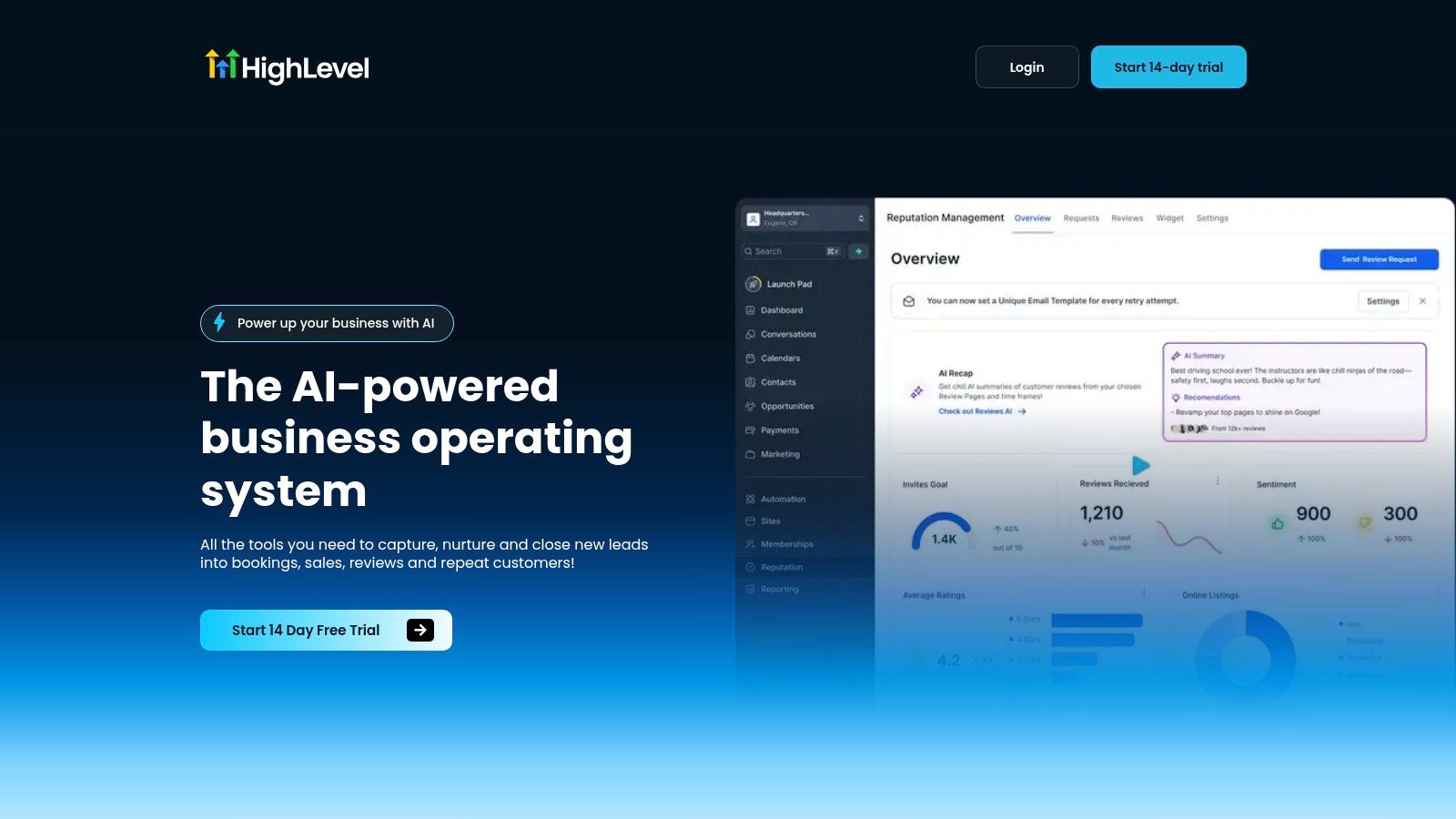
1. HighLevel
A solo agent missing callbacks, a small team losing track of text threads, or a brokerage trying to keep renewals from slipping can all run into the same problem, too many conversations spread across too many tools. HighLevel is built for that front-office mess. It combines CRM, a unified inbox, automation, appointment booking, and revenue tools in one workspace, which makes it a practical option for independent agents who want to move a lead from first inquiry to booked conversation without stitching together separate systems. Its insurance-focused materials also point to pipeline management, lead capture forms, automated follow-up, renewal reminders, and cross-sell or referral campaigns, so it fits agencies that care about quick response times and steady retention insurance CRM page, platform page.
Where HighLevel fits best
The strongest fit is the conversation layer. SMS, Messenger, Instagram DM, WhatsApp, and live chat can sit in one place, which helps agents respond before a quote request goes stale. That matters in insurance, where speed, consistency, and follow-through often decide whether a lead becomes a conversation or disappears into the inbox.
A practical test helps here. If your agency depends on fast callbacks, text follow-up, and appointment booking, a shared inbox usually creates more value than a heavier back-office module that only a few people use. The workflow stays visible, and producers spend less time searching for the next action.
HighLevel also suits agencies with more than one producer or location. Its published plans include unlimited contacts, and its Unlimited plan includes unlimited sub-accounts, which makes it a reasonable fit for lead generation shops, multi-location teams, and agencies that manage several client entities. For operations that want one platform to handle capture, nurture, close, and reactivation, that setup is hard to ignore. If you want to compare top agency tools, it helps to see where that structure sits against systems built more tightly around policy administration.
What to watch before buying
The trade-off is setup overhead. HighLevel can replace several point tools, but that broader scope means solo owners may need time to sort out which workflows matter in daily insurance work. If all you need is a basic contact database and renewal reminders, the platform can feel larger than the job requires.
Its value is strongest for agencies that want a more modern front office, especially if mobile access, review management, missed-call text-back, and AI-assisted follow-up are part of the operating model. For insurance teams comparing the best crm for insurance agents, HighLevel makes the most sense when communication speed and automation are the main bottlenecks.
Read more about the underlying platform for funnels and email automation.
2. AgencyZoom by Vertafore
AgencyZoom is one of the clearest examples of a CRM built around insurance operations instead of retrofitted for them. Its value comes from structured pipelines for sales, onboarding, service, and renewals, which is exactly where many agencies lose discipline when they grow past a few producers. For P&C teams that already use an AMS, this kind of workflow layer can improve follow-up without forcing a full system replacement AgencyZoom website.
Why insurance teams choose it
The biggest reason AgencyZoom keeps showing up in insurance conversations is fit. It's built for lead follow-up, renewal discipline, and retention work, not generic pipeline theater. That means the automations feel closer to agency reality, especially when text, VoIP, web leads, and AMS integrations are part of the process.
A good internal test is simple. If your producers need clear next steps after every inbound lead, every quote, and every renewal conversation, AgencyZoom gives you the structure to make that repeatable. If your agency already lives inside an AMS like QQCatalyst, AMS360, or HawkSoft, the CRM layer can sit alongside that system and keep producers moving.
Where it falls short
AgencyZoom isn't a full AMS, so it won't replace policy accounting or carrier downloads. That matters because some agencies expect one tool to solve both front-office sales and back-office policy administration, and this one doesn't try to do that. It performs best when you already accept the split between AMS and CRM.
A clean setup usually beats a larger feature stack. Agencies that know exactly where lead handoff, renewal reminders, and cross-sell follow-up break down tend to get the fastest win from AgencyZoom.
For agencies that want to compare top agency tools, it's a sensible benchmark because it separates sales discipline from AMS administration. That separation is often what keeps the team consistent once volume starts rising.
3. InsuredMine
InsuredMine is a strong middle-ground choice for independent P&C agencies that want CRM plus communication and client engagement in one package. It blends sales pipelines, marketing automation, texting, review requests, and a customer portal, so the agency can manage both acquisition and service without stitching together too many products InsuredMine website.
The practical appeal is insurance-specific structure. Agencies don't have to force a generic CRM to understand policies, tasks, renewals, and service touchpoints. That reduces custom configuration, and it usually shortens the time between purchase and actual daily use.
How it works in daily operations
InsuredMine's built-in texting and AI-assisted message transforms are useful when teams need quick, personalized follow-up at scale. That matters in agencies where the same producer is juggling incoming leads, renewal reminders, and client service requests throughout the day. The customer-facing Insurance Wallet portal also gives policyholders a cleaner self-service experience, which can reduce routine back-and-forth.
Its automation strength is strongest when renewal and cross-sell workflows are already mapped out. The platform can support those motions well, but only if the agency defines the rules clearly. If the process is fuzzy, software won't fix that.
What to expect during setup
Pricing isn't fully public, so buying usually starts with a demo and a conversation about fit. That's not automatically a drawback, but it does mean smaller agencies should be ready to spend time validating the setup before committing. The quality of the deployment will depend heavily on AMS integration and implementation discipline.
If the agency wants CRM, texting, review requests, and client self-service in one place, InsuredMine is more practical than a generic sales CRM. If the agency only wants basic lead storage, it's probably more system than needed.
4. EZLynx
EZLynx is a strong option for agencies that want their CRM connected directly to policy and rating workflows. As a vendor, it combines AMS functionality with Sales Center CRM and Automation Center, so lead management doesn't sit apart from the rest of the agency's policy data EZLynx website.
Why it's a common fit for independent agencies
For many independent agencies, the appeal is vendor consolidation. One system handles more of the daily work, so quoting, follow-up, and renewal reminders live closer to the actual policy record. That often reduces rekeying and the little workflow gaps that frustrate producers and CSRs.
EZLynx also has a strong reputation for combining comparative rating and sales automation. That matters because a quote that never gets followed up on is just work with no result. The platform is useful when the agency wants one vendor to own more of the process from quote to remarket to renewal.
Trade-offs to keep in mind
The downside is cost structure and flexibility. Pricing that adapts to specific needs can make it harder to estimate total cost of ownership, especially if the agency keeps adding modules or add-ons. Deep integrations with outside CRMs may also be less flexible than teams expect if they've already built a separate tech stack.
The cleanest EZLynx deployment is usually the one where the agency wants fewer systems, not more customization.
For agencies comparing the best crm for insurance agents, EZLynx stands out when the requirement is operational continuity. It isn't the lightest option, but it is often one of the easiest ways to keep policy data, follow-up, and remarketing connected in one environment.
5. HawkSoft
HawkSoft is a familiar name among independent P&C agencies for a reason. It pairs agency management depth with a configurable Sales and CRM Pipeline, which gives teams visibility into prospecting and retention without forcing them into a separate, disconnected sales tool HawkSoft website.
What it does well
The platform's reporting matters as much as the pipeline itself. Agency Intelligence surfaces sales pipeline, retention, and cross-sell reporting, which helps owners and managers see where activity is working and where leads are stalling. That kind of visibility is often what turns a decent operation into a disciplined one.
HawkSoft also supports website lead capture forms inside the management system, which is important for agencies that want incoming web leads to land in the same operational workflow as everything else. If your team values documentation, clear activity tracking, and a strong community reputation, HawkSoft usually earns a place on the shortlist.
Where it's not the answer
It's more desktop-centric than some modern CRM-first platforms, even though web components exist. It's also not a marketing automation platform, so agencies that want heavier nurture sequences or broader campaign tools may need to pair it with another system.
Practical rule: HawkSoft works best for agencies that want sales visibility inside the AMS, not a marketing stack that tries to do everything.
If you're logging calls inside HighLevel, you'll recognize the value of tying every touchpoint back to a real producer activity. HawkSoft's reporting and workflow style serve that same discipline, just from the AMS side.
6. NowCerts AMS
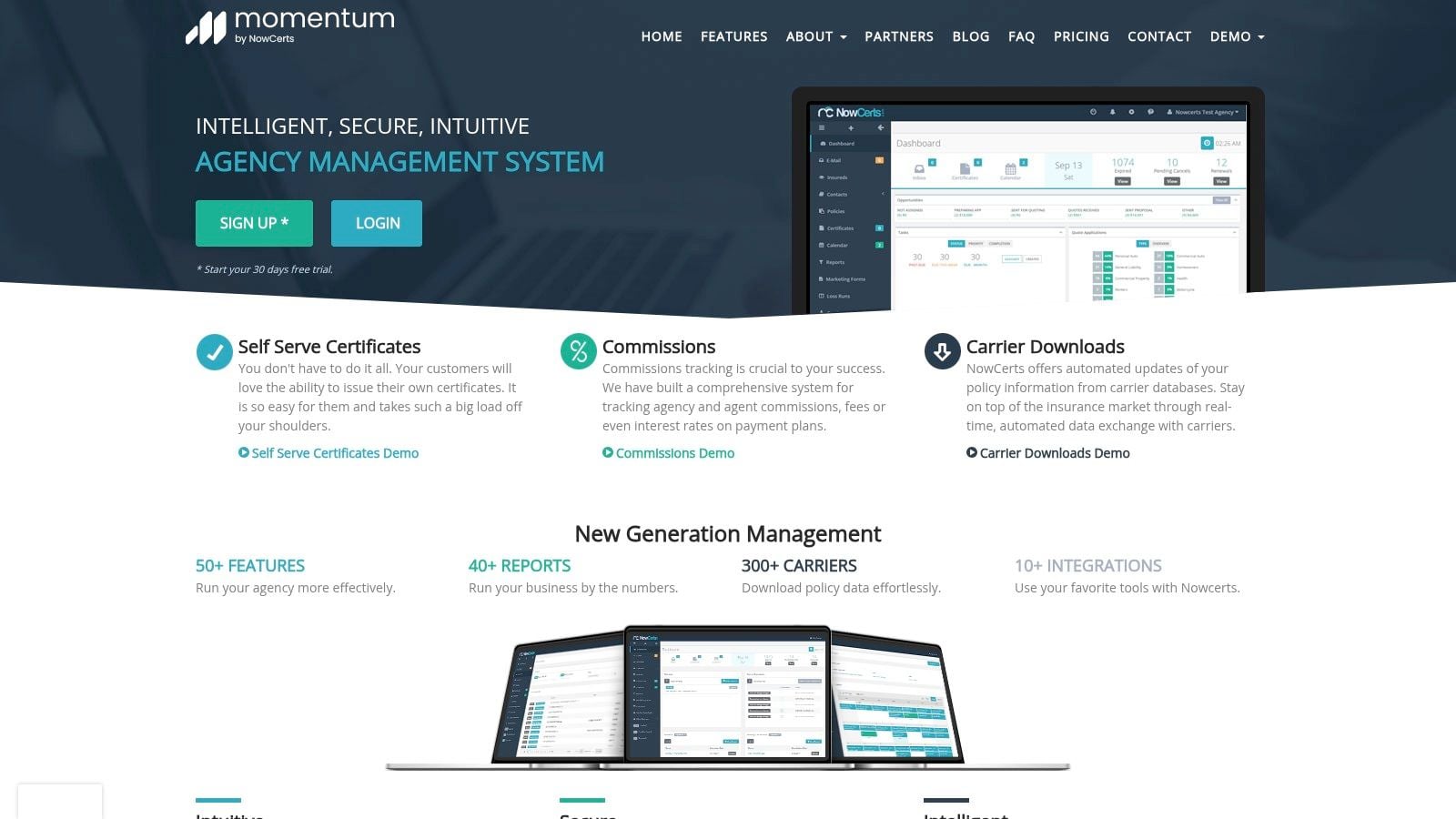
NowCerts is a useful choice for smaller to mid-size P&C agencies that want cloud-based AMS functionality with CRM-style automation already built in. It blends policy management with reminders, texting, and workflow automation, which can help a growing team move beyond spreadsheets without jumping straight into a heavyweight enterprise system NowCerts website.
The attraction is simplicity with enough structure to be useful. Carrier downloads, policy updates, and automation live in the same environment, so the team can manage day-to-day work without constant tab switching.
Why it works for growing teams
NowCerts offers SMS through Twilio, internal messaging, and scheduled alerts, which makes it practical for agencies that rely on direct communication to keep renewals moving. Those tools are especially helpful when a producer needs to send a quick nudge, confirm a document, or remember a follow-up without building a manual reminder chain.
It also publishes pricing tiers and offers a live demo portal, which speeds up the buying process for teams that want clarity before they commit. That's valuable for agencies upgrading from scattered tools because they usually need fast decisions and low-friction adoption.
Where the fit gets narrower
NowCerts is not built for the same enterprise depth as larger AMS suites. If the agency has more complex operational layers, more advanced accounting needs, or a larger production team, the lightweight structure may eventually feel limiting.
Agencies often outgrow spreadsheets before they outgrow a lighter AMS. NowCerts is strongest when the first priority is getting organized without making the system harder than the process.
7. JenesisNow
JenesisNow works well for agencies that want a browser-based AMS with CRM-style functionality and a path to more advanced lead management later. It includes activity tracking, reminders, texting, and insurance workflow tools, while the optional JenesisLink add-on adds deeper CRM capability for agencies that need it Jenesis Software.
Why agencies consider it
JenesisNow is attractive when the agency wants an AMS first and a CRM upgrade path second. That makes it useful for teams that don't want to commit to a separate CRM stack before they've stabilized policy handling, follow-up, and documentation. It's especially relevant for P&C-focused shops that value built-in basics like ACORD forms, calendar tools, and texting.
JenesisLink matters because it gives agencies a way to extend the system without starting over. If a team later decides it needs automated campaigns, lead pipelines, or more structured follow-up, that add-on provides a clearer path than a total rebuild.
What to verify before rollout
The main limitation is that advanced marketing automation generally depends on the add-on. So if the agency assumes the base system will deliver deeper CRM behavior out of the box, it may be disappointed. Specialty lines and more complex agencies may also need additional buildout to make the workflows feel complete.
The best JenesisNow deployments are usually the ones where the agency knows whether it wants basic operations support or a fuller CRM motion. That distinction prevents expensive rework later.
8. Applied Epic
Applied Epic is the enterprise choice on this list. It's designed for agencies and brokerages that need deep operational control, embedded quoting, accounting depth, benefits support, and a system of record that can handle larger-scale complexity Applied Epic.
Why large agencies put up with the complexity
The big strength is breadth. Embedded commercial and personal lines quoting reduce rekeying, and AI-assisted workflows can support renewal and accounting work inside one operating environment. That matters when multiple teams need to work from the same source of truth and can't afford inconsistent data across tools.
Epic also makes sense when the agency's challenge is not lead capture alone, but the entire operational chain around policy servicing, quoting, payments, and reporting. For larger organizations, that's often the main job. A simpler CRM may look attractive, but it usually falls apart once more departments need to work in it.
The trade-off
The cost of that depth is effort. Implementation tends to be heavier, and the system can be too much for very small agencies that only need better follow-up and renewal reminders. It's a serious platform, but it's not a casual purchase.
If the team already knows it needs enterprise control, Applied Epic can be the backbone. If the team is still experimenting with workflow discipline, it's probably more platform than necessary.
For readers who want a HighLevel analytics overview, the contrast is useful. HighLevel leans into front-office automation and communication. Applied Epic leans into back-office operational depth. Different problems, different winners.
9. Salesforce Financial Services Cloud
Salesforce Financial Services Cloud is the most extensible option here, and that's exactly why many larger firms consider it. It gives insurance teams an industry data model with household, policy, coverage, and premium-related objects, plus the broader automation and analytics stack Salesforce is known for Salesforce Financial Services.
The main advantage is flexibility. Agencies and brokerages can tailor the system around complex service models, custom workflows, and more advanced reporting needs, then extend it through the larger app ecosystem.
Where it shines
If your agency has multiple lines, custom workflows, or a technical team that can shape the platform properly, Salesforce can become a long-term operating hub. It's especially effective when the business already understands that CRM and AMS are separate layers and wants the CRM layer to be highly customizable.
That flexibility also makes it a good fit for firms that need enterprise-grade security posture and a broad integration ecosystem. It isn't a light deployment, but it is one of the most adaptable platforms in the category.
Where it becomes expensive fast
Salesforce typically needs expert implementation to deliver full value, and the pricing is quote-based. That means the cost isn't just the software, it's the build, the maintenance, and the internal discipline needed to keep it useful.
Salesforce is powerful when the agency has a real admin strategy. Without that, the platform can become an expensive place to store incomplete data.
For many teams comparing the best crm for insurance agents, Salesforce belongs on the shortlist only if there's a clear plan for customization and ownership. It's a great fit for complex organizations, not for teams hoping software will replace process.
10. HubSpot CRM
HubSpot CRM is the easiest platform on this list for many producers to adopt. That matters more than vendors like to admit, because a CRM that the team resists will lose to a simpler one that gets used every day HubSpot insurance CRM.
Why smaller agencies like it
HubSpot's free entry point and usability make it appealing for independent agents and small teams. Contact management, deal pipelines, tasks, and email tracking are easy to grasp, so producers usually learn the basics quickly without a long onboarding struggle. That can be the difference between a CRM initiative that sticks and one that dies in three weeks.
It also scales through marketing, sales, and service hubs, so a growing agency can layer in more capability when it's ready. That makes it a pragmatic option for teams that want to start simple and expand only when the workflow demands it.
What needs customization
The insurance-specific data model isn't as native as what you get in specialized systems, so the agency may need templates or partner support. Advanced automation and reporting also tend to live in paid hubs, which can change the economics as the team matures.
HubSpot is strongest when speed of adoption matters more than deep insurance logic. If the agency wants the team to actually use the CRM, that's a real advantage.
For teams comparing HighLevel lead tracking insights, HubSpot offers a more conventional CRM experience, while HighLevel pushes harder into channel consolidation and automation. The right answer depends on whether the agency wants simplicity or a more unified operating stack.
Top 10 CRMs for Insurance Agents, Features & Pricing
| Platform | Core features | UX / Quality (★) | Value & Pricing (💰) | Target audience (👥) | Unique selling points (✨) |
|---|---|---|---|---|---|
| 🏆 HighLevel | Unified CRM & conversation inbox, funnels, automations, payments, reputation, mobile app | ★★★★★, feature‑dense, 24/7 support | 💰 Starter $97 · Unlimited $297 · Agency Pro $497 · 14‑day trial | 👥 Agencies, growth SMBs, freelancers wanting agency tooling | ✨ Native AI across messaging/voice/content; unlimited sub‑accounts (Unlimited); Text‑2‑Pay/Tap‑2‑Pay; mobile‑first |
| AgencyZoom by Vertafore | Prebuilt sales/onboard/renewal pipelines, AMS & web‑lead integrations, dashboards | ★★★★, insurance‑centric UX | 💰 Quote‑based; best value when paired with AMS | 👥 P&C agencies seeking pipeline discipline & retention | ✨ Purpose‑built insurance automations; large integration/AMS ecosystem |
| InsuredMine | Sales/service pipelines, texting (AI assist), review requests, client portal | ★★★★, strong outreach & portal experience | 💰 Pricing via demo / tiered | 👥 Independent P&C agencies wanting CRM + client engagement | ✨ Client "Insurance Wallet" app; built‑in review automation & AI replies |
| EZLynx (Applied) | Sales Center CRM, Automation Center, comparative rating, policy workflows | ★★★★, integrated AMS+CRM | 💰 Tailored pricing; add‑ons can raise TCO | 👥 Agencies needing rating + policy lifecycle in one vendor | ✨ Comparative rating + policy‑linked remarketing; single‑vendor stack |
| HawkSoft | Sales/CRM pipeline, Agency Intelligence reporting, lead capture, docs | ★★★★, usable, community‑trusted | 💰 Quote‑based; avoids excessive add‑ons | 👥 Independent agencies valuing reporting & simplicity | ✨ Strong retention & pipeline reporting; partner marketplace |
| NowCerts AMS | CRM campaigns, Twilio SMS, carrier downloads, scheduled alerts | ★★★, practical, lightweight | 💰 Published tiers (affordable) | 👥 Small–mid P&C agencies upgrading from spreadsheets | ✨ Published pricing; built‑in SMS and carrier downloads |
| JenesisNow | Texting, calendar, ACORD forms; optional JenesisLink CRM add‑on | ★★★, browser‑based with upgrade path | 💰 Core AMS pricing; JenesisLink add‑on costs extra | 👥 Agencies wanting AMS now with path to fuller CRM | ✨ Clear upgrade path to native CRM without replacing AMS |
| Applied Epic (Applied Systems) | Embedded quoting, AI renewals, accounting, mobile access, marketing integrations | ★★★★★, enterprise‑grade depth | 💰 Premium TCO; significant implementation | 👥 Large agencies/brokerages needing end‑to‑end ops | ✨ Native quoting & accounting; broad ecosystem for enterprise needs |
| Salesforce Financial Services Cloud (Insurance) | Insurance data model, automation, analytics, app marketplace | ★★★★★, extremely extensible & scalable | 💰 Quote‑based; premium licensing & implementation | 👥 Enterprise insurers/brokerages requiring custom apps | ✨ Highly extensible platform + large partner ecosystem |
| HubSpot CRM (Insurance) | Contact/company management, deal pipelines, marketing & service hubs, integrations | ★★★★, user‑friendly, fast adoption | 💰 Free tier available; paid hubs for advanced features | 👥 Small agents & independent brokers seeking easy CRM | ✨ Generous free tier; easy scale across marketing/sales/service hubs |
How to Choose the Right Insurance CRM for Your Agency
The best crm for insurance agents is the one that fits your workflow, not the one with the longest feature list. Start by mapping what your team does every week. If the biggest pain is missed follow-up, a communication-first system with automation and reminders can create more value than a heavier AMS. If the bigger problem is policy handling, renewal management, and accounting depth, you may need an AMS with CRM capabilities or a CRM that integrates cleanly with one.
Agency size matters too. Solo agents and small teams usually benefit from simpler systems that are easy to adopt and quick to configure, like HubSpot or HighLevel, especially when the priority is lead capture, follow-up, and booking. Mid-size agencies often get more from purpose-built insurance workflow tools such as AgencyZoom, InsuredMine, or NowCerts, because those platforms better support renewal discipline and team visibility. Larger brokerages and more complex organizations usually need the depth of Applied Epic or Salesforce, where customization and enterprise control matter more than speed of setup.
You should also be honest about your AMS strategy. If you already have a system of record, adding a CRM that improves producer activity and client communication can be the smartest move. If you're still assembling the stack, a single-vendor option like EZLynx or a more all-in-one platform may reduce friction, but only if the workflow matches how your team operates.
Don't buy on feature count alone. Test one real process, like creating a new lead, assigning the follow-up, and setting the renewal reminder. Then check whether the tool helps an agent respond faster, stay organized, and keep the next action visible without extra admin work. That's the measure of CRM fit in insurance.
If you're ready to replace scattered follow-up, disconnected inboxes, and manual reminders with one insurance-friendly operating system, take a closer look at HighLevel. It's built for agencies that want to centralize leads, automate follow-up, and keep communication moving across channels. If that sounds like the gap in your current process, it's worth seeing how it handles your day-to-day workflow.
