


Most electrical shops don’t lose jobs because the wiring was wrong, they lose them because the office missed the call, the estimate sat in email, or the follow-up never happened. One technician is on a ladder, another text is buried in a personal phone, a voicemail lives in a different app, and the invoice is still waiting in QuickBooks. That mess is where revenue leaks out, one small delay at a time. The best CRM for electricians doesn’t just store contacts, it keeps estimates, dispatch, texts, payments, and review requests moving without forcing your crew to chase the same lead twice.
The short version is simple. Solo electricians need speed and a low learning curve. Small crews need scheduling, estimates, and follow-up that doesn’t fall apart when the phones get busy. Multi-tech businesses need dispatch, reporting, and a system that can handle the quote-to-cash cycle without duct-taping five tools together. The picks below are ranked by how well they fit electrician workflows like estimates, dispatch, on-site forms, SMS, voice, and review automation, not by generic CRM bragging rights.
Table of Contents
- 1. HighLevel
- 2. ServiceTitan
- 3. Housecall Pro
- 4. Jobber
- 5. ServiceM8
- 6. FieldPulse
- 7. simPRO
- 8. Service Fusion
- 9. Workiz
- 10. Fergus
- Top 10 CRM Comparison for Electricians
- Pick Your CRM, Then Run a Tight 30-Day Rollout
1. HighLevel
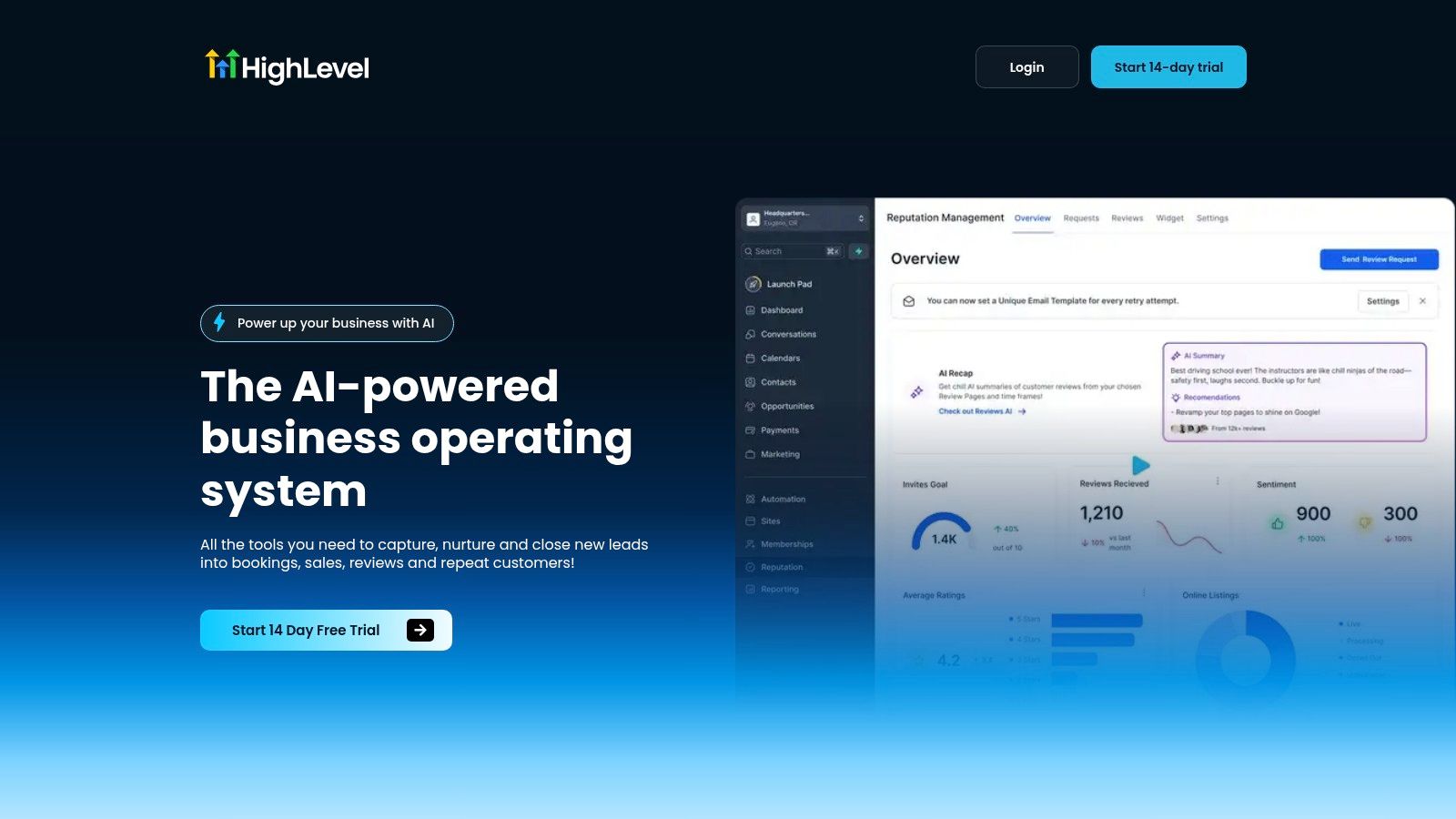
If your electrical business is juggling calls, texts, forms, and follow-up in separate tools, HighLevel is built to cut that mess down fast. It puts CRM, a unified inbox, forms, calendars, invoicing, Text-2-Pay, missed-call text-back, reputation automation, and workflows into one mobile-accessible system. That matters for electricians because every handoff between lead capture, scheduling, quoting, and payment creates delay. One missed step can stall the whole job.
A better setup starts with a better process. If your office team is bouncing between texts, call logs, and spreadsheet notes, the problem is the workflow, not the lead source. HighLevel is built to clear that bottleneck.
The strongest fit is growth-focused electricians, multi-location businesses, and any shop that wants one system for lead capture, booking, follow-up, payment, and reviews. HighLevel’s Conversation AI, call tracking, broadcast campaigns, and AI review replies help you answer faster and keep stale leads from dying in the cracks. For contractors who care about throughput, that end-to-end flow is the point. For a closer look at scheduling tools that support smaller teams, find booking tools for small firms. The contractor-specific angle is also covered in this guide to automating home service follow-up.
Why electricians choose it
HighLevel makes sense when you want more than contact storage. It fits businesses that rely on missed-call text-back, booking reminders, lead scoring, and review requests after the job is done. The platform is also built with a mobile-first mindset, so an owner or office manager can keep the pipeline moving from the truck, not just from a desk.
For solo electricians, HighLevel gives you one place to catch leads, book estimates, and send payment links without switching apps all day. For small crews, it adds enough structure to keep the office and field on the same page. For multi-tech businesses, the value is control, because you can standardize follow-up, track response times, and keep the job record clean across the team. That is the practical reason it belongs in the conversation for electricians.
- Best for: Agencies, multi-location shops, and growth-minded SMBs.
- Best workflow fit: Lead capture, estimate follow-up, booking, payment, and review generation.
- Main trade-off: The depth that makes it powerful also makes setup more involved than a lighter field-service app.
Website: HighLevel
2. ServiceTitan
ServiceTitan is the heavy-duty option. If your electrical company runs multiple crews, handles complex dispatch, and needs deep reporting, it belongs on the shortlist. Its CRM is tightly tied to call booking, dispatch, pricebook-driven estimating, financing, and analytics, which makes it a strong fit for shops that have already outgrown basic sales tools.
For electricians, the big advantage is workflow depth. You’re not just storing a lead, you’re routing it through a system built for field operations, from first call to technician assignment to invoice follow-up. That makes ServiceTitan a serious choice for established residential contractors and larger commercial businesses that need structure, accountability, and management visibility. The internal team resources and mature onboarding also matter when you’ve got office staff, techs, and managers all touching the same job record.
For a broader framing of how it fits into contractor operations, the construction workflow solutions angle is worth reading.
What it does well
ServiceTitan is strong when your business needs more than a simple pipeline. Its electrical workflow support, dispatch tools, and reporting are built for firms that can’t afford sloppy handoffs. The downside is obvious, it’s not the easy, inexpensive option for a one-truck operation.
- Best for: Multi-crew and multi-location electrical businesses.
- Best workflow fit: Dispatch, quoting, financing, and management reporting.
- Main trade-off: Quote-based pricing and a heavier implementation lift.
Website: ServiceTitan
3. Housecall Pro
Housecall Pro is the safe pick for electricians who want speed, simplicity, and a modern mobile experience. It handles scheduling, estimates, invoicing, payments, reviews, and automations without making you babysit the system all day. If your crew spends more time in the field than at a desk, that matters.
The platform is especially strong when you want to keep the customer journey tidy. A lead comes in, you book the job, send the proposal, collect payment, and ask for a review, all from one system. That’s the kind of workflow a small electrical business can maintain without extra admin overhead. It also has a broad add-on catalog, so shops that grow past the basics can layer on phone, payroll, GPS, or campaigns later.
If you’re trying to sort through booking options for a small shop, this guide to find booking tools for small firms is a solid companion read.
Why it lands with residential electricians
Housecall Pro is strong on the field-service side and easy to teach to techs. It’s the kind of system you can roll out without a long internal project, which makes it a smart choice for owners who want the team using it this week, not next quarter.
Direct advice: If your crew needs a clean mobile app and you don’t want to build a system from scratch, Housecall Pro is one of the least painful options on the list.
- Best for: Small and mid-sized residential electrical shops.
- Best workflow fit: Scheduling, estimates, payments, and review requests.
- Main trade-off: Advanced capabilities often live in higher tiers or add-ons.
Website: Housecall Pro
4. Jobber
Jobber is the best fit for small electrical shops that want to get organized fast. It covers lead management, online booking, quotes, scheduling, dispatch, invoicing, and payments, and it does it in a way that feels approachable instead of bloated. For a 1 to 10-truck operation, that simplicity is a real advantage.
The value here is speed of adoption. Jobber’s mobile apps, client hub, and two-way texting make it easy to keep a job moving without a long training cycle. The trade-off is that some of the sales and marketing muscle sits behind add-ons or paid tiers, so you need to be honest about how much automation you want. If your business is mostly referral-based and inbound, Jobber fits well. If you’re trying to run complex pipeline campaigns and deep marketing automation, it starts to feel narrow.
For review workflow planning, this guide to review consolidation helps frame the reputation side of the equation.
The right use case
Jobber is a strong default for small crews because it keeps the basics clean. It helps you quote work, get it scheduled, and send invoices without building a monster process around it. That’s why it shows up so often in small service businesses.
- Best for: Solo operators and small crews.
- Best workflow fit: Lead intake, scheduling, quotes, invoicing, and two-way texting.
- Main trade-off: Sales and marketing depth require extra spend.
Website: Jobber
5. ServiceM8
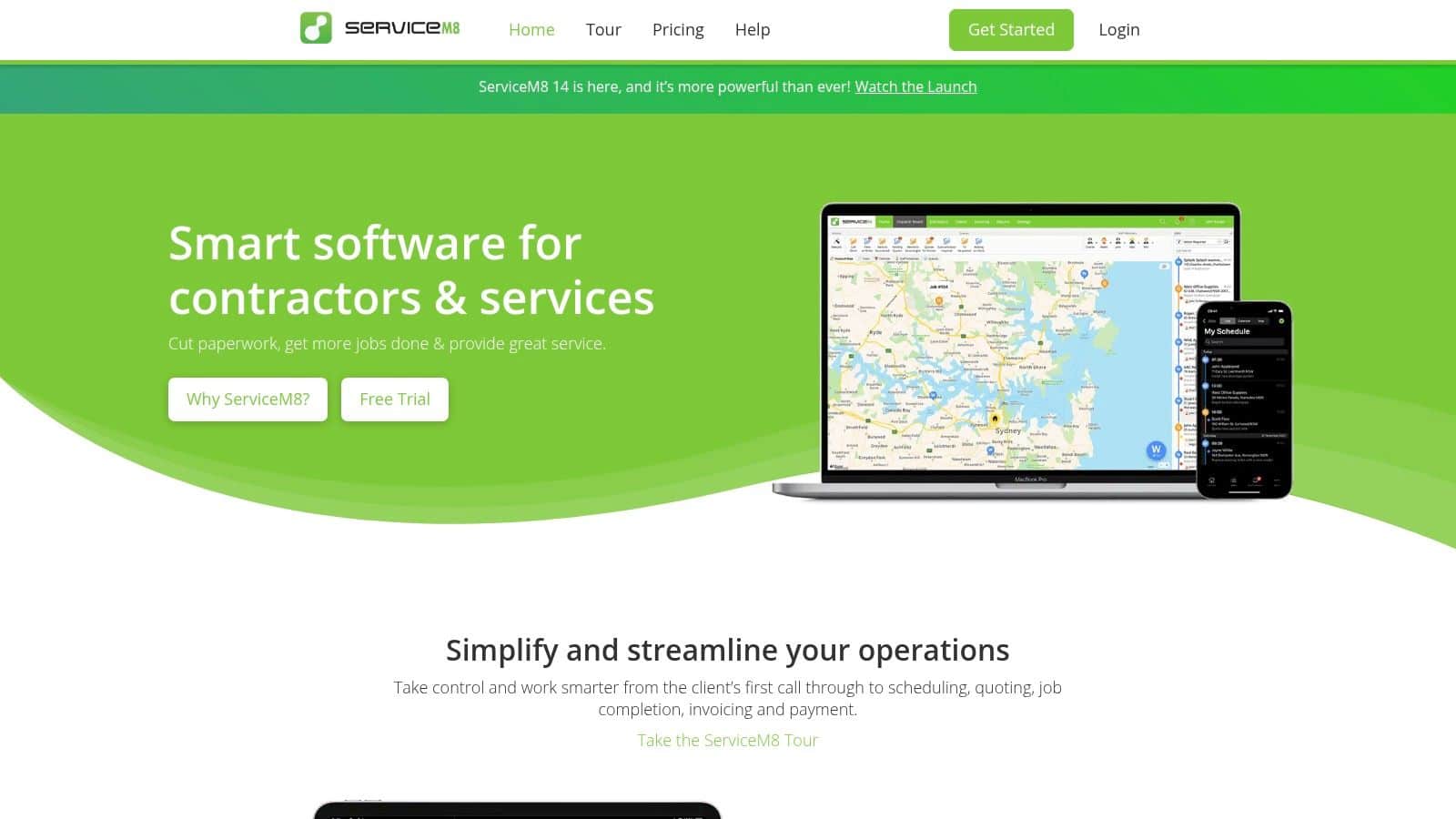
ServiceM8 is built for electricians who live on iPhone or iPad and want the job moving from the truck, not from the office. It combines CRM, job history, automated SMS and email, scheduling, online booking, electronic forms, and compliance PDFs in a package that feels very field-friendly. For small teams that care about checklists and on-site paperwork, it’s one of the smartest options.
The key differentiator is the mobile workflow. ServiceM8 leans hard into iOS, which is why it works so well for techs who want to quote, capture form data, and close out jobs on-site. The usage-based plan structure also makes sense for growing shops that don’t want to pay per user in a traditional way. The honest downside is obvious, Android users don’t get the same experience, and high-volume shops need to keep an eye on job and SMS usage.
Best fit for iPhone-first crews
If your team already runs on Apple hardware, ServiceM8 feels natural. The app design supports fast job execution, and the on-site forms are a real advantage for electricians who need more than a basic contact database.
Practical rule: If your technicians hate office software, choose the app they’ll actually use in the field. ServiceM8 is strong when the phone is the workspace.
- Best for: Small electrical teams using iPhone and iPad.
- Best workflow fit: Job forms, compliance PDFs, scheduling, and client communication.
- Main trade-off: iOS-first design, with lighter Android support.
Website: ServiceM8
6. FieldPulse
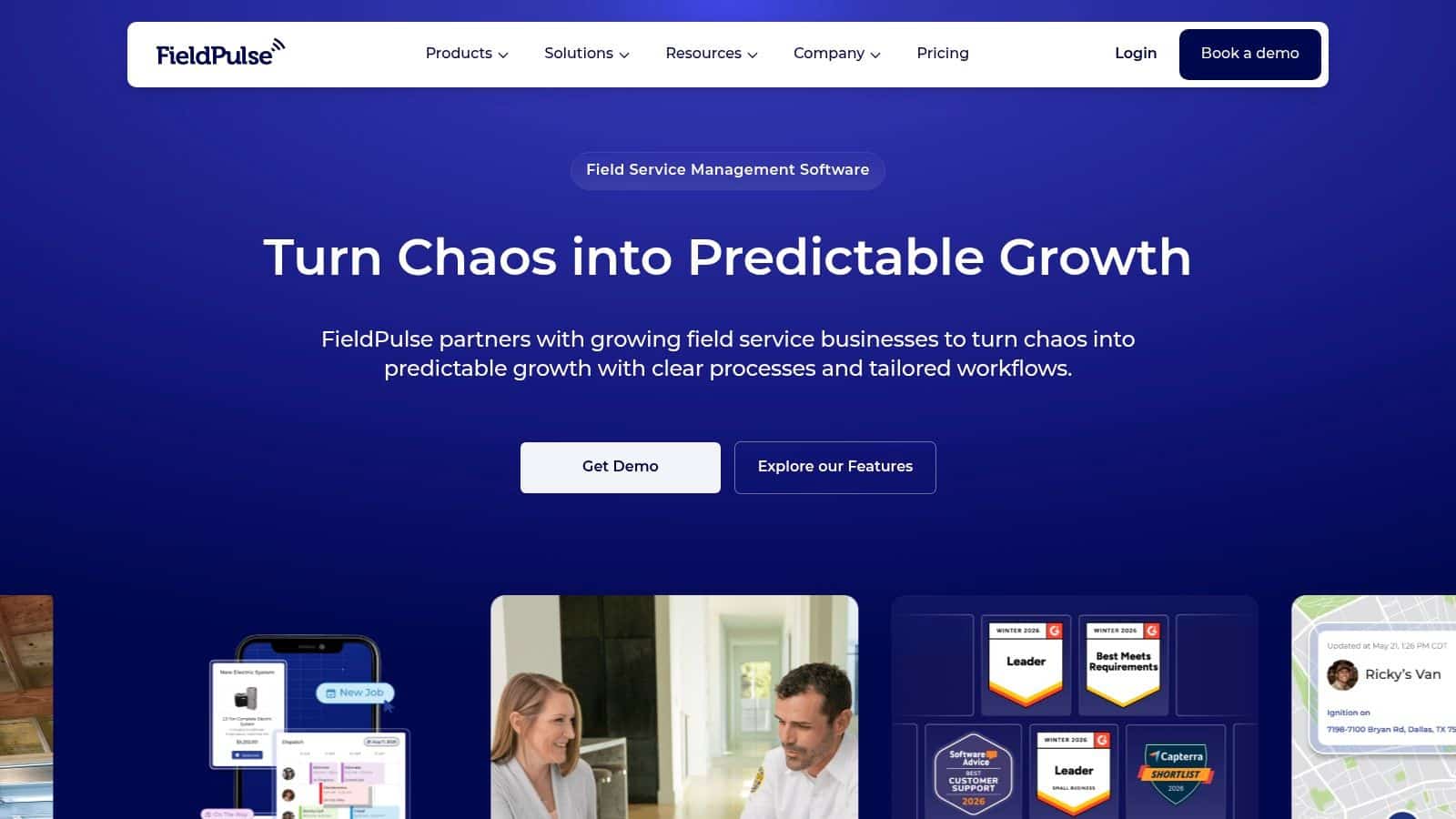
FieldPulse is for electricians who want more structure than a spreadsheet but aren’t ready for enterprise complexity. It blends CRM, scheduling, dispatch, estimates, invoicing, job costing, and guided workflows in a way that helps growing crews standardize the job process. That guided approach is the point, it helps the office and the field follow the same playbook.
This is a good pick when you’re outgrowing improvised systems and need better margin control. FieldPulse’s reporting and job costing give owners a clearer view of where time and money are going, and that matters when the crew starts expanding. It doesn’t try to be everything for everybody, which is why it feels more focused than some larger platforms.
Where it makes sense
FieldPulse is especially useful when you need predictability. If your business is adding techs and the job process keeps changing depending on who is working, this kind of guided system helps keep quality steady.
- Best for: Small to mid-sized crews growing out of spreadsheets.
- Best workflow fit: Estimates, job costing, scheduling, and standard operating steps.
- Main trade-off: Pricing isn’t always public, so you’ll be working from a quote.
Website: FieldPulse
7. simPRO
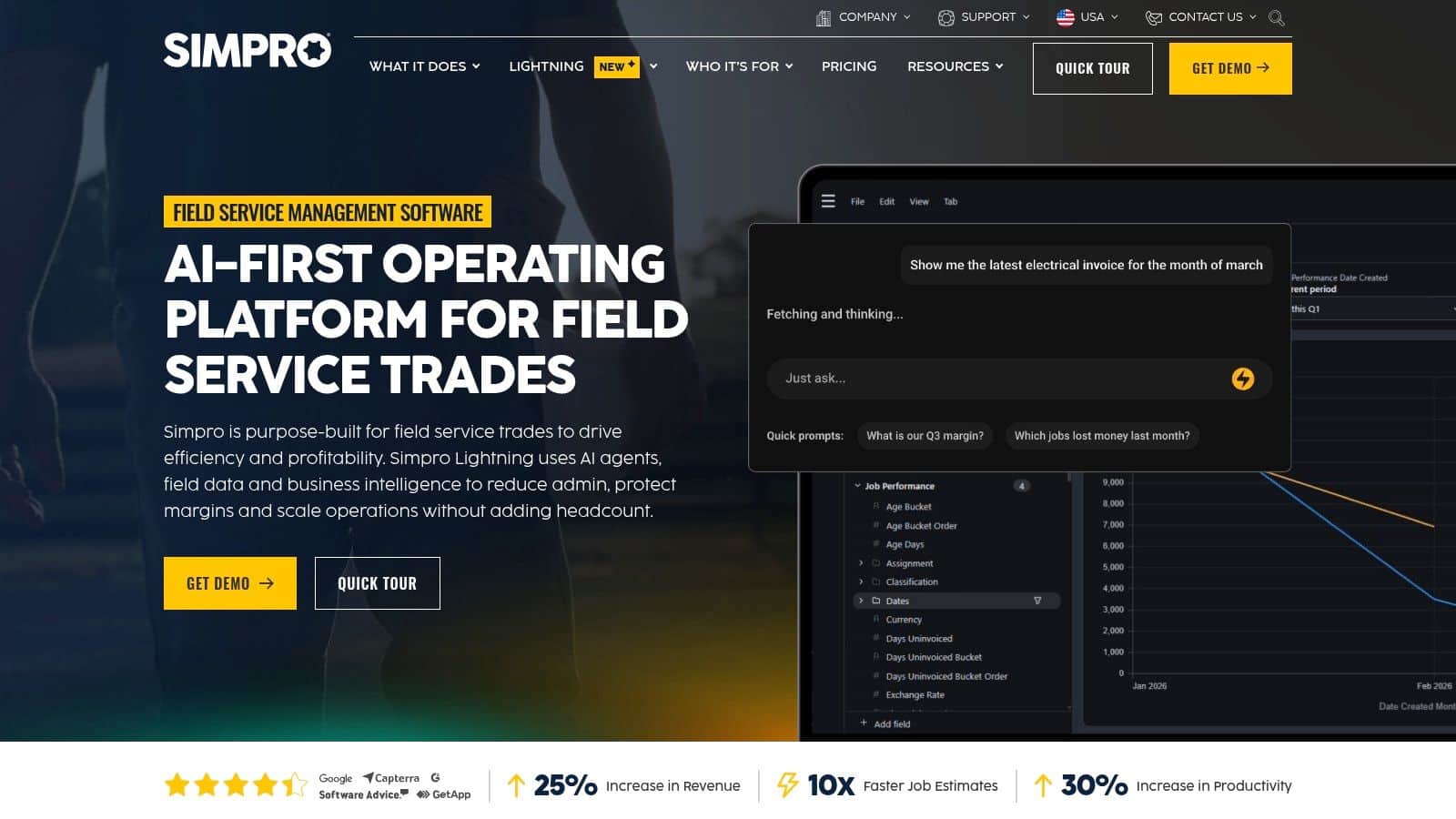
simPRO is built for electricians who care about estimating detail, inventory, and profitability tracking. It goes deeper than a basic CRM by tying labor, materials, and supplier pricing into the estimating process, which makes it a strong fit for commercial work and project-heavy operations. If your jobs are more than quick service calls, this kind of depth pays off.
The platform also scales. That’s the important part. A small team can use it, but it’s clearly designed to grow with more complexity, more people, and more moving parts. The scheduling, dispatch, and reporting tools support a business that needs visibility across multiple jobs at once, not just a simple calendar.
For commercial and project-heavy work
simPRO’s strength is not flashy CRM polish, it’s operational control. For electricians doing larger installs or work that needs better material tracking, it’s one of the most serious choices on the list.
- Best for: Commercial electricians and project-heavy shops.
- Best workflow fit: Estimating, inventory, scheduling, and profitability tracking.
- Main trade-off: Bigger feature set means longer onboarding.
Website: simPRO
8. Service Fusion
Service Fusion is the budget-conscious answer for contractors who still want a broad feature set. It covers CRM, customer and job history, two-way communications, scheduling, estimates, invoicing, payments, inventory, and job costing, and it does it with unlimited users on each plan. That pricing structure is a big reason small and mid-size electrical businesses look at it closely.
Predictability is the key benefit. If you’ve got an owner, an office manager, and a handful of techs who all need access, unlimited users avoids the annoying math that comes with per-seat pricing. It’s not the flashiest interface on the market, but it gives you the core operations stack without making the budget explode.
The plain-spoken SMB choice
Service Fusion is a practical pick when you care more about keeping costs steady than chasing the most polished dashboard. It gets the essential work done and leaves room for the business to grow.
- Best for: Small and mid-sized electrical contractors.
- Best workflow fit: Scheduling, invoicing, payments, and job costing.
- Main trade-off: Reporting depth and interface polish lag behind the biggest vendors.
Website: Service Fusion
9. Workiz
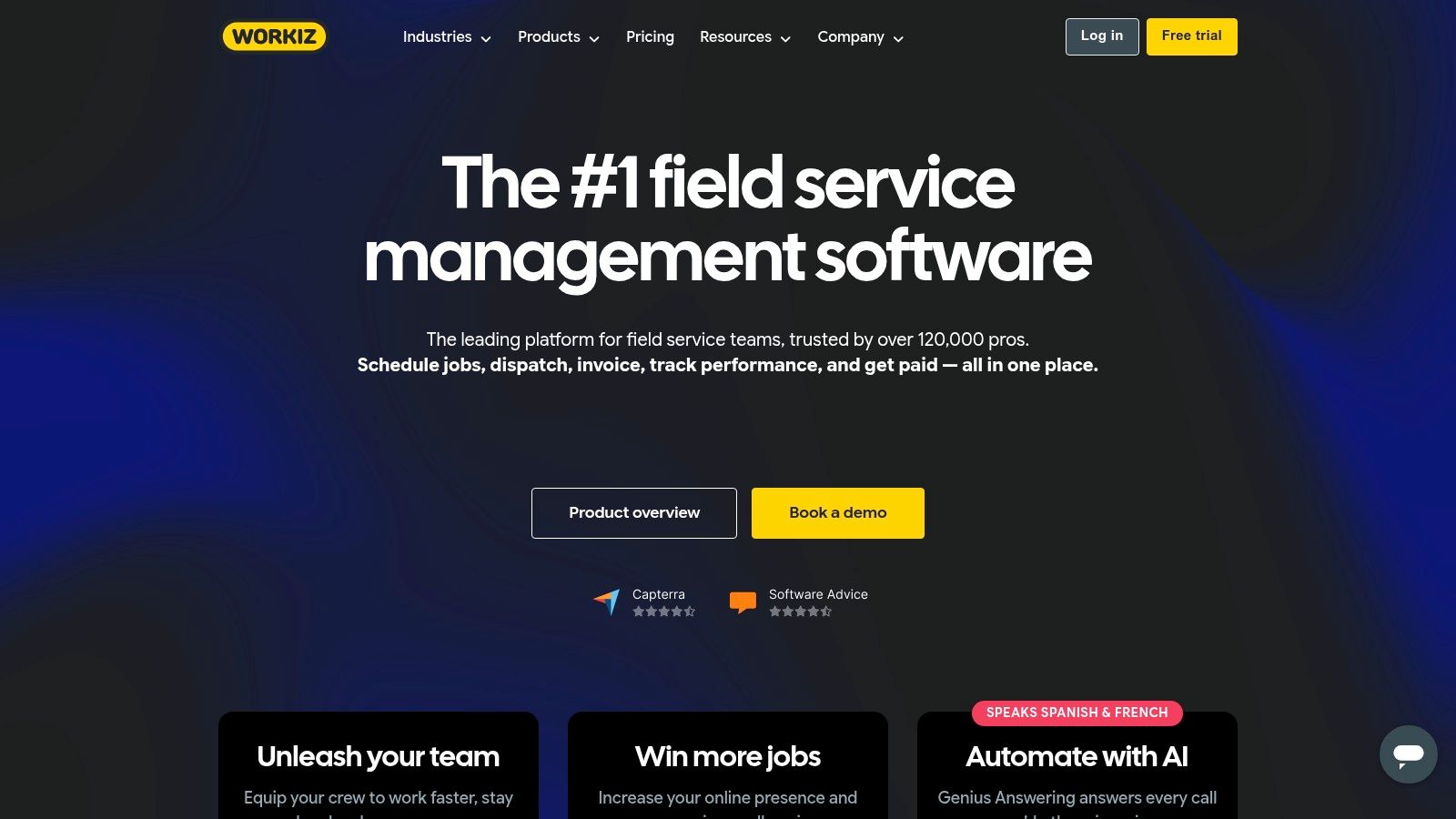
Workiz is the communications-first option. It combines CRM, jobs, estimates, invoices, a client portal, an integrated phone system, two-way texting, and AI scheduling tools, which makes it a strong fit for growing teams that get buried in calls. If your office spends too much time bouncing between a phone app and a CRM, Workiz reduces that switching.
That phone layer is the reason it stands out. Call recording, masking, queues, and AI-assisted lead handling make it feel more operational than a standard CRM. It’s a solid choice for electrical shops that want tighter control over lead response and appointment flow, especially if the phone is still the main entry point for new business. If you’re evaluating the communications stack specifically, this guide to find the right call tracking platform is useful context.
Strong fit when the phone never stops ringing
Workiz makes sense if you want less app switching and more call control. It’s not just a CRM bolted onto field software, it’s a workflow built around customer communication.
Direct advice: If your lead flow is heavy on inbound calls, choose the platform that treats the phone like a revenue channel, not an afterthought.
- Best for: Growing service teams and franchises.
- Best workflow fit: Calls, SMS, scheduling, estimates, and client communication.
- Main trade-off: Some phone and AI capabilities may require add-ons.
Website: Workiz
10. Fergus
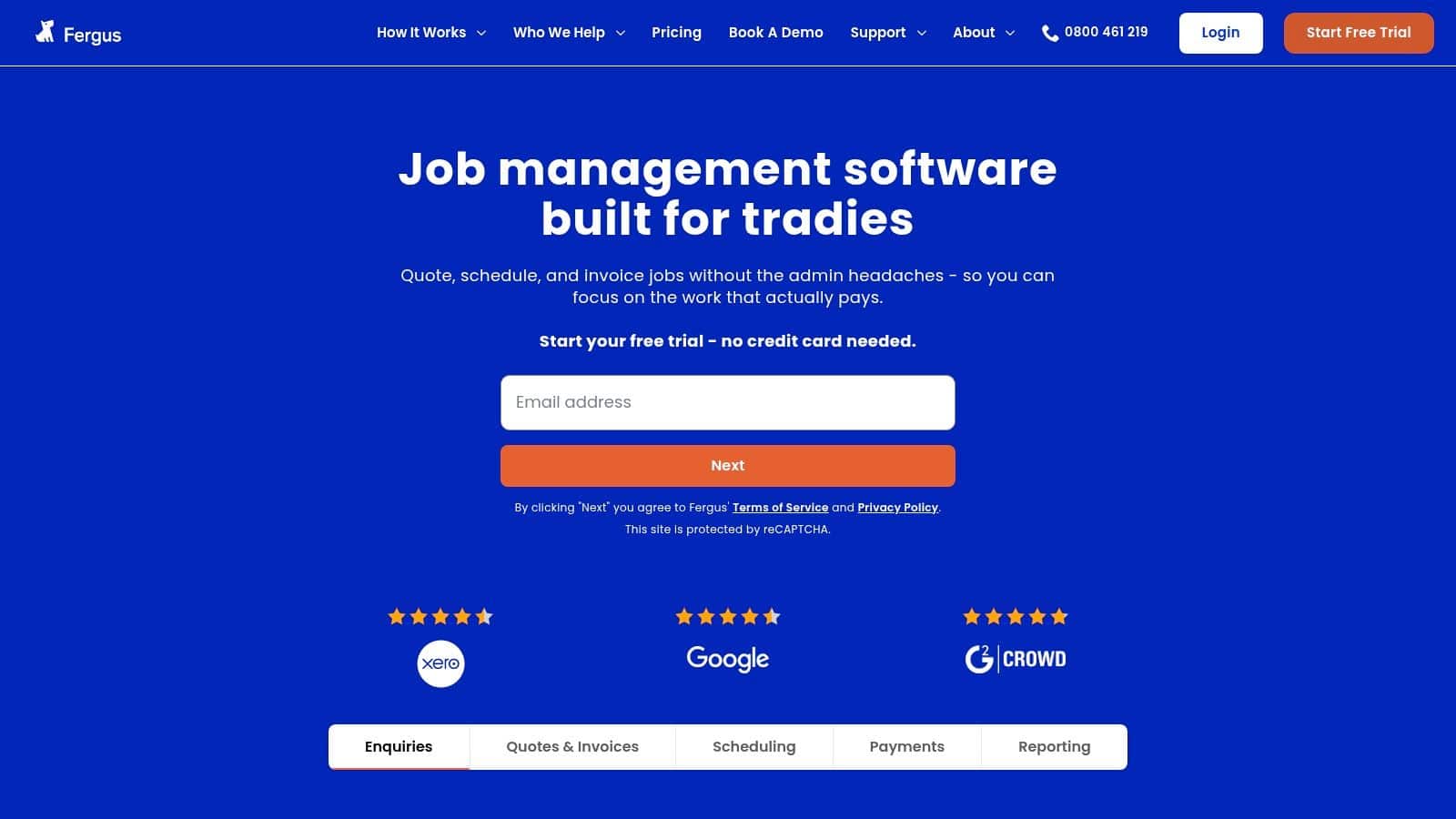
Fergus is a trade-first job management platform that electricians can use without fighting the software. It gives you a pipeline for enquiries and leads, plus scheduling, dispatch, price books, quoting, job tracking, and profitability reporting. That mix makes it a strong option for electricians who want a practical view from lead to completion.
The appeal is clarity. You can see what’s in the pipeline, what’s booked, and what each job is doing financially. That matters when you want a CRM that doesn’t feel generic. Fergus is especially appealing for smaller crews that want electrical-specific workflows without buying an oversized enterprise system.
Straightforward trade-first choice
Fergus is best when you want a clean workflow and visible job economics. It doesn’t try to be the biggest platform, it tries to be the one that makes sense for trades.
- Best for: Electricians who want trade-specific workflows.
- Best workflow fit: Leads, scheduling, quoting, and profitability tracking.
- Main trade-off: Smaller ecosystem and per-user pricing can add up.
Website: Fergus
Top 10 CRM Comparison for Electricians
| Platform | Core capabilities | UX & Quality (★) | Value & Pricing (💰) | Target Audience (👥) | Notable Differentiator (✨) |
|---|---|---|---|---|---|
| 🏆 HighLevel | CRM + unified inbox (SMS/IG/WhatsApp), funnels, forms & Conversation AI, workflows, calendars, payments, reputation | ★★★★☆ 24/7 support, mobile‑first | 💰 Starter $97/mo · Unlimited $297/mo · unlimited contacts/sub‑accounts | 👥 Agencies, multi‑location SMBs, growth teams | ✨ All‑in‑one + native AI across messaging/voice/content; unlimited sub‑accounts |
| ServiceTitan | CRM, dispatch, pricebook‑driven estimating, financing, analytics, integrations | ★★★★☆ Enterprise‑grade, mature onboarding | 💰 Quote‑based, per‑technician (can be costly) | 👥 Large contractors, multi‑crew, commercial | ✨ Deep estimating + Titan Intelligence analytics |
| Housecall Pro | Scheduling, proposals, invoicing, payments (Tap‑to‑Pay), reviews, mobile app | ★★★★☆ Quick deploy, strong mobile UX | 💰 Tiered plans + add‑ons; 14‑day trial | 👥 Small‑mid home‑service teams | ✨ Modern mobile UX; built‑in payments & consumer financing |
| Jobber | Lead mgmt, online booking, quotes, scheduling/dispatch, invoicing, client hub | ★★★★☆ Simple UX, fast setup | 💰 SMB‑friendly tiers; marketing add‑ons | 👥 1–10 truck teams, small electricians | ✨ Easy setup, broad integrations (QuickBooks, Zapier) |
| ServiceM8 | Job/CRM history, quoting, scheduling, electronic forms, SMS/email automations | ★★★★☆ iOS‑first, fast mobile workflows | 💰 Job‑credit / usage pricing; affordable entry; 14‑day trial | 👥 Small tradies, iOS‑centric teams | ✨ iOS‑optimized on‑site forms & compliance PDFs |
| FieldPulse | CRM, scheduling/dispatch, estimates/invoices, job costing, mobile checklists | ★★★☆☆ Guided UX with training resources | 💰 Mid‑market; demo/quote | 👥 Small→mid crews outgrowing spreadsheets | ✨ 'ClearPath' guided job processes to protect margins |
| simPRO | Electrical estimating, scheduling, inventory, procurement, job costing, reporting | ★★★★☆ Deep functionality; longer onboarding | 💰 Quote‑based enterprise pricing | 👥 Commercial/project‑heavy electrical teams | ✨ Advanced estimating + inventory & purchase‑to‑pay |
| Service Fusion | CRM, scheduling, estimates, invoicing, payments, inventory, QuickBooks sync | ★★★☆☆ SMB‑friendly, predictable plans | 💰 Flat pricing with unlimited users; month‑to‑month option | 👥 Small/mid contractors seeking predictable costs | ✨ Flat pricing + unlimited users; optional VoIP/fleet |
| Workiz | CRM, estimates, invoices, integrated phone, two‑way SMS, AI scheduling/leads | ★★★★☆ Communications‑centric, clear tiers | 💰 Tiered plans; phone/AI add‑ons | 👥 Growing teams & franchises | ✨ Integrated phone system + AI 'Genius' modules |
| Fergus | Lead pipeline, scheduling/dispatch, pricebooks, job tracking, profitability | ★★★★☆ Trade‑first UX, strong scheduling board | 💰 Tiered per‑user pricing; 14‑day trial | 👥 Electricians & trade businesses | ✨ Trade‑specific workflows & job profitability controls |
Pick Your CRM, Then Run a Tight 30-Day Rollout
The wrong way to roll out a new CRM is to buy it, open it for a few days, and then blame the crew when adoption stalls. Run the first 30 days around process, not shiny features. In week 1, import contacts, clean duplicates, and set a pipeline that fits how your electrical business sells. In week 2, build three core workflows, estimate → invoice → review request, so every finished job follows the same path. In week 3, put one technician on the mobile app and test the system on live jobs before the rest of the crew touches it. In week 4, roll it out to the full team and turn on automations only after the basics are working.
Crew size should drive the shortlist. Solo electricians should start with Jobber, ServiceM8, or Housecall Pro. Small crews of 2 to 5 techs should weigh Housecall Pro, FieldPulse, Fergus, or HighLevel. Multi-tech and multi-location operations should narrow it to ServiceTitan or simPRO. That is the cleanest decision framework, because the best CRM for electricians is the one your crew will use every day, not the one with the longest feature list.
Buy for speed from lead to booked job to paid invoice. If the system needs constant babysitting to get there, skip it. Pick two finalists, run their free trials on real electrical jobs, and make the call on speed-to-value.
If you want one system that centralizes lead capture, follow-up, booking, payments, and review requests in a single mobile workspace, take a hard look at HighLevel. It cuts tool sprawl and keeps electrical leads moving before they go cold. If your shop wants to tighten the quote-to-cash cycle, start there and see how it handles real jobs.
