


You can buy the builder, connect the checkout, and still end up with a membership site that leaks members faster than it collects them. That usually happens when the founder is juggling a WordPress page, a separate payment tool, a CRM that does one thing well, and an onboarding sequence nobody has time to fix after launch. The problem isn’t the landing page, it’s the gap between capture, payment, access, and retention.
A strong membership business runs like an operating system, not a stack of disconnected apps. The site, the offer, the emails, the gated content, and the renewal logic have to work as one system, because recurring revenue only compounds when members stay, use the product, and feel progress early. If you’re trying to figure out how to build a membership site with HighLevel CRM, the practical answer is simple, centralize the workflow so the business doesn’t depend on manual handoffs.
Table of Contents
- Why Membership Sites Break Before They Begin
- Mapping the Build Into Distinct Phases
- Choosing Between an All-in-One Stack and a Stitched Stack
- Designing Tiers, Payments, and Founding-Member Offers
- Building Course and Members-Only Content With Access Control
- Designing the First 30 Days to Reduce Churn
- Analytics, Optimization, and the Pre-Launch Checklist
Why Membership Sites Break Before They Begin
A coach launches with a clean homepage, a checkout tool, and a welcome email that sounded good in draft. The first few buyers get in, then support questions pile up, logins get confused, and the content library feels more like a folder of PDFs than a real product. That’s how a lot of membership sites stall, not because the offer was weak, but because the operating system underneath it was stitched together too loosely.
The deeper issue is that a membership site is really a retention engine wearing a website’s clothes. Wild Apricot’s guide breaks the work into seven stages, from choosing the model and building the plan to launching and then retaining members ongoing, and that staging matters because it shows the work isn’t a one-week page build, it’s an operating rhythm of acquisition, onboarding, content delivery, and renewal. Wild Apricot’s membership site guide makes that structure obvious, and it’s the right frame for founders who keep treating the build like a design task.
The founder failure mode
The most common failure pattern is tool drift. A founder wires one app for checkout, another for gated content, a third for email, and a fourth for support, then spends launch week debugging handoffs instead of onboarding members. That’s where even a decent offer starts to feel brittle.
Practical rule: if a member can pay, get access, and ask for help without the founder manually stitching the experience together, the membership is much more likely to survive its first month.
The smarter build starts with the business loop, not the page layout. You need a system that captures leads, converts them into paid members, and keeps them engaged long enough for recurring revenue to compound. That’s also why a small business lead gen tactics mindset belongs inside a membership plan, because acquisition only matters if the member journey is ready to receive it.
Mapping the Build Into Distinct Phases
A founder usually runs into trouble at the moment the offer, the tech stack, and the onboarding process are all being designed at once. A cleaner build starts by separating the work into phases, then making sure those phases still fit together inside one operating system. That is the practical advantage of HighLevel for membership sites, because funnels, memberships, courses, workflows, and reputation tools can all support the same retention loop instead of living as separate fixes.
Phase one, define the offer before the software
Start with the member outcome. The content count, visual style, and platform choice all come later. If the recurring value is accountability, access, or expert support, that should shape the tier structure before you build the funnel or write the onboarding emails.
A membership model also has to fit the way your business delivers value. A founder who sells coaching-style access needs a different rhythm than a creator who sells self-serve lessons, and that affects pricing, access rules, and how often members should hear from you. If you are mapping delivery for an agency or productized service, your your SaaS agency roadmap should be clear at this point, because recurring revenue only works when the service cadence is realistic.
Phase two, configure the stack around the member journey
HighLevel lets you build the core path in one place, which matters when the main issue is handoffs. Set up the funnel, connect the form or order form, configure the membership access, and then tie those events to workflows that handle tags, reminders, and onboarding messages. That reduces the usual scramble of moving a member from opt-in to activation across separate tools.
The trade-off is that the platform will not decide the offer for you. It will support the structure you choose. If the membership needs a private portal, a course area, a payment path, and a response sequence for missed billing, all of those pieces can live together without forcing the member to jump between disconnected systems.
Phase three, build for retention, not just entry
A clean launch still fails if the first week feels empty. The membership has to deliver a visible win early, and the onboarding cadence has to make the next action obvious. That is where workflows, reminders, and content release timing matter as much as the checkout page.
HighLevel can help here because the same system that collects the payment can also trigger the member welcome sequence, route support requests, and prompt review activity later in the relationship.
A membership site is a delivery cadence, not a page build. The real test is whether the member can pay, get in, and keep finding a reason to stay.
Choosing Between an All-in-One Stack and a Stitched Stack
Most founders compare platforms as if the question were only about features. The question is whether the stack helps or hurts retention. A stitched setup can work, especially if you need advanced content structures, but it usually adds friction in every place a member touches the business, from lead capture to billing to support.
Where all-in-one wins
HighLevel already centralizes the core moving parts that matter for membership operators, including CRM, the unified conversation inbox, forms, chat widget, Conversation AI, workflows, calendars, paid calendars, order forms, one-click upsells and downsells, Text-2-Pay, Tap-2-Pay, memberships, courses, gift cards, loyalty programs, review widgets, automated review requests, AI review replies, and broadcast campaigns. That means the member journey can live in one system instead of being scattered across four or five logins.
The upside isn’t just convenience. It’s fewer broken handoffs, fewer duplicated records, and less context switching when a member misses a payment, needs access updated, or asks a question from mobile. On the retention side, that matters more than flashy design.
Where a stitched stack still makes sense
A stitched stack still has a place when the content model itself is unusually complex. If you need custom post types, PDF libraries, or a very specific WordPress gating structure, a more modular setup can be justified.
That said, the more you stitch, the more you own the failure points. You’ll spend more time debugging payment syncs, access rules, and login edge cases, which is why operators tend to prefer a consolidated stack when speed to revenue matters. If you want a useful reference for tool consolidation, the guide to consolidating marketing tools captures the logic clearly.
Designing Tiers, Payments, and Founding-Member Offers
Pricing is where a lot of membership sites lose value. If every tier is just a different amount of the same content, members compare it like a product catalog and churn when the novelty wears off. The better move is to price by recurring outcome, not by the number of videos or downloads included.
Build tiers around outcomes, then wire the checkout
A basic tier might be access plus the community. A higher tier might add live calls, direct support, or a more personal review loop. The point is to make each level feel like a different delivery model, not just a different folder of assets.
Inside HighLevel, that tier structure can be tied to order forms, one-click upsells and downsells, and payment options like Text-2-Pay and Tap-2-Pay. Those tools matter because they reduce the friction between interest and payment, especially for members who buy from mobile or want a fast upgrade path. Paid calendars can also be part of the offer when the membership includes booked access, not just static content.
Use a launch price that seeds the community
There’s a reason experienced operators launch with a small group first. Another practical source recommends inviting founding members at a discount, collecting feedback, and seeding the community before public access opens, which lowers the risk of launching into an empty room.
A stronger launch pattern is to open a waitlist first, then offer founding-member pricing to the first 50 to 100 members and lock that rate in for life. SamCart’s 2026 membership guidance highlights that pattern, and it’s a smart way to reward early buyers without undercutting the long-term price floor. Once public launch begins, standard pricing takes over.
Keep the value stack practical
Gift cards and loyalty programs can support retention when they’re tied to referral behavior or member milestones, not treated like afterthought perks. The more the payment layer supports the membership journey, the less you have to rely on discounting to keep people around. That’s the trade-off most founders miss, cheaper entry can help launch, but only a clear recurring outcome protects the monthly bill.
Building Course and Members-Only Content With Access Control
A membership build can fail even when the offer and pricing are solid if the content area feels like a dump of files behind a paywall. Members need a clear starting point, a clean path through the lessons, and a way to reach help when they stall. Without that structure, the portal looks full but the experience feels unfinished.
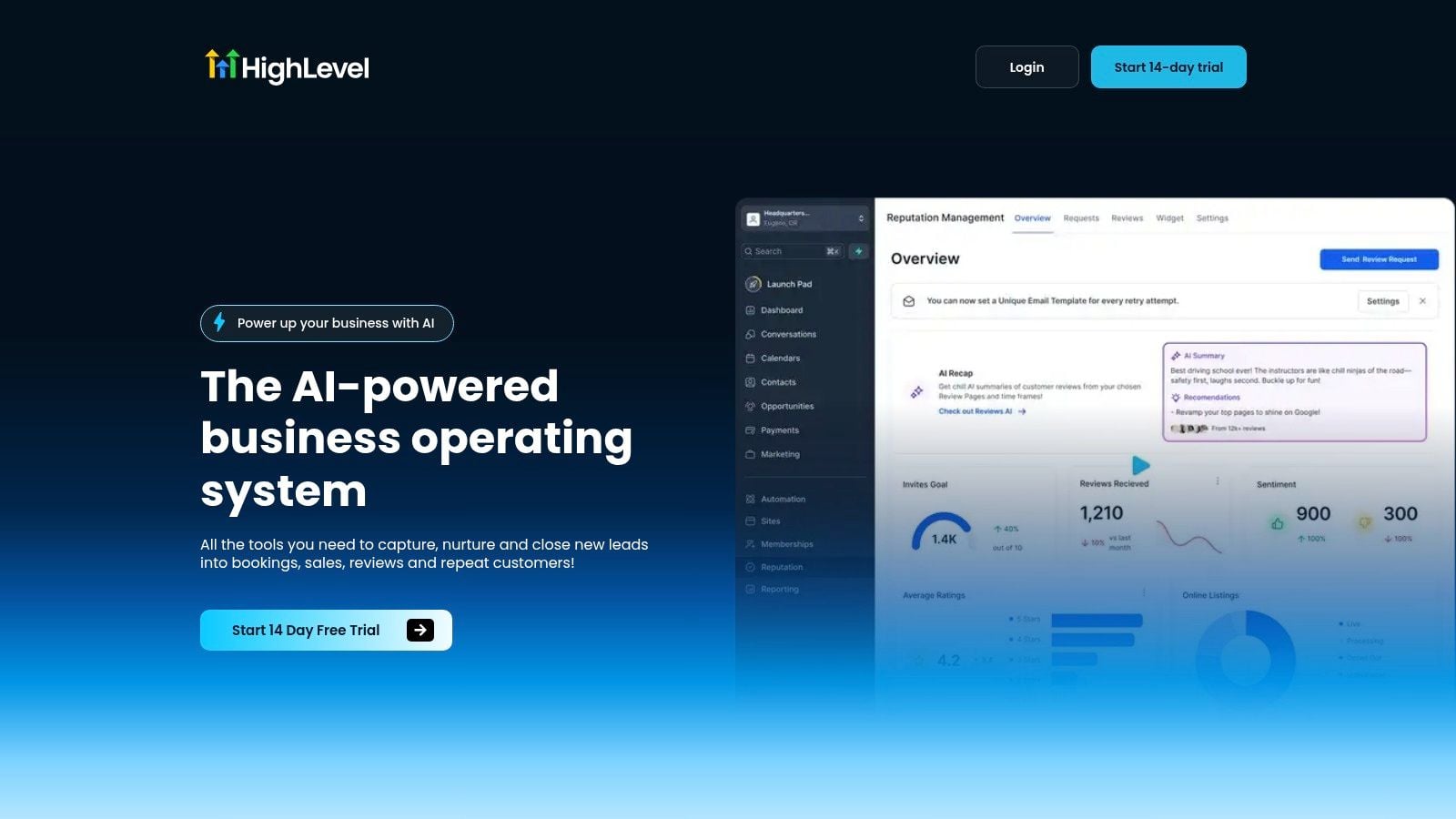
Inside HighLevel, the practical move is to set up the membership portal and courses module, then map lessons, downloads, and access rules so each tier sees only what it purchased. That matters because the content system and the CRM can sit in the same place, which keeps delivery, follow-up, and member status tied together instead of spread across separate tools.
Structure access by tier, not by hope
Access control has to be deliberate. Use tags and pipeline stages to separate free leads, trial members, active members, and canceled members, then connect each state to the pages and resources that person can open. If a payment fails or a tier changes, access should update automatically.
That setup also keeps credential sharing from becoming a quiet mess. In memberships that include support, booked calls, or private resources, a shared login quickly creates confusion about who saw what and who is allowed to request help. The system should enforce the rule set, not your inbox.
Keep support inside one thread
A member usually does not send one clean question and stop there. They might open with a DM, follow with an email, and then leave a missed call, while expecting the team to remember the full context. HighLevel’s unified conversation inbox, SMS, Messenger, Instagram DM, WhatsApp, and live chat keep those touchpoints in one place so support does not fragment across channels.
The support layer matters because the content library is only half the product. Call tracking and missed-call text-back can sit beside the member experience so an unanswered call becomes a fast follow-up instead of a dead lead. That turns the portal into a working service relationship, not just a content vault. It also ties in with the same automation thinking you would use to improve agency lead flow, because the system has to route responses fast when members reach out from different channels.
A short walkthrough video helps here too.
If the membership includes sensitive files or premium resources, treat access like an asset, not a convenience. The guidance in securing sensitive documents effectively is worth applying here, because members need confidence that downloads, private files, and protected materials are not exposed more widely than they should be.
Designing the First 30 Days to Reduce Churn
Most membership sites lose money in the first month, not because the offer is terrible, but because the member never forms a habit. The gap in most build guides is retention engineering after launch, and that’s where the first 7 to 30 days matter most. Founders often obsess over getting the sale, then leave activation to chance.
Build the welcome path before public launch
The first touch should be a trigger from signup that pushes the member into a Get Started page, a short tour, and a quick-win task inside 48 hours. Foundr’s membership guidance recommends that kind of “Get Started” page, tour, autoresponder, and quick win, while Mighty Networks’ 2026 guidance adds a distinct new-member experience and welcome event. That combination is important because it moves the member from purchase to visible progress before attention drops.
A 3 to 5 email onboarding sequence over the first two weeks is a solid cadence for reducing early churn and improving activation, especially when the emails aren’t all marketing. They should point to the first action, the next small win, and the support path if a member gets stuck. Raklet’s membership guidance explicitly recommends that sequence and also notes that over 60% of membership traffic comes from mobile devices, which makes mobile-friendly onboarding essential.
Use automation to create momentum
HighLevel’s visual workflow builder is useful here because it can connect welcome triggers, email or SMS nudges, Conversation AI responses, and review requests once a member hits a milestone. The goal isn’t to flood people, it’s to create a visible path from login to action to recognition. That’s how habit formation starts.
Broadcast campaigns also matter after the first few days. Use segmented nudges, not broad blasts, so active members get progress prompts and quiet members get re-entry prompts. If you’re trying to improve agency lead flow across multiple offers, the same logic shows up in improve agency lead flow, because good automation follows behavior instead of spraying the same message at everyone.
Retention rule: the first win has to happen fast, or the member starts treating the subscription like a library card they forgot to use.
Analytics, Optimization, and the Pre-Launch Checklist
The operators who keep memberships alive usually measure a small set of signals and act on them quickly. Paid Memberships Pro reported that almost 89% of memberships have a churn rate below 10%, while more than 44% achieve churn below 5%, which is a good reminder that low cancellations are the dividing line between modest communities and durable businesses. Paid Memberships Pro’s membership economics study also found that about 50% of established memberships make six figures annually, almost 6% make seven figures, average revenue for memberships operating more than a year was $179,880, and average revenue for established memberships was $307,805.
Track engagement, not just sales
Pipeline analytics and workflow analytics should tell you where members stall, which content paths get used, and when win-back automations need to fire. If activity drops, that’s a trigger for a check-in, a reminder, or a content refresh, not an excuse to wait until renewal day.
Reputation tools also belong in the loop. Automated review requests, AI review replies, and review widgets can turn successful members into social proof, which helps if your offer depends on trust and visible outcomes. That reputation layer is especially useful when the membership is tied to coaching, support, or a premium learning experience.
Run the pre-launch checklist before the first member sees the portal
Test the full payment flow before launch, verify that gated content is inaccessible when logged out, check page speed, and confirm the experience on mobile. Those are the friction points that break most first launches, and they’re easy to miss when you’re focused on content loading instead of user behavior. The checklist below is the one I’d use before opening the doors.
| Area | Check | Why It Matters |
|---|---|---|
| Payments | Complete a test transaction from start to finish | Confirms the checkout works before a real member hits it |
| Access control | Log out and confirm premium content stays hidden | Prevents accidental access leaks |
| Mobile UX | Open the portal on a phone and tap through the flow | Over 60% of membership traffic comes from mobile devices Raklet |
| Onboarding | Trigger the full welcome sequence | Ensures new members get the first 7 to 30 day path |
| Support | Send a test message through the inbox | Confirms member questions don't disappear |
| Documents | Review private files and download permissions | Helps keep premium materials organized and protected |
| Analytics | Confirm workflow and pipeline reporting are visible | Lets you react before churn becomes a pattern |
If you're tracking performance more closely across the business, the broader agency analytics platform conversation is useful because a membership site only improves when the team can see where people drop off and where they stay engaged.
If you want one system for funnels, memberships, workflows, payments, and follow-up, HighLevel already brings those pieces into a single workspace. It's built for operators who need the capture, the conversion, and the retention logic to work together instead of surviving on integrations. Visit HighLevel if you want to build a membership site with fewer handoffs and a cleaner path from first click to recurring member.
